Best Intrinsically Safe LED Flashlights for Hazardous Environments
When safety matters, choose intrinsically safe (IS) LED flashlights designed to minimize ignition risk in hazardous locations. This guide highlights five top options ideal for workers in oil, gas, chemical plants, utilities, and other high-risk settings. Each entry explains who it’s best for, why it was selected, and a practical caveat. For quick comparison, see the summary table below.
| Product | Best For | Key Strength |
|---|---|---|
| Nightstick XPP-5422GMX X-Series | Maintenance crews needing dual illumination | Dual-light (spot + flood) with strong magnets |
| Streamlight 68750 Dualie 3AA | General industrial work with two-beam versatility | Spot, flood, or both beams |
| Nightstick XPP-5420G | Above- and below-ground hazardous locations | ATEX/IECEx and MSHA listed |
| Nightstick XPR-5522GMX | Rechargeable, dual-light needs | Rechargeable with magnets, ATEX/IECEx |
| Streamlight 68732 Dualie 275-Lumen | Rechargeable or where lithium-free options exist | Integrated LEDs, three modes |
Note: Each product supports intrinsic safety standards and is intended for professional use in hazardous environments. Always confirm local regulations and compatibility with your specific work site before selection.
Nightstick XPP-5422GMX X-Series Intrinsically Safe Dual-Light Flashlight
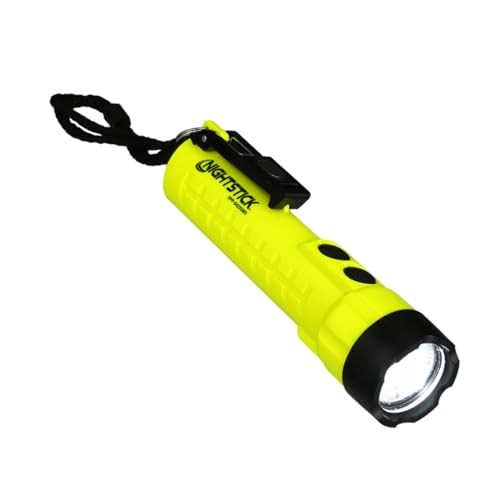
Best for: Technicians who need both a tight beam and wide-angle illumination in tight spaces. This model delivers a 235 lumen flashlight and a 130 lumen floodlight for flexible task lighting, plus a 300 lumen dual-light option for combined use. It is ETLus listed for Intrinsic Safety and includes dual magnets for hands-free operation. Choose this if you work in confined spaces and require steady, stable mounting.
Caution: Battery runtime and beam modes depend on the selected configuration; verify your required mode before use in critical tasks.
Streamlight 68750 Dualie 3AA Intrinsically Safe Flashlight

Best for: Industrial workers who need flexible beam options on a compact, triple-AA platform. The Dualie 3AA offers one spot beam, one flood beam, or both, with a robust 140 lumens spot and enhanced beam intensity. It is Class I, II, Division 1 rated and MSHA permissible for methane-air environments. The two-beam approach helps reduce outages and improve site safety.
Limitation: Runs on AA batteries; consider battery availability and replacement logistics in remote sites.
Streamlight 68732 Dualie 275-Lumen Rechargeable Flashlight

Best for: Teams that prefer rechargeable IS lighting with multiple modes. The Dualie 275-Lumen model supports spot, flood, and spot/flood combination with a rugged, snag-free clip. It’s designed for heavy-duty industrial use, offering reliable performance in hazardous locations. Magnetic base aids hands-free use, which reduces tool downtime.
Limitation: Rechargeable power adds a charging requirement; ensure access to a compliant charging setup on site.
Nightstick XPR-5522GMX Intrinsically Safe Dual-Light Flashlight

Best for: Professionals needing a blue-green magnet-enabled dual-light setup with rechargeable capability. The XPR-5522GMX is cETLus, ATEX, IECEx and MSHA listed, with a 150 meter beam distance. Magnets embedded in the base and clip allow stable hands-free positioning during inspections or maintenance tasks.
Limitation: It is a magnet-assisted design—use caution near sensitive electronics or sensitive equipment to avoid unintended interference.
Streamlight 68732 Dualie 275-Lumen Intrinsically Safe Rechargeable Flashlight
Best for: Users who want a compact, rechargeable IS flashlight with multiple modes and a strong beam. This model features three lighting modes—spot, flood, and spot/flood—with a robust approach to durability and safety standards. The integrated magnets support hands-free use on metal surfaces.
Limitation: Ensure compatibility with your site’s charging protocol and safety guidelines for charging IS devices.
Buying Guide
What to consider when choosing an intrinsically safe LED flashlight:
- Certification and ratings: Look for ETLus, cETLus, ATEX, IECEx, MSHA, and Class I/II Div 1 compliance. These indicate suitability for hazardous environments.
- Light output and beam type: Assess whether you need a focused spot beam, a wide flood beam, or both. Dual-light designs offer flexibility for different tasks.
- Power source: Decide between disposable batteries (AA/AAA/3xAA), or rechargeable options. Consider availability of spares and site charging facilities.
- Durability and mounting: Magnetic bases, clips, and rugged housings improve hands-free operation and reliability in tough work conditions.
- Runtime and usability: Check run times for each mode and how quickly you can switch modes under load. Ergonomics matter for extended use.
- Size and weight: Lighter, compact models reduce fatigue in overhead or overhead-space work; larger models may offer longer runtime and brighter output.
FAQ
- What does intrinsically safe mean for flashlights? Intrinsically safe devices are designed to prevent ignition in hazardous areas by limiting energy and temperature, reducing the risk of sparks or heat ignition.
- Are all intrinsically safe flashlights reusable in the field? Yes, most IS flashlights are designed for repeated field use with replaceable batteries or rechargeable packs, but verify the site’s charging and battery handling protocols.
- Which flashlight is best for overhead tasks? Look for models with a strong flood beam and magnets or clips for hands-free use, ensuring good visibility in overhead work areas.
- Can intrinsically safe lights be used in non-hazardous settings? Yes, they function like standard flashlights but carry safety certifications suitable for hazardous locations.
- How important is beam distance in hazardous environments? Longer beam distance helps with distance inspection and locating distant hazards, but a bright flood helps close-up tasks; many IS lights offer both modes.
- Do IS flashlights require special batteries? Some models use standard AA or AAA cells; others are rechargeable. Always follow manufacturer guidance for charging and storage in hazardous zones.