Best Indirect-Fired Water Heater Alternatives for Reliable Hot Water
Choosing the right residential water heater involves evaluating capacity, efficiency, installation space, and fuel type. This article highlights five top options from trusted brands that align with the need for dependable, on-demand hot water across multiple fixtures. Each product section includes key features, performance notes, and practical considerations to help you decide what best fits your home’s setup.
Summary of Selected Products
| Product | Brand | Type | Key Benefit | Link |
|---|---|---|---|---|
| 18kW Tankless Water Heater Electric | Orbek | Electric Tankless | High flow with up to 4.17 GPM for 2-3 fixtures | Product Link |
| EcoSmart ECO 11 | EcoSmart | Electric Tankless | Self-modulating tech for efficiency | Product Link |
| APUS Tankless Water Heater Propane | APUS | Propane Tankless | High power with precise temp control | Product Link |
| Rheem 6.5kW POU Electric | Rheem | Electric Point-of-Use | Compact, space-saving with steady temp | Product Link |
| BOSCH Tronic 3000 T 2.5-Gallon | Bosch | Electric Mini-Tank | Under-sink hot water instantly | Product Link |
18kW Tankless Water Heater Electric
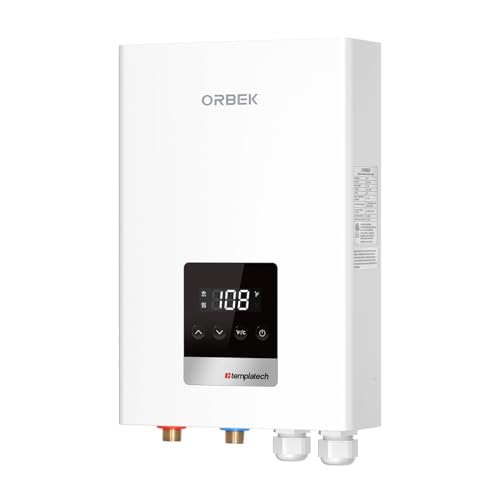
Brand: Orbek
Overview: This 18 kW electric tankless unit provides on-demand hot water with a flow rate up to 4.17 GPM, suitable for 2–3 fixtures. It heats water rapidly, delivering near-instant hot water once demand arises. The installation requires two 240V/40A two-pole breakers, two sets of 8 AWG wires, and 3/4″ NPT water connections. A professional electrician is recommended to verify circuit capability and ensure safe operation. Efficiency stems from water-electricity separation to minimize scale and corrosion, with potential energy savings compared to traditional tanks.
EcoSmart ECO 11 Electric Tankless

Brand: EcoSmart
Overview: The ECO 11 uses patented self-modulating technology to deliver endless hot water with consistent temperatures. It actively monitors water temperature and adjusts flow to stay within 1 degree of the set point. With a compact footprint (about 11.5 x 8 x 3.75 inches) and high energy efficiency (nearly 99% thermal efficiency), this model saves space and reduces energy use by heating water only when needed. Ideal for point-of-use installations or small spaces.
APUS Tankless Water Heater Propane Gas
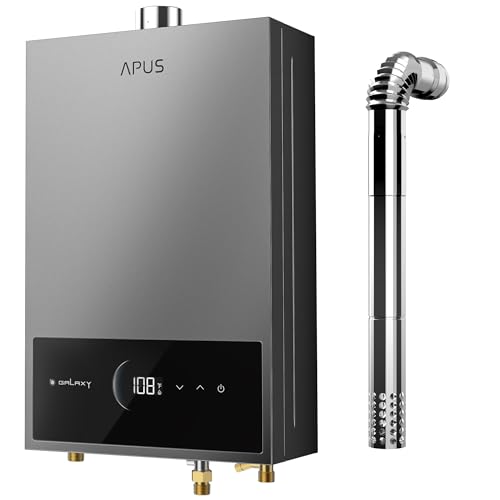
Brand: APUS
Overview: A high-capacity propane tankless unit that delivers up to 4.42 GPM with 95,000 BTU, designed to meet simultaneous hot-water needs (two showers and a sink) while maintaining stable output. Features include a smart digital display and sensors to keep temperature within ±1°F. It emphasizes energy efficiency with multiple advantages such as segmented combustion technology and oxygen-free copper heat exchangers, aiming for significant energy savings over traditional tanks.
Rheem 6.5kW POU Electric

Brand: Rheem
Overview: A compact point-of-use electric tankless option that emphasizes endless hot water with precise temperature control. It continuously monitors water temperature and adjusts flow to maintain the desired setting within a tight tolerance. The unit is designed for space savings and straightforward installation, making it suitable for under-sink or small vanity installations where hot water is needed locally.
BOSCH Tronic 3000 T Mini-Tank
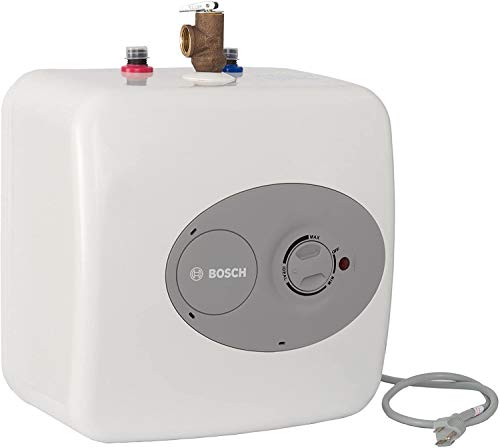
Brand: Bosch
Overview: The 2.5-gallon mini-tank is designed for point-of-use, placing hot water exactly where you need it. It features high thermal efficiency (around 98%), compact dimensions, and a simple 120V plug-in design for independent installation or inline with a larger hot-water source. It’s well-suited for under-sink applications or as a supplementary heater for small households.
Buying Guide: Key Purchase Considerations
- Fuel type and efficiency: Electric tankless units offer easy installation where electricity is abundant, while propane/gas models provide high flow in larger homes. Consider energy efficiency, self-modulating features, and standby losses.
- Flow rate and simultaneous usage: Determine the number of fixtures that might run at once. Tankless models list GPM; ensure the unit can meet peak demand without temperature drops.
- Temperature stability: Look for units with precise temperature control (±1–1.5°F) to avoid scalding or uncomfortable hot water fluctuations.
- Installation requirements: Electric models may require dedicated circuits, wiring runs, and breaker sizing. Gas/propane units need proper venting and professional installation. Check local codes and hire licensed technicians as needed.
- Space and layout: Point-of-use mini-tanks save space but serve limited areas. Tankless systems free up footprint but may require more complex installation.
- Durability and warranties: Look for copper heat exchangers, quality inner components, and manufacturer warranties. Consider corrosion resistance and serviceability.
- Maintenance needs: Some units are easier to service in-place; others require professional servicing. Consider periodic descaling for mineral-rich water regions (especially on gas units).
- Safety features: Overheat protection, leak detection, and pressure relief are important. Ensure proper venting for gas units and electrical safety clearances for all models.
Choosing the right indirect-fired or alternative hot-water solution depends on your home’s heating system, energy source, space, and hot-water demand. While none of the listed options are traditional indirect-fired water heaters, they provide credible, on-demand alternatives that can be matched to different installation contexts and efficiency goals.