Best in Wall Cable Tube Solutions for Clean, Hidden Wire Management
In-wall cable tube solutions streamline home and office setups by concealing wires behind walls or in protected conduits. The top picks below help different buyers—home theater enthusiasts, office remodelers, and general homeowners—keep cables tidy and safe. This guide highlights five dependable options, with quick-fit guidance on who benefits most from each.
Summary of chosen products:
- CrocSee 25ft – 1/2 inch Flame Retardant Split Wire Loom Tubing with Installation Tool — Best for automotive, industrial, and DIY projects where a long, flame-retardant sleeve is needed.
- Alex Tech 10ft – 1/2 inch Split Wire Loom Tubing — Best for quick-protect installs in home or office with moderate cable runs.
- Cable Pass Through Wall Port by matterform — Best for clean, paintable wall transitions with versatile cable types.
- 4 Pack TV Cord Hider for Wall Mounted TV by BGHEOUYV — Best for quick, secure in-wall TV cable management in living rooms or bedrooms.
- Riozoo TV Wire Hider Kit for Wall Mount TV — Best for perforated walls and easy installation with included accessories.
CrocSee 25ft – 1/2 Inch Split Wire Loom Tubing

Best for long runs in automotive, industrial, or general DIY projects requiring flame-retardant protection. Inner diameter 1/2 inch, length 25 feet, made from thick polypropylene. Includes a wire loom insertion tool to ease feeding wires through the split loom. Operates safely from -22 °F to 221 °F.
Who it’s best for: hobbyists and professionals who need a durable, flame-retardant conduit for extended wire runs. Why selected: long length and robust material support tidy, protected wiring in demanding environments. Caution: not ideal for very tight bends or spaces where a non-split, rigid conduit is preferred.
Alex Tech 10ft – 1/2 Inch Split Wire Loom Tubing

Best for quick, moderate-length cable management at home, office, or automotive projects. Inner diameter 1/2 inch, 10 feet long, made from 100% new high-quality polyethylene. Split design makes it easy to insert wires. Temperature tolerance from -94 °F to 257 °F, suitable for varied environments.
Who it’s best for: users needing fast, straightforward protection for standard-sized wires. Why selected: reliable, flexible protection with clear installation simplicity. Caution: suitability depends on cable count; thicker bundles may require multiple lengths.
Cable Pass Through Wall Port by matterform

Best for versatile wall-to-wall cable routing, accommodating power, HDMI, coaxial, ethernet, and more. Universal compatibility ensures most cable types fit. White minimalist design blends into decor and can be repainted to match walls. Fully enclosed tube pathway from side to side for a clean, hidden setup.
Who it’s best for: homeowners and small offices seeking a paintable, low-profile solution. Why selected: broad cable compatibility and a simple, seamless wall transition. Caution: consider wall type and thickness to ensure a clean install in plaster or drywall.
BGHEOUYV 4 Pack TV Cord Hider for Wall Mounted TV
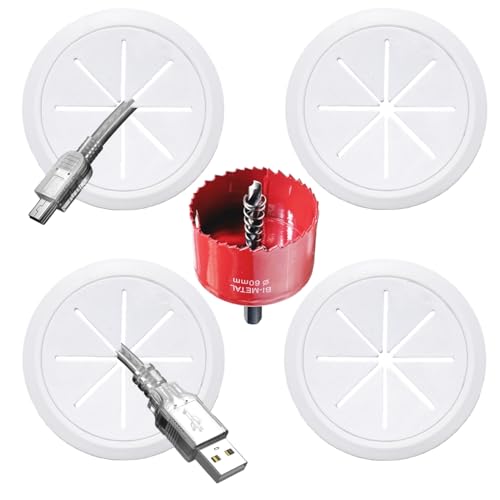
Best for wall-mounted TVs with in-wall cable access. Includes four cord pass-throughs and a hole saw drill attachment for quick installation. Designed to keep wires hidden behind the wall, enhancing aesthetics in living rooms and entertainment areas.
Who it’s best for: homeowners seeking a simple, all-in-one kit to hide TV cables behind the wall. Why selected: bundled hardware supports faster, cleaner installs. Caution: performance depends on wall material and hole alignment; ensure compatibility with your wall configuration.
Riozoo TV Wire Hider Kit for Wall Mount TV
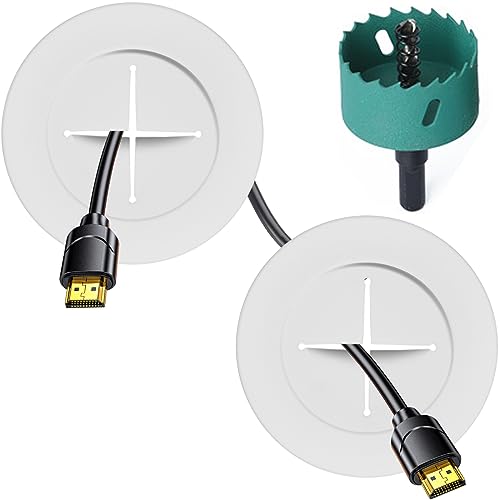
Best for perforated walls where a dedicated in-wall channel is advantageous. This white kit is designed for low-voltage cables around wall-mounted TVs and entertainment consoles. It includes thicker hole sawing and drilling accessories for a precise fit, simplifying installation.
Who it’s best for: renters or homeowners with perforated wall patterns or plaster/wood plank walls. Why selected: purpose-built for in-wall TV cable routing with robust accessories. Caution: ensure wall composition supports the included hardware and provides solid mounting choices.
Buying Guide
Key considerations determine the best in-wall cable tube choice. Use these practical questions to compare options.
- What size and type of cables will you run? Choose split loom for flexible, wire-by-wire insertion, or non-slit conduit for durable, side-sealed protection.
- What wall type will host the channel? Plaster, drywall, or perforated walls affect installation methods and required attachments.
- Do you need a paintable or matching finish? Paintable white or black surfaces help blend with décor; some kits include paint-ready finishes.
- Is environmental exposure a concern? Flame-retardant materials and temperature ratings matter in garages, workshops, or automotive spaces.
- How many channels and how much length are needed? Long runs require longer loom or multiple pass-throughs; plan with room to spare.
- What about tools and installation ease? Kits with insertion tools or drill attachments speed up work for DIYers and professionals alike.
FAQ
- What is the difference between split loom and solid conduit? Split loom is easier to insert wires into but may offer less stiffness than a solid conduit; solid options can provide rugged protection in harsh environments.
- Can I paint in-wall cable ports to match my walls? Yes, most minimalist ports are paintable; check product details to verify compatibility and the finish.
- Will these kits work with all wall types? Most are compatible with common walls (drywall, plaster, wood), but heavy plaster or reinforced walls may require different tools or larger holes.
- How many wires can a single pass-through handle? It depends on the diameter and design; always verify the maximum cable count for each product.
- Are installation tools included with all kits? Some include hole saw attachments or insertion tools, while others may require separate purchases.
- Is flame retardancy always necessary? In automotive, industrial, or high-heat spaces, flame-retardant materials offer added safety; for simple home use, standard plastics may suffice.