Best in-Line Flow Switches for Water Systems and Heaters
The right in-line flow switch protects pumps, heaters, and other equipment by detecting water flow and triggering a safe shutdown if flow falls below a defined threshold. This guide reviews five reliable options from trusted brands, highlighting compatibility, installation, and electrical characteristics to help you pick the best fit for your system.
Overview at a glance: the table below summarizes core details for quick comparison. All models are designed for inline installation and are suitable for water-based applications, with variations in thread size, contact type, and operating voltage.
| Product | Brand | Thread | Flow Range | Electrical | Key Use |
|---|---|---|---|---|---|
| DIGITEN FS-C02 G3/4″ BSP Male | DIGITEN | G3/4″ BSP Male | 0-2 A; 0-220 V | AC/DC | Shower, Water Heater |
| PDT R3/4 HFS-20 | Niiyen | R3/4″ | Adjustable | SPDT; 15A; 250V | Water treatment, Chillers |
| DIGITEN FS-C01 G1/2″ | DIGITEN | G1/2″ BSP | 1-30 L/min | 0-2 A; 0-220 V | General inline flow sensing |
| Solimeta HFS-15 | Solimeta | 1/2″ | 1/2″ in product title; broad compatibility | SPDT; 15A; 220V | Humidifier, Boiler, Dispenser |
| GREDIA G3/4″ | GREDIA | G3/4″ BSP | 1-50 L/min | 2A max; 220VDC | General water systems |
All the products here are inline flow switches that rely on sensing water movement to actuate electrical contacts. The list includes variants with brass bodies for durability, various thread types for compatibility, and different output configurations to match typical pump and valve setups. Consider your system’s voltage, load requirements, and whether you need a fixed or adjustable setpoint when choosing.
DIGITEN FS-C02 G3/4″ BSP In-Line Flow Switch

Made of brass and RoHS-compliant materials, this flow switch is designed for safety by cutting power when water flow stops. It is suitable for connection with a relay in loads like heaters or pumps. The 3/4″ BSP male thread provides straightforward inline installation with standard plumbing hardware. Operating range supports 0-2 A at 0-220V (AC or DC). The device is described as waterproof and resistant to heat, pressure, and cold, offering compact size and stable performance.
PDT R3/4 HFS-20 Water Flow Switch

The HFS-20 is a versatile inline flow switch with a SPDT micro-switch output rated up to 15A at 250V. It’s designed for water treatment, central air-conditioning, and cooling systems, and is suitable for water, oil, or non-hazardous liquids. The sensitivity and repeatability can be adjusted, enabling precise activation when flow crosses the set threshold. Its robust design emphasizes ease of use and stable operation in varying conditions.
DIGITEN FS-C01 G1/2″ Flow Switch with Filter

This brass-bodied inline sensor features an integral filter to prevent sediments from entering the mechanism. The 1/2″ BSP male thread aids straightforward installation. It provides safety by interrupting load current when flow is absent. The recommended practice is to connect the load through a relay. Working voltage ranges from 0-220V with a 0-2A maximum load, and it’s designed for reliable operation in damp environments.
GREDIA G3/4″ Hall Effect Flow Switch
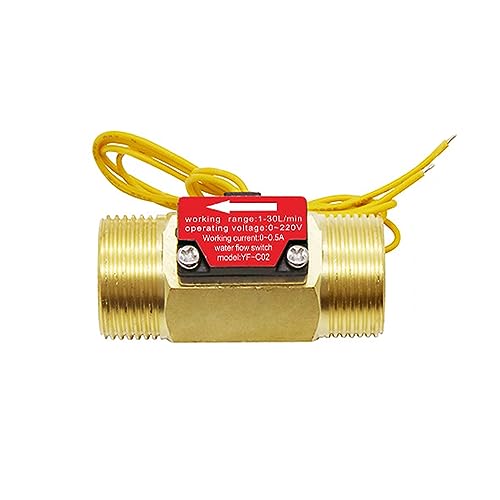
This Hall Effect flow switch uses a G3/4″ BSP thread and supports a flow range from 1 to 50 L/min. It is designed for a maximum load current of 2A and a switching voltage up to 220VDC. Suitable for humidifiers, water dispensers, showers, and heaters, it aims for reliable switching with low magnetic interference and compact geometry compatible with standard inline plumbing. The rated start-up water pressure is 0.1 MPa or below, helping with low-flow detection scenarios.
Buying Guide: Key Purchase Considerations
When selecting an in-line flow switch, users should weigh several practical factors to ensure compatibility and long-term reliability:
- Thread size and connection type: Match the inline thread (G, BSP, or other standards) with your plumbing fittings. Consider adapters if needed for nonstandard threads.
- Operating voltage and current: Ensure the switch’s electrical ratings align with your control circuit and relay options. Some units specify AC/DC compatibility, others target fixed voltage ranges.
- Flow detection method: Mechanical (paddle/impeller) switches versus Hall effect sensors. Hall effect variants often offer better longevity in mineral-rich water conditions.
- Adjustability: If your system experiences fluctuating flow, an adjustable setpoint improves reliability and reduces nuisance trips.
- Material compatibility: Brass bodies are common and robust, but consider corrosion resistance for aggressive water conditions or high mineral content.
- Load needs and protection: Use a relay or contactor with appropriate amperage ratings to protect the switch from direct load stress.
- Environmental conditions: Temperature and pressure ratings matter. Look for models rated for the expected water temperature and line pressure.
- Maintenance and filtration: Inline filters can protect sensors from sediment; consider this in systems with variable water quality.
- Certifications and RoHS compliance: For safety and regulatory alignment in the U.S. market, select RoHS-compliant components when possible.
- Installation accessibility: Ensure there is space for wiring, a clean inline path, and easy access for testing and replacement.
In choosing among these options, consider whether you need a simple water presence switch, an adjustable setpoint, or a digitally robust component designed for aggressive water conditions. For critical systems like hot water heaters or large chillers, prioritize devices with higher electrical ratings, reliable seals, and solid manufacturer support.