Best Hybrid Inverter Grid Tie Solutions for Home Solar Systems
Hybrid inverter grid-tie systems blend solar generation with grid power and, when needed, backup capabilities. They’re designed to maximize solar harvest, reduce reliance on the grid, and support critical loads during outages. Below, five top-rated units are highlighted to help American homeowners compare capacity, MPPT performance, battery compatibility, and grid-backup features. This guide draws on popular models that emphasize high-efficiency MPPT, parallel expansion options, and grid-feed capabilities. A quick product snapshot follows to help you skim key specs at a glance.
| Product | Brand | Peak Power | Key Benefit |
|---|---|---|---|
| POWLAND 12,000W Grid-Tied Hybrid | POWLAND | 12,000W | Battery-free design with high MPPT efficiency |
| POWLAND 10,000W Grid-Tied Hybrid | POWLAND | 10,000W | Strong grid-tie with battery-free operation |
| BUSBYR 12,000W Hybrid Inverter | BUSBYR | 12,000W | Dual MPPT, flexible battery options |
| DATOUBOSS 12,000W Hybrid | DATOUBOSS | 12,000W | Dual MPPT, high PV input, scalable up to 72kW |
| PowMr 12,000W Solar Inverter | Temank | 12,000W | ETL-listed grid-tie with smart time-based control |
Note: Each product can support 48V battery systems and grid-tie operation, with models that also offer off-grid or battery-free configurations. Features vary from dual MPPT inputs to parallel expansion, allowing larger installations as needed. When selecting a unit, consider battery compatibility, PV array voltage, and whether you want seamless fallback to the grid during outages.
POWLAND 12,000W Grid-Tied Hybrid Solar Inverter

Powerful, grid-tied operation with a battery-free design allows surplus solar energy to supplement household load and feed back to the grid, with optional CT sensor to monitor exports. The unit aims at large homes and RV sites, providing up to 12,000 watts of pure sine wave power (120V ±5%). It emphasizes high solar harvest through an MPPT controller and claims up to 99.9% efficiency, expanding low-light gains and enabling robust operation across a wide DC input range (90-500VDC / 200A).
Key considerations
- Battery-free option can lower upfront battery costs for some households.
- Integrated CT sensor support for precise export monitoring.
- Compatibility with 48V LiFePO4 or lead-acid batteries if you choose to add storage later.
POWLAND 10,000W Grid-Tied Hybrid Solar Inverter
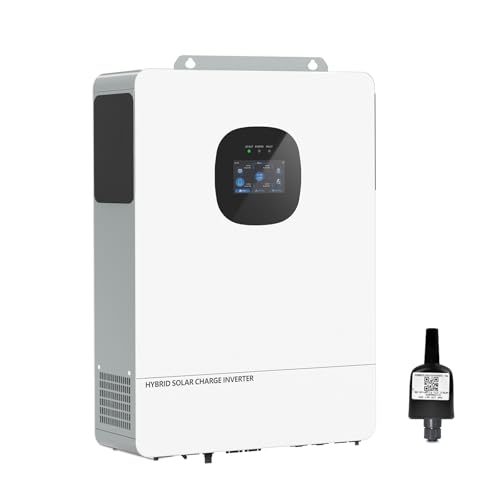
This model delivers 10,000W of continuous power and mirrors POWLAND’s battery-free approach with grid-tie operation. It’s positioned for sizable homes and RV parks, providing seamless blending of solar, grid, and potential storage. The unit emphasizes the same 99.9% harvesting efficiency and robust MPPT performance, with a built-in 250A MPPT and a broad voltage window to accommodate varied PV arrays.
Key considerations
- Higher built-in MPPT rating helps with faster tracking across sunlight shifts.
- Compatibility with 48V battery systems if you later decide to add storage.
- Grid-backfeed configuration supports continuous operation of essential circuits.
BUSBYR 12,000W Hybrid Solar Inverter

BUSBYR’s unit provides 12,000W of continuous output with dual MPPT solar charging and 99.9% efficiency, designed for on-grid and off-grid applications. It supports 48V battery chemistries, including LiFePO4 and lead-acid, and can operate battery-free for certain configurations. The model highlights parallel expansion capability and a flexible output configuration that can be tailored to different home layouts and loads, including HVAC systems and major appliances.
Key considerations
- Dual MPPT improves performance under partial shading or variable irradiance.
- Battery flexibility reduces vendor lock-in for battery choices.
- Protection features ensure safe integration with existing electrical systems.
DATOUBOSS 12,000W Hybrid Solar Inverter

Across 12 kilowatts of continuous output, this unit supports 120/240V output with both grid-tie and off-grid modes. It features dual MPPT controllers—each capable of up to 6500W PV input—allowing robust solar harvest even on higher-VPV arrays (up to 500V DC). Parallel operation with up to six units enables large residential or small commercial installations, and the system supports mixed battery types, including 48V LiFePO4 and lead-acid.
Key considerations
- High PV input compatibility up to 500V supports modern high-voltage modules.
- Parallel expansion allows scaling to meet growing energy needs.
- Flexibility with battery types helps align with existing storage strategies.
PowMr 12,000W Solar Inverter
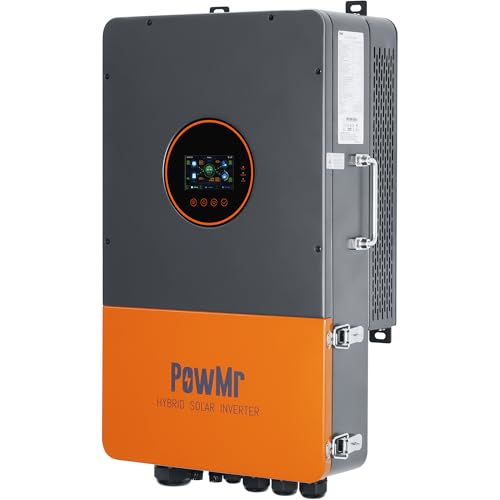
PowMr’s 12,000W inverter delivers grid-tie and off-grid capabilities with a built-in 200A MPPT controller. The unit supports a broad range of PV inputs and emphasizes time-based control to leverage lower grid rates, as well as the option to export surplus power to the grid. It is designed to work with various 48V battery chemistries and supports multiple units in a stacked configuration for higher power systems.
Key considerations
- Time-based control can optimize energy costs in regions with dynamic electricity pricing.
- ETL-listed compliance and UL1741 safety alignment aid utility approvals.
- Battery-flexible design supports diverse storage strategies and future upgrades.
Additional Options: Quick notes
- 1200W Grid Tie Micro Inverter (HCYHSLH) offers modularity for smaller roof sections and simple scalability, but with much lower output than the 12kW systems listed above.
- EEYBLAEEY and Y&H models provide compact grid-tie options for limited-space installations and lighter loads, useful for small cabins or RVs.
Buying Guide: Key purchase considerations and comparisons
When choosing a hybrid grid-tie inverter, focus on how you plan to use solar energy, the size of your home, and whether you want backup capabilities or purely grid-tied operation. Here are essential considerations:
- System goal: Decide whether you mainly want to export surplus to the grid, maintain essential loads during outages, or maximize self-consumption with battery storage.
- Power rating and surge: Ensure the continuous and surge capacities align with your peak household loads, such as HVAC, water heaters, and appliances.
- MPPT performance: Dual MPPT inputs improve harvesting under shading and complex roof layouts; look for high efficiency ratings and a wide MPPT voltage window.
- Battery compatibility: Check compatibility with LiFePO4, lead-acid, or other chemistries; consider future storage expansion and the availability of compatible batteries.
- Grid interaction and safety: Verify anti-backflow features, UL1741/IEEE compliance, anti-islanding protections, and local utility compatibility.
- Expandability: If you anticipate system growth, choose units that support parallel operation or modular stacking to reach higher total power.
- Monitoring and connectivity: Built-in WiFi or remote monitoring helps track production, exports, and battery status for performance optimization.
- Installation considerations: Ensure the selected inverter fits your roof layout, wiring gauge, and the compliance requirements of your electrical code.
- Cost of ownership: Evaluate upfront costs alongside battery costs (if storage is planned) and potential savings from grid exports and reduced energy bills.
Overall, each product listed emphasizes high-efficiency solar harvesting, grid-feed capability, and flexible operation modes. For homeowners seeking dependable grid-tie with potential backup, the POWLAND, BUSBYR, and DATOUBOSS offerings stand out for their dual MPPT and scalable architectures, while PowMr adds a time-based control edge. The micro inverters and lighter grid-tie options serve smaller installations or phased upgrades.