Best Electric Hot Water Heaters for on-Demand Home Comfort
The following picks spotlight electric hot water solutions that deliver on-demand hot water, energy efficiency, and compact installation options. This guide compares tankless and small-tank models from well-known brands, helping American homeowners choose the right unit for point-of-use or whole-home needs.
| Product | Brand | Type | Key Feature |
|---|---|---|---|
| EcoSmart ECO 11 | EcoSmart | Tankless | Self-modulating technology; compact size |
| Rheem 18kW Tankless | Rheem | Tankless | External LED thermostat; self-modulation |
| Rheem RTEX-24 | Rheem | Tankless | High power; adjustable temperature |
| Orbek 14kW | Orbek | Tankless | LED display; 3.38 GPM; high efficiency |
| Bosch ES2.5 Mini-Tank | Bosch | Mini-Tank | 2.5 gallons; easy under-sink install |
EcoSmart ECO 11 Electric Tankless Water Heater

The EcoSmart ECO 11 is a compact, 13 kW tankless water heater designed for point-of-use or small-supply scenarios. It employs patented self-modulating technology to adjust energy use based on demand, minimizing energy waste. The unit is only 11.5 x 8 x 3.75 inches, enabling wall or vertical installation in tight spaces. It delivers on-demand hot water with temperature stability within about 1 degree, and its 54 A amperage draw should be considered when planning electrical service. Ideal for kitchens, sinks, or showers with moderate demand, it emphasizes efficiency and space savings.
Rheem 18kW 240V Tankless Electric Water Heater
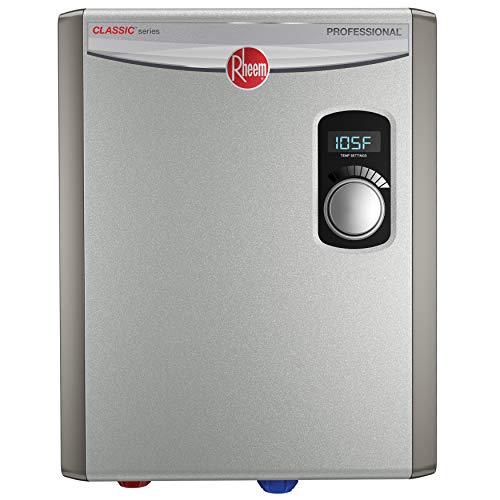
This Rheem model uses external digital thermostatic control with an LED display and high-precision 1-degree accuracy, ensuring precise water temperature. It features advanced self-modulation to adjust power based on demand and has durable copper immersion heating elements for longer life. The unit is field serviceable for easier maintenance and offers a flow rate up to 4.4 GPM, making it suitable for smaller homes or point-of-use systems where space is at a premium. Proper electrical capacity is essential due to the 18 kW rating.
Rheem RTEX-24 24kW Electric Tankless Water Heater
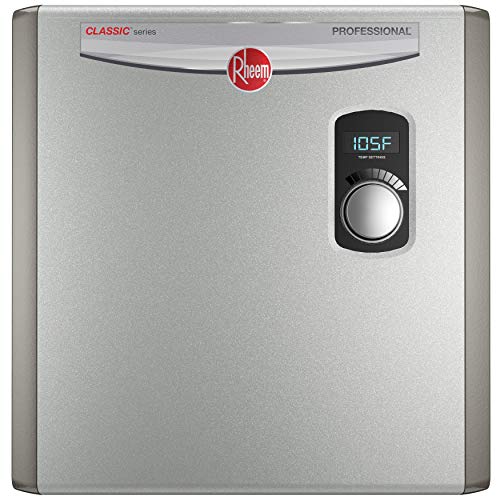
The RTEX-24 is a higher-capacity tankless unit designed for whole-home use, requiring robust electrical service (3 x 40 A breakers and likely a 200 A service). It provides continuous hot water and allows temperature adjustments in 1-degree increments from 80 to 140 degrees Fahrenheit. The product emphasizes performance consistency and considers groundwater temperature effects on rise and flow rates, making it a solid option for homes with higher hot water demand and compatible electrical infrastructure.
Orbek 14kW Tankless Water Heater

The Orbek 14kW electric tankless heater delivers up to 3.38 GPM for 2-3 points of use, with a 240V/60A two-pole breaker requirement. It emphasizes energy efficiency through water-electricity separation to minimize scale and corrosion. This unit is aimed at smaller install points—kitchens or bathrooms with modest flow—where on-demand hot water is desired without a large storage tank. Potential buyers should confirm electrical capacity and circuit availability before installation.
Bosch Electric Mini-Tank Water Heater Tronic 3000 ES2.5
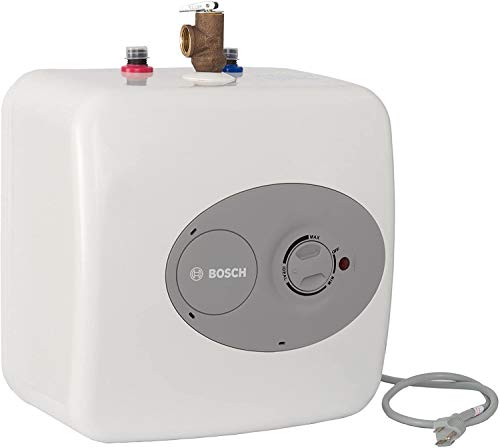
The Bosch ES2.5 is a compact 2.5-gallon mini-tank designed for under-sink use, offering 98% thermal efficiency. It’s a 120-volt unit with a 12 A draw, suitable for locations where hot water is needed directly at the point of use. Its glass-lined tank and compact dimensions (roughly 13.75 x 13.75 x 10.75 inches) support quick, independent installation or inline with larger hot water systems. This model is ideal for small sinks, RVs, or offices needing reliable hot water without a full-size heater.
Buying Guide
- Application and demand: Choose tankless models for on-demand use or select a mini-tank for point-of-use needs. For whole-home use with high flow, ensure the unit matches your home’s hot water demand and electrical capacity.
- Electrical requirements: Tankless units often demand substantial electrical service (amperage, breaker size, and panel space). Plan for dedicated circuits and verify service capacity with a licensed electrician.
- Energy efficiency: Self-modulating and advanced control technologies reduce standby losses and energy use. Compare temperature stability and efficiency claims to real-world performance data.
- Space and installation: Tankless units save space but may require venting, proper clearances, and mountings. Mini-tanks fit under sinks and in tight spots but provide limited hot water capacity.
- Maintenance and durability: Look for durable heating elements (e.g., copper immersion) and field-serviceable designs. For hard water areas, consider scale-prevention features or water conditioning.
- Temperature control: Accessible digital displays and narrow temperature bands improve control. Confirm the acceptable temperature range for your household and safety considerations for children and elderly residents.
- Cost considerations: Upfront unit price varies by capacity and features; lifetime operating costs depend on efficiency, installation labor, and electrical upgrades.
- Scalability: If you anticipate growth or remodeling, choose units with higher GPM ratings or modular configurations to meet future hot water needs.
In evaluating these options, consider your current plumbing layout, electrical panel capacity, and typical hot water usage across sinks, showers, and appliances. The selections here balance compact design with reliable on-demand performance across various home sizes and configurations.