Best Horizontal Electric Water Heaters for Fast, Reliable Hot Water
Whether you’re outfitting a compact apartment, a small salon, or a family home, a horizontal electric water heater can provide steady hot water with space-saving design. This guide highlights five top options that fit a range of needs—from wall-mounted, horizontal units to compact tankless solutions. Each product is evaluated for who it’s best for, why it’s a good fit, and a practical caution to consider before you buy.
| Product | Best For | Key Benefit |
|---|---|---|
| GDIFLS Wall Mounted Horizontal Electric Tank Water Heater | Homes with limited vertical space | Large capacity, fast heating, stable temperature |
| AIYEZIDT Tankless Water Heater Electric 110V | Point-of-use hot water | Instant hot water, ultra-compact, wall-mounted |
| VEVOR 12 Gallon Electric Tank Water Heater | Small apartments or studios | Good storage capacity with efficient insulation |
| EcoSmart ECO 11 Electric Tankless Heater | Energy-conscious homes seeking space savings | Self-modulating, compact footprint |
| Rheem 11kW Tankless Electric Water Heater | Moderate hot water demands | Digital display, self-modulating power |
GDIFLS Wall Mounted Horizontal Electric Tank Water Heater

Type: Horizontal, wall-mounted electric storage heater. Capacity supports continuous hot water for family baths, kitchen tasks, and commercial use in salons or small businesses. Construction features premium stainless steel and plastic, designed to resist rust and withstand heat. Temperature control spans 95–167°F for stable, comfortable output.
Best for: Households needing a balance of hot water capacity and a space-saving horizontal installation. The unit’s large tank accommodates multiple outlets without frequent reheat.
Why selected: This model’s combination of corrosion-resistant materials, fast 20-minute heat time, and broad temperature range makes it a practical all-purpose solution for wet areas like bathrooms, kitchens, and salons.
Caution: As with all storage heaters, consider space for venting and the possibility of standby heat loss if water sits unused for long periods.
AIYEZIDT Tankless Water Heater Electric 110V
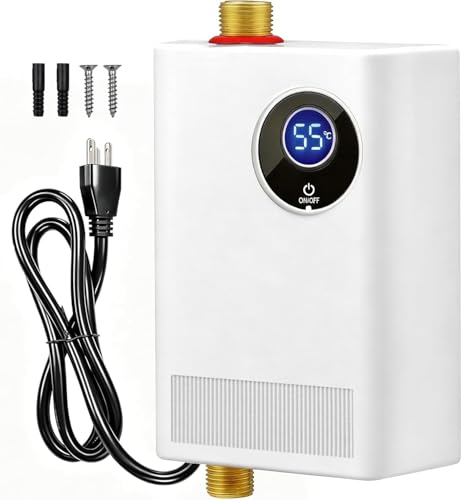
Type: Tankless, under-sink style with 110V input and digital display. Delivers hot water in 3–5 seconds with a maximum temperature around 55°C/131°F. Compact, wall-mounted form—ideal for kitchens, bathrooms, RVs, and apartments.
Best for: Point-of-use applications where space is at a premium and instant hot water is desired at a specific faucet or sink.
Why selected: Its rapid hot water delivery and compact footprint make it a strong choice for travelers, tiny homes, or zones where a full-size heater would be impractical.
Caution: Suitable for limited flow needs; high-demand showers or multiple outlets at once may exceed its capacity. Ensure electrical wiring and mounting comply with local codes.
VEVOR 12 Gallon Electric Tank Water Heater

Type: Storage water heater with 12-gallon capacity, designed for small apartments and studios. It uses fast heating through an extended immersion heating tube and features two outlets for multiple uses. Insulation minimizes heat loss to improve energy efficiency.
Best for: Small households that need reliable, steady hot water for showers and basic kitchen tasks without installing a full-sized unit.
Why selected: The combination of decent storage, fast heating, and a straightforward control system makes it a practical all-around choice for compact living spaces.
Caution: The unit’s insulation helps save energy, but overall efficiency depends on usage patterns; consider counterflow demands to avoid short cycling.
Rheem 11kW Tankless Electric Water Heater
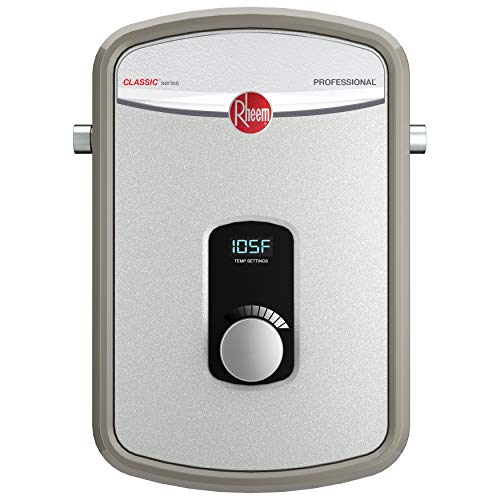
Type: Tankless heater with 11kW input and self-modulating power control. Features an ON/OFF dial with a digital temperature display and a copper immersion heating system. Flow rate reaches up to 2.68 GPM, suitable for single-point or light multi-point use.
Best for: Homes with moderate hot water needs, looking for a compact tankless solution that adapts to demand with stable temperature control.
Why selected: The self-modulating technology helps address energy efficiency while maintaining consistent output, making it a sensible option for apartments or small homes.
Caution: May require professional electrical work and adherence to local electrical codes due to high power draw; ensure your panel and breakers are rated accordingly.
Buying Guide: Key Considerations For Horizontal Electric Water Heaters
- Horizontal vs. vertical installation: Horizontal models save vertical space and are ideal where ceiling height or closet depth is limited. Confirm mounting orientation and clearances in your installation area.
- Storage vs. tankless: Storage heaters provide a steady supply at a known temperature but can waste energy during idle times. Tankless units save energy by heating on demand but may have lower flow at higher temperature settings.
- Capacity and flow rate: For storage models, choose a tank size that supports your household’s peak hot-water needs. For tankless models, check GPM (gallons per minute) ratings and whether multiple outlets can be served simultaneously.
- Temperature control and safety: Look for units with precise temperature adjustment and protection features like overheat, dry-fire, and IP ratings for moisture-prone spaces.
- Electrical requirements: Tankless units often demand higher amperage and dedicated circuits. Verify panel capacity (amps and voltage) and wire gauge before installation.
- Energy efficiency: Self-modulating or high-efficiency designs reduce standby losses and energy use. Compare insulation, heat retention, and control features to estimate long-term savings.
- Installation considerations: Some units are designed for point-of-use mounting, while others require a dedicated space with proper ventilation and access for service.
Frequently Asked Questions
- What is a horizontal electric water heater good for? It optimizes space in tight areas while delivering hot water reliably, whether as a storage unit or a point-of-use tankless solution.
- Do tankless models require different electrical wiring? Yes, many tankless heaters require dedicated circuits and higher amperage; consult a licensed electrician for proper wiring and breaker sizing.
- Is a larger tank always better? Not necessarily. For smaller households, a compact tank or point-of-use unit can provide adequate hot water without excess standby heat.
- How do safety features affect longevity? Overheat protection, dry-fire protection, and moisture-rated enclosures reduce failure risks in humid environments like bathrooms and kitchens.
- Can I install these myself? Some installations are straightforward, but electrical and plumbing work can be hazardous. Follow local codes or hire a professional for installation.
- Are these units energy efficient? Models with self-modulating technology and good insulation typically offer better energy efficiency and lower operating costs over time.