Best Home Natural Gas Detectors for Safer Living and Quick Alerts
Keeping your home safe from gas leaks is essential. This article reviews five reliable natural gas detectors available on Amazon, detailing how they detect leaks, alert you, and support ongoing protection in kitchens, basements, and RVs. Each product below offers real-time monitoring, audible alarms, and easy plug-in setups to help you respond quickly to potential hazards.
Summary Table of Chosen Products
| Product | Brand | Key Feature | Power | Extra |
|---|---|---|---|---|
| Firlarm Natural Gas Detector | Firlarm | Multi-gas detection, 3% LEL alarm | Plug-in 110V–220V | LED display, safety housing |
| Kidde Carbon Monoxide + Explosive Gas Alarm | Kidde | CO plus explosive gas detection | Plug-in, 9V battery backup | Digital display, 85 dB alarm |
| HSTMYFS Natural Gas Leak Detector | HSTMYFS | Detects LPG, LNG, methane, propane, natural gas | AC power | 85 dB audible and visual alert |
| Kidde Gas Alarm (CO & Explosive Gas) | Kidde | CO, propane, natural gas, methane | Plug-in with 9V backup | Digital LED display |
| Xalire Gas Leak Detector | Xalire | Detects multiple flammable gases | AC 110V-240V | LED display, audible alarm |
All five products provide real-time monitoring and audible alerts, with various display and backup power options to fit different home layouts and safety needs.
Firlarm Natural Gas Detector With LED Display

Firlarm’s plug-in gas detector is designed for home use with multi-gas detection, including natural gas, propane, LPG, and LNG. It provides real-time monitoring around the clock, and when gas concentration exceeds 3% LEL, it triggers an 85 dB audible alarm with synchronized red flashing lights. The unit’s flame-retardant PC housing adds safety, and power use remains under 2W. It uses a standard US plug and supports a wide input range (110V–220V), making installation straightforward in kitchens, basements, or RVs. This detector emphasizes rapid response and continuous surveillance for everyday safety.
Kidde CO + Explosive Gas Alarm With Digital Display
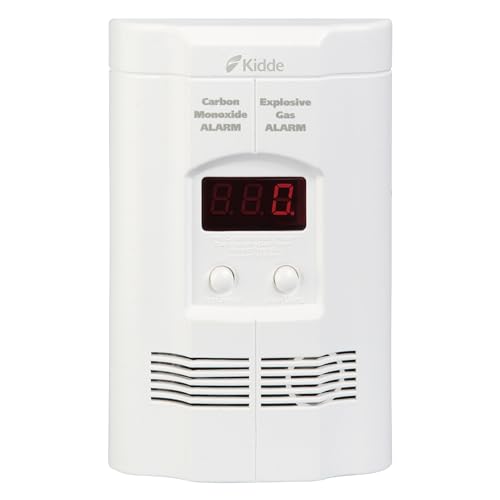
Kidde combines carbon monoxide and explosive gas detection into a single plug-in device with a 9V battery backup. The digital LED display shows the CO level or indicates “GAS” when explosive gases are present. A straightforward installation is possible by simply plugging into a standard 120V outlet. The 9V battery backup ensures continued protection during power outages, providing a reliable safety layer for homes with gas appliances and garages where leaks can occur.
HSTMYFS Natural Gas Leak Detector

HSTMYFS offers a versatile plug-in detector for home, kitchen, or RV use capable of sensing LPG, LNG, methane, and natural gas. It features an 85 dB audible alarm along with a visual alert to quickly draw attention to potential leaks. The device is designed for long-term reliability and safety, with a proven track record of sales supporting its stability. Its broad compatibility with different gas types makes it suitable for households with diverse gas appliances and outdoor setups like RV parks.
Kidde Gas Alarm With Digital LED Display
This Kidde model provides carbon monoxide and detonable gas detection with a plug-in design and 9V backup. The digital LED display shows gas levels and indicates when explosive gas is present, helping users quickly interpret the situation. It’s simple to install in hallways or living rooms near gas appliances and uses the 9V battery backup to maintain protection during outages, offering continuous awareness of indoor air quality and gas hazards.
Xalire Gas Leak Detector For Home And RV

Xalire’s detector is versatile for home and RV use, with support for a range of natural gas and propane varieties. It features an audible alarm and a vivid LED indicator to signpost rising gas levels quickly. The device is designed for 110V-240V operation, offering broad compatibility with different electrical setups. Its compact form makes it suitable for tight spaces like utility rooms, basements, or behind kitchen appliances where leaks are more likely to occur.
Buying Guide: Key Purchase Considerations For Gas Detectors
When selecting a home natural gas detector, consider the following factors to ensure effective protection and ease of use:
- Gas detection scope: Some detectors monitor multiple gases (natural gas, propane, LNG, LPG) whereas others focus on CO and explosive gases. Pick a detector that covers the gas types common in your home or RV.
- Alarm type and intensity: Look for devices with loud audible alarms (85 dB or higher) and visible indicators (LED lights) for quick awareness, especially in noisy kitchens or basements.
- Power and backup: Plug-in detectors with battery backups provide continuous protection during power outages. Consider models with 9V or internal battery backups depending on your needs.
- Display and readability: Digital LED displays help monitor gas levels at a glance. Rotating or adjustable screens can improve visibility in tight spaces.
- Response time and sensitivity: Fast-responding sensors detect leaks quickly. Check product specs for ppm or LEL thresholds and response times to gauge effectiveness in early warning.
- Placement strategy: Install detectors near potential gas sources (kitchens, basements, near furnaces, or RV compartments) but away from direct steam or harsh ventilation that could cause false alarms.
- Durability and safety certifications: Look for flame-retardant housings and devices designed for continuous operation. Certifications or long-term testing histories add confidence in reliability.
- Maintenance: Some detectors require periodic testing and sensor replacement over time. Verify maintenance needs and replacement costs to sustain protection.
- Interoperability: For households with multiple detectors, consider models that support consistent alerts across devices and easy replacement parts or batteries.
In summary, the best choice depends on your space, preferred power source, and whether you want single-gas focus or multi-gas surveillance. A plug-in detector with a backup battery and a clear digital display is typically a strong balance of ease of use, reliability, and rapid alerts for most American homes and RVs.