Best Highest Rated Electric Water Heaters for Home Use in 2026
Looking for the best electric water heaters that deliver reliable hot water on demand? This guide highlights five highly capable electric options suited for different homes and uses. Each choice emphasizes efficiency, ease of installation, and clear performance signals, so you can compare quickly. This list targets buyers who want strong, steady hot water with clear control and robust support for multiple fixtures. Below is a concise buying table to help you compare key specs at a glance.
- Rheem RTEX-24 24kW 240V Electric Tankless Water Heater
- Orbek 14kW Tankless Electric Water Heater 240V
- WINTEMP 36kW Tankless Electric Water Heater 240V
- Rheem 18kW 240V Tankless Electric Water Heater
- GE 18 Gallon Versatile Electric Water Heater
Product Comparison At A Glance
| Product | Type | ON/OFF/Display | Estimated Flow (GPM) | Best For |
|---|---|---|---|---|
| Rheem RTEX-24 | Tankless Electric | ON/OFF Dial with Digital Display | Varies by demand | Whole-home use with high flow |
| Orbek 14kW | Tankless Electric | Digital display | Up to 3.38 | 2–3 fixtures, energy-conscious |
| WINTEMP 36kW | Tankless Electric | WiFi/Display | Up to 8.7 | Large homes, multiple showers |
| Rheem 18kW | Tankless Electric | Digital thermostat | Up to 4.4 | Smaller homes or apartments |
| GE 18 Gallon | Storage Electric | Adjustable Thermostat | Hot water for 1–2 | Compact spaces, easy setup |
Rheem RTEX-24 24kW Tankless Electric Water Heater
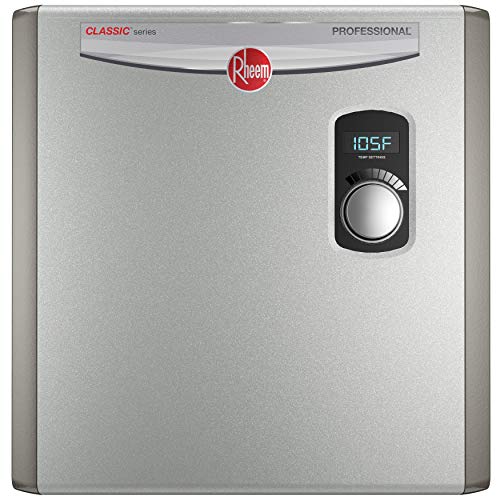
Brand: Rheem. Features include continuous hot water, a 24kW, 240V system, and an adjustable ON/OFF dial with a temperature display. It’s designed to provide steady hot water for whole-home supply in appropriate electrical setups. Best for homes with sufficient electrical capacity and a need for high flow. Caution: Verify breaker and panel capacity before installation to avoid overloading electrical service.
Orbek 14kW Tankless Electric Water Heater

Brand: Orbek. This 14kW unit provides on-demand hot water with a maximum flow of about 3.38 GPM, suitable for 2–3 fixtures. It emphasizes high efficiency and reduced electricity use versus traditional tank heaters. Best for smaller homes or apartments where space and efficiency matter. Limitation: Requires a 240V/60A two-pole breaker and proper wiring; ensure your panel capacity is adequate.
WINTEMP 36kW Tankless Electric Water Heater
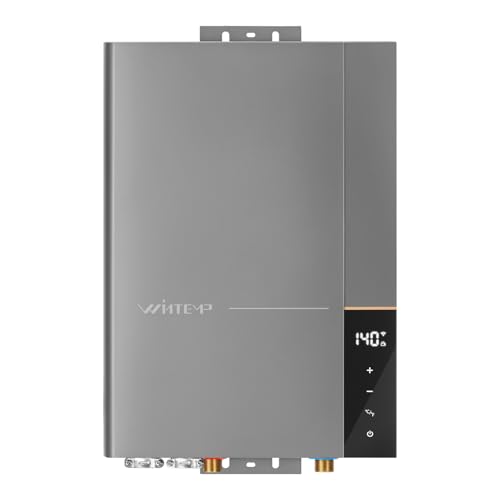
Brand: WINTEMP. A high-capacity 36kW model designed for larger homes, delivering up to 8.7 GPM. It features self-modulating technology for energy efficiency and a WiFi-enabled interface for remote management. Best for households needing multiple simultaneous hot-water outlets. Caution: Installation requires a robust electrical service (300 Amp recommended) and professional wiring oversight.
Rheem 18kW 240V Tankless Electric Water Heater
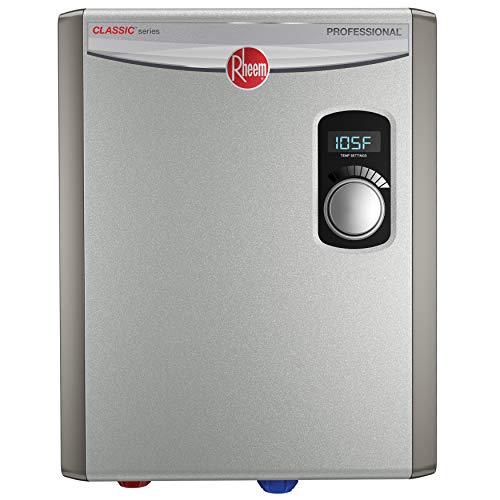
Brand: Rheem. Features include an external digital thermostatic control with an LED display, self-modulation to match hot-water demand, and two durable copper immersion heating elements. It supports up to 4.4 GPM flow. Best for medium households looking for reliable on-demand hot water. Limitation: Optimal performance depends on proper electrical service and inlet water temperature.
GE Appliances 18 Gallon Versatile Electric Water Heater

Brand: GE. This lowboy, 18-gallon storage heater is designed for tight spaces and fits easily where height is a concern. Suitable for a household of 1–2 people, it offers straightforward setup and a standard 240V connection. Best for small homes or apartments needing reliable storage hot water. Caution: Storage heaters do not supply endless hot water; refill time depends on tank size and usage.
Buying Guide: Key Considerations For Electric Water Heaters
What type best fits your home?
Tankless units supply hot water on demand and save space, but require substantial electrical capacity. Storage heaters offer simpler installation and consistent supply but heat and cool with demand. Your choice should align with household size, typical peak hot-water use, and electrical service capacity.
How much electricity can your panel handle?
Many high-capacity tankless units demand 240V service and multiple double-pole breakers. Check the total amperage your service can provide and whether your panel has space for the required breakers and cables before purchasing.
What about flow and temperature stability?
Self-modulating technology and digital thermostats help stabilize water temperature and conserve energy. For larger homes, models with higher GPM ratings ensure multiple fixtures can be supplied simultaneously without a temperature drop.
Installation considerations
Tankless heaters often require professional installation due to venting, gas- or water-line requirements, and electrical work. Storage tanks may be easier to install but require more space and higher standby heat loss. Ensure proper clearances, venting (where applicable), and code compliance.
Safety and efficiency
Look for features like automatic shutoff, dry-fire protection, and leak detection. Self-modulating or demand-based systems save energy by adjusting power use to real-time water flow and desired temperature.
Budget and long-term costs
While tankless models typically have higher upfront costs, they can offer energy savings over time. Storage heaters may have lower initial costs but incur standby heat losses. Consider your long-term energy usage and local utility incentives when choosing.
FAQ
- What is the difference between tankless and storage electric water heaters?
Tankless units provide instant hot water on demand and save space; storage heaters hold a ready reserve of hot water but require more space and may lose heat over time. - Can my electrical system support a high-capacity tankless water heater?
Many require 240V service and multiple breakers. Have a licensed electrician assess panel capacity before installation. - What flow rate should I expect from a tankless model?
Flow varies by model and water temperature. Look for GPM ratings and consider concurrent usage (showers, sinks, appliances). - Is self-modulating technology worth it?
Yes, because it adjusts energy use based on demand, improving efficiency and stabilizing output. - Are there safety features to look for?
Leak protection, dry-fire protection, and automatic shutoffs enhance safety, especially in homes with children or pets. - Do I need a professional for installation?
Tankless systems often require professional installation due to electrical and gas considerations; storage units may be simpler but still require proper setup.