Best High Voltage Programmable Thermostats for Electric Heating
Looking for a high voltage programmable thermostat to control electric baseboard, convector, or fan-forced heaters? This guide highlights five solid options and explains who each is best for. It covers 120–240V systems, simple-to-use models, and non-programmable backups. Ideal buyers include energy-conscious homeowners, renovators replacing old units, and renters seeking straightforward temperature control without complex setup.
Summary of chosen products
| Product | Best For | Key Benefit |
|---|---|---|
| Lux ELV4 Line Voltage Programmable | Budget-conscious bases with 4 daily programs | Simple 4-period per day scheduling |
| meross Matter Smart Thermostat (Electric Baseboard) | Smart home integrators | Matter compatibility across ecosystems |
| Honeywell Home RLV4305A1000 | Accurate, quiet baseboard control | High accuracy and silent operation |
| meross Smart Thermostat (High Voltage, 4-Wires) | New installs with smart features | 4-wire requirement and voice control |
| Stelpro SWT2F Double-Pole Mechanical | High-safety shutoff in cold climates | Fully disconnects power for safety |
Lux ELV4 Line Voltage Programmable 5-2 Day Thermostat

The Lux ELV4 is a line voltage thermostat designed for electric baseboard or convector heaters. It supports 4 program periods per day, making it suitable for typical weekday/weekend routines. Best for buyers who want a straightforward, budget-friendly programmable option with reliable on-screen programming. Caution: it may not be compatible with systems that combine resistive heating elements with inductive loads like blowers, so check your heater configuration before purchase.
meross Matter Smart Thermostat for Electric Baseboard Heaters
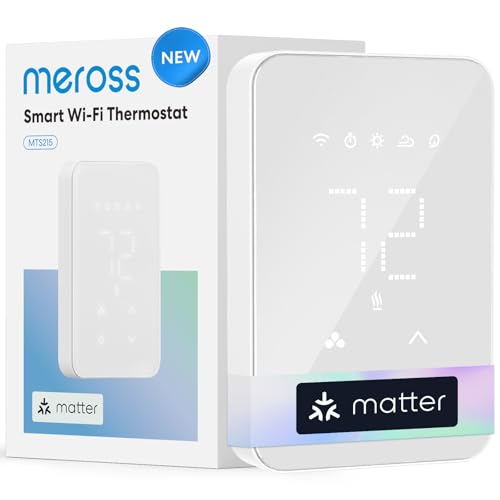
This Meross model is designed for high-line voltage electric heating systems (120–240 VAC) like baseboards and fan-forced heaters. It supports Matter across ecosystems (Alexa, HomeKit, Google, SmartThings) for flexible smart home setups. Best for buyers seeking cross-platform smart control and energy savings. Limitation: not suitable for 24V HVAC systems or setups outside high-voltage electric heat.
Honeywell Home RLV4305A1000 5-2 Day Programmable Thermostat

The Honeywell RLV4305A1000 offers a digital 5-2 day schedule for electric baseboards and related heaters. Notable for its accuracy (approx. ±0.27°F) and TRIAC switching for quiet operation. Best for buyers who want precise temperature control with minimal noise. Caution: it is a non-programmable energy saver approach if you need more than two daily programs.
Honeywell TL8230A1003 Electric Heat Digital 7 Day
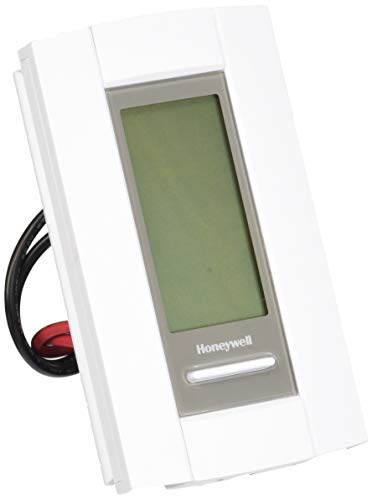
The TL8230A1003 provides a full 7-day programmable schedule for electric heat systems, with precise electronic temperature control and a quiet operation profile. Best for buyers who want full-week customization and higher energy savings potential. Limitation: slightly more complex setup than 5-2 day models.
meross Smart Thermostat for Electric Baseboard (4-Wire)

This Meross 4-wire high-voltage model is install-friendly for smart home users. It supports 120–240V, works with HomeKit, Alexa, and Google, and requires four or more wires for installation. Best for households that want voice control and remote scheduling. Caution: installation can be more involved due to wiring requirements.
Stelpro SWT2F Double-Pole Mechanical Thermostat

The Stelpro SWT2F is a fully mechanical, double-pole thermostat intended for 120–277V systems up to 22A. It provides a robust, safe shutoff with a clear 50–90°F dial. Best for buyers who want a durable, simple mechanical option with enhanced safety in cold climates. Limitation: non-programmable, so less flexible for varying daily schedules.
Buying Guide: Key Considerations for High Voltage Programmable Thermostats
What kind of heating system are you controlling? Verify voltage (120V vs. 240V) and whether your heater is baseboard, convector, or fan-forced, as some thermostats are designed specifically for one type.
Programmable capabilities matter. If you want daily or weekly schedules, choose models offering 5-2 day or 7-day programming. For simple installations, non-programmable or mechanical options may suffice, but they offer less energy savings.
Smart features and ecosystem compatibility can influence future-use. Some thermostats support Matter, HomeKit, Alexa, Google, or SmartThings. Consider whether you need voice control, remote scheduling, or automation.
Wiring requirements affect installation difficulty. Many high-voltage thermostats require multiple wires (often 4 wires). If wiring is limited, consider models that work with your current setup or hire a professional.
Accuracy and noise levels impact comfort and efficiency. Look for specifications like ±0.3°F or better and quiet operation, especially for bedrooms or living areas where thermostat “clicks” can be noticeable.
Safety and disconnect options are critical for power-down scenarios. Double-pole (fully disconnects power) models provide greater safety in cold climates or when full power shutoff is needed.
Frequently Asked Questions
- What is a high voltage thermostat used for? – It controls electric baseboard, convectors, and other 120–240V heating elements to regulate room temperature.
- Do I need a smart thermostat for high voltage systems? – Not always. Smart thermostats add remote control and automation, but programmable non-smart models can be sufficient for basic schedules.
- Can I mix line voltage thermostats with inductive loads? – Some models are not compatible with inductive loads like blowers. Check compatibility with your heater type before purchasing.
- What is the difference between single-pole and double-pole thermostats? – Single-pole models reduce heat by turning off part of the circuit, while double-pole models fully disconnect power for safety and energy efficiency.
- Is installation difficult for high voltage thermostats? – It varies. Some require multiple wires and careful wiring, while plug-in or simpler models may be easier. When in doubt, consult a professional.
- How important is thermostat accuracy? – Higher accuracy minimizes temperature swings, improving comfort and reducing energy use.