Best High Voltage Phase Tester: Top Picks for 3-Phase Work
When working with three-phase electrical systems, a reliable high-voltage phase tester is essential for safety and efficiency. This guide highlights five top-rated testers that help electricians verify phase rotation, detect live wires, and monitor voltage levels with clear indicators. Each product below offers unique features—ranging from rotation indicators and signal bars to dual-range high-voltage detection—designed to support professional tasks and DIY projects alike.
Summary Table of Selected Products
| Product | Brand | Key Feature | Voltage Range | URL |
|---|---|---|---|---|
| BSIDE Voltage Tester | BSIDE | 3-Phase Rotation Indicator, Rechargeable | 6 ranges | Link |
| Fluke 1AC II VoltAlert | Fluke | Audible beeper, 90-1000V AC, CAT IV | 90-1000 V AC | Link |
| Klein Tools HVNCVT-1 | KLEIN TOOLS | Dual-Range High-Voltage Detection | 50V AC to 132kV AC | Link |
| Extech PRT200 | Extech | Phase Sequence Indication | 75-1000 VAC | Link |
| ATOPLEE 3 Phase Sequence Tester | ATOPLEE | 3-Phase Presence, LED/Buzzer | 60V-600V | Link |
BSIDE Voltage Tester: 3-Phase Rotation and Analog Bar

The BSIDE AVX1 voltage tester combines non-contact voltage detection with a built-in 3-phase rotation indicator. It displays rotation as “L” (left) or “R” (right), aiding quick orientation on live systems. A large color screen shows both voltage signal percentage and an analog bar, giving a visual sense of voltage strength. The device is rechargeable, reducing the need for frequent battery changes during long jobs. Its multi-range capability supports a range of common electrical tasks, from residential to industrial. This tester is suitable for technicians who need clear phase orientation and real-time voltage feedback in one compact tool.
Fluke 1AC II VoltAlert: Pocket-Size Phase Voltage Detect

The Fluke 1AC II VoltAlert provides reliable non-contact voltage detection from 90 to 1000 V AC with a CAT IV rating for added safety. A continuous self-test helps confirm the tester is functioning, and a red glow plus audible beeper indicates voltage presence. This compact tool is ideal for quick checks on outlets, switches, and wiring. The high-contrast indicator and built-in test routine make it a trusted choice for field technicians requiring dependable performance in a small form factor.
Klein Tools HVNCVT-1: Dual-Range High-Voltage Tester

The HVNCVT-1 offers dual-range non-contact voltage testing with clear audible and visual signals. Its low range detects 50 V AC to 1.5 kV AC, while the high range covers 1.5 kV AC to 132 kV AC, making it suitable for both low-voltage residential work and high-voltage industrial tasks. Designed for safety, it emphasizes quick voltage presence detection on conductors, cables, and equipment. A sturdy build and user-friendly indicators make it a practical choice for professionals handling mixed-voltage environments.
Extech PRT200 Non-Contact Phase Sequence Tester

The Extech PRT200 is designed to identify phase sequence by indicating clockwise or counter-clockwise rotation, along with live status for multiple phases. It covers a practical input range of 75 to 1000 VAC and a frequency range of 45 to 65 Hz. This tester is well-suited for industrial and commercial electrical setups where correct phase rotation must be confirmed before motor or equipment startup, reducing the risk of damage from incorrect wiring.
ATOPLEE 3 Phase Sequence Presence Tester
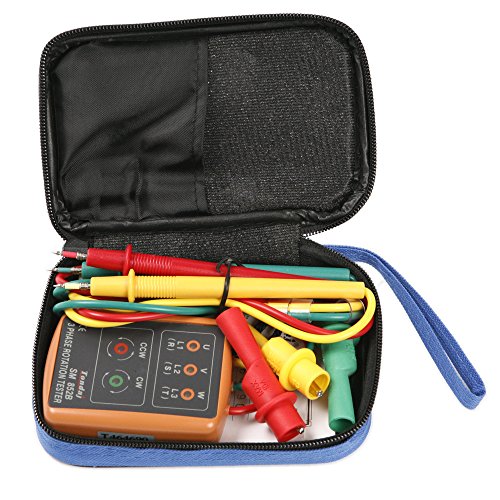
The ATOPLEE 3 Phase Sequence Presence Tester detects three-phase rotation and presence with LED indicators and a buzzer, covering a practical range from 60V to 600V. Its compact design makes it easy to carry on service calls, and it provides quick feedback on phase orientation and live status. The tool is especially useful for installers and electricians who need fast, non-contact confirmation of three-phase order during panel work or motor connections.
Buying Guide: Key Considerations for High Voltage Phase Testers
- Voltage range and dual-range capability: Look for testers that cover low-voltage and high-voltage ranges, especially if your work spans residential, commercial, and industrial settings. Dual-range models reduce the need for multiple tools.
- Phase detection versus general voltage detection: Some devices focus on phase sequence and rotation, while others primarily detect voltage presence. Choose a tester based on whether you need phase orientation, live status, or both.
- Non-contact safety and CAT rating: Non-contact testers reduce the risk of contact with live conductors. A high CAT rating (e.g., CAT IV) is important for higher energy environments.
- Indication method: Visual indicators (LED, color bars, screen readouts) and audible alerts help in noisy or bright environments. Some models offer percent signal display for more precise feedback.
- Display and usability: A clear display or bar graph that shows voltage strength can improve measurement interpretation. Consider devices with battery life or rechargeable options for longer field use.
- Durability and form factor: Compact, rugged designs with protective housings are valuable for on-site use. A pocket clip or belt holster adds convenience.
- Accessories and battery life: Rechargeable batteries, included test leads, and protective cases can affect long-term cost and readiness.
- Safety certifications and use-case alignment: Ensure the tester is suitable for the specific standards you must meet in your region or industry (industrial, electrical, construction jobs).
Choosing the right high voltage phase tester involves balancing the need for accurate phase rotation detection with the environment in which you work. The selections above provide a mix of rotation indicators, non-contact voltage detection, and multi-range capability to support a wide range of electrical tasks. Always follow safety procedures and manufacturer guidelines when testing live systems.