Best High Voltage Ignition Transformer Picks for DIY Projects
Whether you’re building a plasma arc experiment, a spark ignition project, or a scientific display, choosing the right high voltage ignition transformer is essential. This guide highlights five practical options, each suited to different testers—from hobbyists seeking simple, battery-powered operation to professionals needing robust AC or high-voltage output. The selections emphasize safety, clear wiring, and reliable performance for common ignition and arc-generation tasks. Use the buying guide below to compare capabilities and decide which model fits your project goals and skill level.
| Product | Best For | Key Output |
|---|---|---|
| AEDIKO High Voltage Generator (50kV) | Compact, battery-powered sparks | DC 50,000V |
| GODIYMODULES High Frequency HV Generator | Small arc needs, simple run | DC 15kV – high frequency |
| Comidox 15kV Boost Transformer | DIY arc experiments, circuits with diagrams | High voltage secondary |
| HanOaki 15kV Ignition Transformer | Burner/boiler ignition systems | 15kV secondary, integrated pin |
| Walfront DC 4.8–6V to 50–800kV | Small, high-voltage booster modules | 50kV–800kV |
Product sections below present each option with a concise, comparison-friendly overview. Each entry notes who benefits most, practical uses, and a potential limitation to consider before purchase.
AEDIKO 50kV High Voltage Generator

Best for compact, battery-powered ignition experiments. The AEDIKO module converts a 3.7–6V input to a high voltage pulse up to 50kV. It’s suited for hobbyists who want a small, high-energy spark source that can run off a single cell or small pack. The setup is straightforward: connect the switch and battery, and you’re ready to spark. Caution: high voltage can be dangerous; maintain proper insulation and avoid contact with exposed conductors.
Who it’s for: Makers seeking a portable, stand-alone HV source for demonstrations or small ignition tests. Why selected: high voltage in a compact form, simple wiring, and battery compatibility make it a versatile starter option.
Limitation: only the high-voltage side is exposed; ensure safe enclosure and proper mounting to prevent accidental contact.
GODIYMODULES 15KV High Frequency HV Generator

Best for direct arc initiation without manual pull. The driver board uses an H-bridge MOS topology to deliver high driving efficiency with reduced heat. It can start an arc at 1 cm to 2 cm without external arcing assistance, making it suitable for experiments that require quick, repeatable sparks. Caution: handling high-voltage arcs demands protective gear and non-conductive housing.
Who it’s for: Electronics hobbyists and students exploring pulse arcing. Why selected: efficient driver topology and straightforward arc initiation simplify hands-on experiments.
Limitation: higher-frequency operation may require careful heat management and proper shielding to avoid interference.
Comidox 15KV Boost High Voltage Transformer Kit
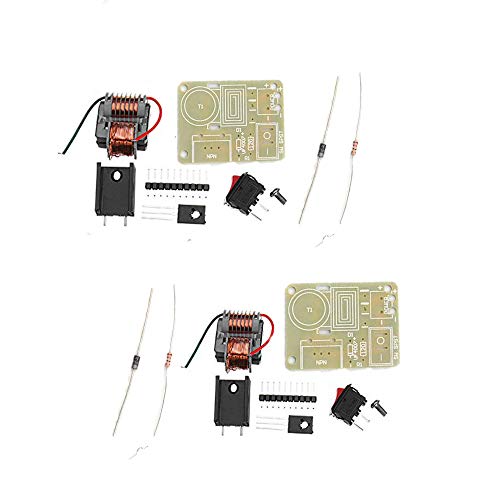
Best for electronics enthusiasts who want a complete kit with a professional circuit diagram. This set includes a PCB board, resistors, diodes, transistors, heatsinks, and a switch for constructing a high-frequency arc circuit. The transformer features primary and secondary windings designed to handle high-frequency pulses, enabling stable arc ignition. Caution: the data indicates very high temperatures during operation; ensure adequate ventilation and flame-safe surroundings.
Who it’s for: DIY builders needing a guided, multi-component solution for plasma-lighting and ignition experiments. Why selected: bundled components and diagram support a smoother build process.
Limitation: requires careful assembly and testing to avoid short circuits or overheating during high-current operation.
DUQTMBDT A06-SA6 Ignition Transformer

Best for standard ignition tasks where a robust, legacy-style transformer is appropriate. The A06-SA6 ignition transformer is commonly used for spark ignition needs in burners and related systems. It provides a straightforward solution for applications that require reliable, high-voltage pulses. Caution: verify compatibility with your ignition circuit and ensure safe handling around hot surfaces.
Who it’s for: Professionals or technicians replacing older ignition components. Why selected: familiar form factor and documented utility for ignition applications.
Limitation: may lack integrated ignition features; integration with your control circuit is necessary for automated use.
HanOaki 15KV Ignition Transformer

Best for automatic ignition systems requiring a stable spark source. HanOaki’s 15kV unit is designed for burners and boilers, offering a high-voltage output with integrated ignition pin and a design aimed at extended service life in demanding environments. Caution: ensure proper heat management and protective enclosure around the high-voltage components.
Who it’s for: Industrial or commercial ignition setups that need a ready-to-use HV source with integrated ignition electrode. Why selected: integrated pin simplifies sparking, reducing maintenance.
Limitation: intended for ignition use; not a general-purpose high-voltage generator for other experiments.
Walfront 4.8–6V to 50kV–800kV Booster Module

Best for compact, high-voltage boosting needs in small experimental setups. This finished module can output 50kV to 800kV from a 4.8–6V input, making it suitable for demonstrations and compact HV projects. Caution: the extreme voltage requires careful insulation, secure mounting, and a non-conductive enclosure to prevent shock or arcing.
Who it’s for: Light to medium-duty HV demonstrations and scientific toy-like experiments where size matters. Why selected: integrated booster design reduces assembly complexity and provides a wide HV range.
Limitation: extremely high voltages demand rigorous safety measures and appropriate protective gear and enclosures.
Buying Guide
What to look for when selecting a high voltage ignition transformer
- Voltage range and intended use: Match the output voltage to your project needs, whether a spark for ignition or a high-voltage arc for demonstrations.
- Input power and source: Consider whether you’ll run from batteries, wall power, or another supply. Battery-powered units offer portability, while mains-powered units may deliver steadier performance.
- Safety features and enclosure: Look for models with clear insulation, protective housings, and safe wiring practices to minimize shock risk and accidental contact with HV components.
- Integrated components: Some models include ignition pins, PCB boards, or driver circuitry that simplify assembly and reliability for specific tasks.
- Size, heat, and cooling: High-voltage work can generate heat; assess whether the device needs heat sinking, ventilation, or compact cooling provisions.
- Ease of wiring: Devices with color-coded leads and straightforward wiring reduce setup errors and improve overall safety.
- Documentation and diagrams: Kits with circuit diagrams or assembly guides help in building stable, repeatable experiments.
FAQ
- What safety precautions are essential when using high voltage ignition transformers?
– Always insulate exposed conductors, use non-conductive enclosures, wear eye protection, and work on non-conductive surfaces. Keep a safe distance from the output and avoid touching wiring during operation. - Can these transformers run from standard batteries?
- Are integrated ignition pins standard across these devices?
- What are common applications for these transformers?
- What is the risk of overheating with high-output HV modules?
- Why choose a kit with a circuit diagram?
– Some models are designed for battery operation, while others require higher-current or mains power. Check the input voltage range and recommended power source for each unit.
– Some models include integrated ignition pins or electrodes, while others are designed to be used with external ignition systems. Verify whether an integrated pin meets your project needs.
– Common uses include spark ignition for burners, spark demonstration arcs, plasma experiments, and educational demonstrations about high voltage.
– High-output modules can heat up during continuous operation. Ensure adequate cooling, ventilation, and shut-off protections to prevent damage and injury.
– A diagram aids correct wiring, improves safety, and reduces the likelihood of misconfiguration in improvised experiments.