Best High Voltage Generator Modules for Powerful and Efficient Boosting
High voltage generator modules are essential components for many DIY electronics projects, scientific experiments, and hobbyist applications. These modules convert low DC voltages into extremely high voltage outputs needed to generate sparks, arcs, or pulses. Below is a summary table of top high voltage generator modules available on Amazon, highlighting their input voltage, output voltage, and key features for quick comparison.
| Product | Input Voltage | Output Voltage | Key Features |
|---|---|---|---|
| AEDIKO High Voltage Generator DC 6-12V | 6-12 V DC | 500KV~1000KV | Tesla coil principle, high efficiency, 2A-5A current |
| ZORZA High Voltage Booster Coil 20KV | 12V AC | 20KV | H-bridge 4-transistor MOS, low heating, arc distance 1-2 cm |
| DEVMO 5PCS 3-6V to 400KV Module | 3-6 V DC | 400,000 V | Pulse current output, 10-20 mm discharge distance |
| DORHEA 3Pcs DC 6-12V to 1000KV Power Module | 6-12 V DC | 500KV~1000KV | Tesla coil based, simple circuit, strong discharge |
| QINIZX DC-DC 3V-4.2V to 1500-2000V Module | 3-4.2 V DC | 1500V to 2000V | Pulse boost, small size, low current, discharge capacitor |
AEDIKO High Voltage Generator DC 6-12V to 1000KV

The AEDIKO high voltage generator module operates on a DC input of 6V to 12V and produces an output voltage ranging from approximately 500,000 to 1,000,000 volts. It operates with an input current between 2A and 5A. The module uses a Tesla coil principle combined with a high-voltage transformer and circuit components to achieve its pulse output. Input and output cables are about 100mm in length. This module is highly efficient and suited for applications requiring very high voltage pulses in a compact size.
ZORZA 20KV High Voltage Booster Coil
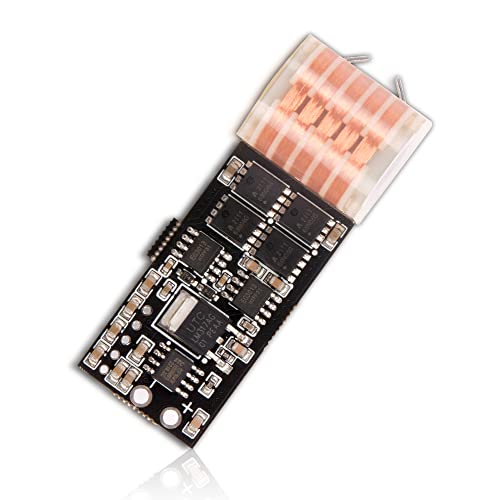
The ZORZA booster coil module is designed for high-frequency AC input at 12V and provides an output voltage of around 20,000 volts. The driver board uses an H-bridge 4-transistor MOS variable frequency resonant topology for efficient power delivery with low heating, eliminating the need for a heat sink. It can generate arcs with a distance of 1 to 2 cm and is capable of melting fine copper and iron wires directly. This module is ideal for users who want reliable arc ignition with minimal thermal stress.
DEVMO 5PCS 3V-6V to 400KV Power Module Set
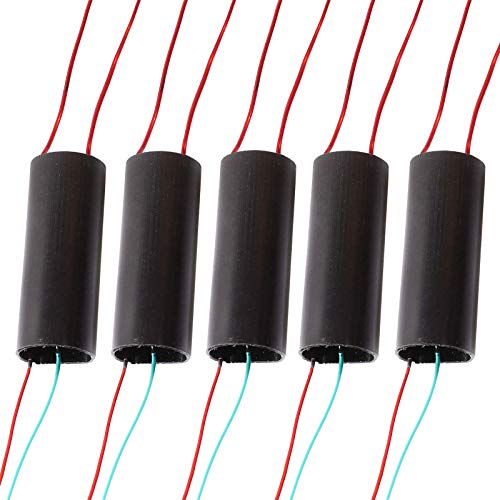
DEVMO offers a pack of five high voltage generator modules that convert a low DC input voltage ranging from 3V to 6V into a high voltage output near 400,000 volts. Each module can generate pulse current outputs with discharge distances between 10mm and 20mm. The modules are versatile for multiple projects and come compact enough for easy integration. Be mindful of high voltage safety when working with these powerful boost step-up modules.
DORHEA DC 6V-12V to 1000KV Boost Step-Up Power Module

The DORHEA high voltage generator module utilizes the Tesla coil principle to convert DC input voltages between 6V and 12V into output voltages up to 1000 kilovolts. Its simple peripheral circuit requires only a switch and battery for operation. The module delivers a strong high voltage pulse current, enabling great discharge intensity. Input wiring is color-coded for easy connection, enhancing user convenience and safety precautions.
QINIZX DC-DC 3V-4.2V to 1500-2000V Pulse Boost Module

The QINIZX boost module operates with DC input voltages from 3V to 4.2V and steps these up to a high voltage output ranging from 1500V to 2000V. With a compact footprint, it generates pulse boosts with an output current of about 0.5 to 1 mA, which can be increased using an external parallel capacitor. This module incorporates a high-voltage discharge capacitor and voltage doubling rectifier circuit to enhance output performance. It is suitable for applications requiring moderate high voltage pulses with efficient energy use.
Buying Guide for High Voltage Generator Modules
Input and Output Voltage Requirements
When selecting a high voltage generator module, consider the input voltage your power source can supply and the desired output voltage for your application. Modules vary from low-voltage inputs (3V) to higher inputs (12V), and output voltages range from a few thousand volts to over one million volts. Choose a module that matches your voltage needs while providing safety margins.
Current Capacity and Thermal Management
Input current ratings typically range from a few hundred milliamps up to several amps. Ensure your power source can meet these currents. Also, consider whether the module requires active cooling or heat sinks. Some modules with advanced circuit designs minimize heat generation and can operate without additional cooling, which can simplify your setup.
Arc Length and Discharge Distance
The arc distance or discharge gap capability is critical, especially for applications like spark generation or ignition. Larger arcs require higher output voltages. Modules indicate typical arc lengths, such as 1 cm to 2 cm or 10 mm to 20 mm. Choose modules providing arcs suitable for your project’s scope.
Circuit Design and Ease of Integration
Some high voltage modules operate on the Tesla coil principle with simple wiring, while others use advanced driver circuits like H-bridge MOSFET topologies. Modules with minimal surrounding circuitry simplify integration and reduce the risk of wiring errors.
Safety Considerations
High voltage electrical components are inherently dangerous. Always observe safety precautions, including insulated wiring, protective casings, and safe handling practices. Modules outputting hundreds of thousands of volts require particular care to prevent electric shocks or damage.
Package Quantity and Budget
Consider if you need a single module or multiple units. Multi-packs can reduce per-unit costs and offer spare modules for experimentation or redundancy. Factor this into your purchase along with your budget and project requirements.