Best High Voltage Electrical Insulators for Safe Power Connections
When choosing high voltage electrical insulators, focus on durability, dielectric strength, and suitability for your setup. This guide highlights five solid options for different use cases—from compact busbar setups to fencing and general high-voltage panels. The top picks are best for professional electrical work, farm fencing projects, and DIY electrical installations that require reliable insulation and easy mounting. A quick summary table follows to help shoppers compare at a glance.
| Product | Best For | Key Benefit |
|---|---|---|
| SQXBK Busbar Insulator 5PCS | Industrial busbar assemblies | Epoxy resin, good insulation, long life |
| TopHomer 10pcs Busbar Insulator | High-temp environments | Strong insulation with weather resistance |
| Zareba Slant Nail Insulator (250 Pack) | Large fencing projects | Extends wire with minimal energy loss |
| MK-CL Polyester Standoff Insulator (4 pcs) | Power distribution cabinets | UL-listed resin, mounting screws |
| MOKIKUBA 4 pcs 2500V Standoff Insulators | High voltage busbar kits | UL-rated materials, robust brackets |
SQXBK Busbar Insulator 5PCS Red Resin SM-25

Best for compact, budget-friendly busbar assemblies in control panels and distribution boxes. The SQXBK SM-25 insulators are made from epoxy resin with M6 nuts, providing reliable insulation and a long service life. This set is suitable for installers who need a simple, economical option for multiple bussing points. The package includes six units, and the product name highlights its compatibility with standard M6 hardware.
Who it’s best for: Electric technicians and installers building or upgrading low- to mid-voltage busbar layouts that require straightforward mounting. Limitations: Not explicitly rated for extreme environmental extremes beyond general insulation duties; verify environmental specs for outdoor use.
TopHomer 10pcs Busbar Insulator, SM-45

Better for demanding environments, TopHomer’s SM-45 insulators emphasize strong insulation, weather resistance, and mechanical strength. They are described as suitable for varying temperatures and humidity, ensuring stable operation of the power system even under harsh conditions. This makes them a solid pick for outdoor panels, industrial facilities, or locations with exposure to the elements.
Who it’s best for: Projects in challenging environments where insulation stability and weather resilience matter. Limitations: Documentation emphasizes performance in adverse conditions, but users should confirm exact voltage and current ratings for their specific system.
Zareba Slant Nail Insulator for Electric Fencing (IWNY-Z)

Ideal for large fencing installations, the Zareba IWNY-Z insulators extend wire from wooden posts while minimizing energy loss. They support a variety of wire gauges, polywire, and polyrope up to 1/4 inch, with a 2.5-inch extension to keep current paths well away from posts. The large pack is convenient for long runs or multiple installations where consistency matters.
Who it’s best for: Farm or large property fencing projects needing scalable insulators. Limitations: Primarily designed for fencing; not a general-purpose indoor insulator for electrical panels.
MK-CL Busbar Insulator, Polyester Standoff

This MK-CL unit provides UL-listed resin-based insulation with screws, designed for use in high- and low-power distribution cabinets. It emphasizes versatility for busbars, copper or aluminum, and other mounting needs. The UL material designation and self-extinguishing properties aim to reduce risk in standard electrical applications.
Who it’s best for: Cabinet builders and installers seeking UL-listed, screw-mounted standoff insulation. Limitations: The description notes it’s suitable for a range of cabinet applications; confirm exact voltage limits for your setup.
MOKIKUBA 4 pcs 2500V Standoff Insulators
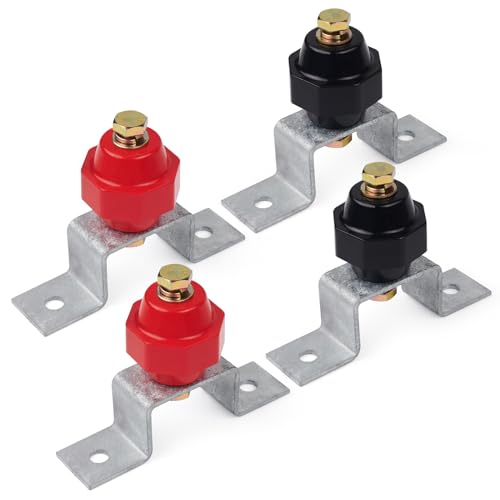
Designed for higher voltage applications, these 2500V standoff insulators come in a kit with mounting brackets. They pair a sturdy bracket system with UL-recognized resin insulators, supporting safe separation and insulation of busbars in power distribution setups or high-voltage panels. The kit-oriented design supports quick installation in professional builds.
Who it’s best for: Installers needing a compact, high-voltage busbar kit with mounting hardware. Limitations: The kit size is limited to four pieces, so plan for larger systems accordingly.
MG Chemicals 4226A Clear Insulating Varnish

For high voltage components and windings, the MG Chemicals 4226A insulating varnish offers a clear coating to prevent arc and corona in transformers, coils, and other energized parts. It adheres to UL EIS standards and is meant to insulate and protect components in operating environments where surface insulation is crucial.
Who it’s best for: Technicians protecting windings, transformers, and high-voltage components with a protective varnish layer. Limitations: It is a coating, not a stand-alone insulator, so use as a supplemental insulation measure within appropriate assemblies.
Buying Guide: Key Considerations for High Voltage Insulators
- Voltage rating and insulation strength: Match insulators to the system voltage. Look for UL or equivalent ratings when available.
- Material and environmental suitability: Epoxy, polyester, and resin-based insulators offer different heat, humidity, and chemical resistances. Outdoor use requires weather-resistant materials.
- Mounting compatibility: Ensure screw sizes (M6, M8, etc.) and mounting hardware fit your busbars or cabinets. Check included hardware in kits.
- Configuration needs: Decide between stand-off insulators, end caps, or fencing insulators depending on whether you’re insulating busbars, fencing wires, or cabinet components.
- Physical dimensions and fit: Verify the length, extension, and thickness align with your panel or post spacing to prevent clearance issues.
- Kit contents and scalability: For larger installations, consider full kits versus individual units. Some products ship in multiples that simplify bulk work.
- Compliance and safety: Prioritize products that meet UL or other relevant safety standards to reduce installation risk.
FAQ
- What is the purpose of a busbar insulator? It provides electrical insulation and mechanical separation for busbar connections, preventing arcing and short circuits.
- Can insulators be used for outdoor high voltage installations? Yes, but choose weather-resistant materials and verify environmental ratings for UV exposure, temperature, and moisture.
- What mounting hardware should I look for? Check the nut/bolt size (e.g., M6, M8) and whether screws are included in the package.
- Are there insulators specifically for fencing? Yes, slant nail insulators extend wire from wooden posts and minimize energy loss, ideal for large fencing projects.
- Do I need UL-listed insulators? UL-listed parts provide recognized safety standards, which is beneficial for commercial installations.
- How many insulators should I buy? Plan for the number of busbar connections, posts, or runs; bulk packs reduce onsite reorders and ensure uniform performance.