Best High End Solar Panels for Serious Home, RV, and Off-Grid Power
If you’re seeking high-end solar panels that deliver superior efficiency, durability, and long-term energy savings, these five top picks are designed for demanding setups. They suit off-grid homes, RVs, boats, and premium installations where space is valuable and reliability matters. The following selections emphasize advanced cell technology, bifacial designs, and robust weather tolerance to maximize energy capture in varying climates. The buyer’s choices below help you compare power, installation needs, and performance guarantees at a high tier of performance.
| Product | Key Benefit | Best For |
|---|---|---|
| 860W Bifacial Solar Panels (STAR) | Very high output with 30-year lifespan and strong wind/snow ratings | Large off-grid systems, farms, luxury installs |
| 800W Bifacial Panels (Epoch) | Double-sided capture with IP68 protection and strong efficiency | RV, boats, remote cabins |
| 720W Modules (Futuresolar) | Half-cut, high efficiency with broad suitability | RVs, tiny houses, commercial off-grid |
| ShadowFlux 400W N-Type (Renogy) | Anti-shading tech, compact design | Limited space, shading-prone rooftops |
| 200W×2 Bifacial (AeternaSol 400W) | Excellent efficiency and durability in a bifacial pair | Compact configurations needing strong output |
860W Bifacial Solar Panels, STAR

These 860W panels use a high-density 430W module per unit and feature a dual-glass encapsulation for longer service life. UL61730 certification and a 30-year expectancy align with North American safety standards, reducing risk for primary residences and remote installations. The design supports harsh environments, with wind resistance up to 2400Pa and snow loads up to 5400Pa. Best for large off-grid systems or ground-mounted setups where space is available and maximum output matters.
Best for: High-energy farms, luxury off-grid homes, and remote cabins needing substantial power in a compact footprint.
Caution: The very high power rating may require specialized inverters and mounting hardware; ensure compatible framing and electrical planning for your site.
800W Bifacial Panels (Epoch)
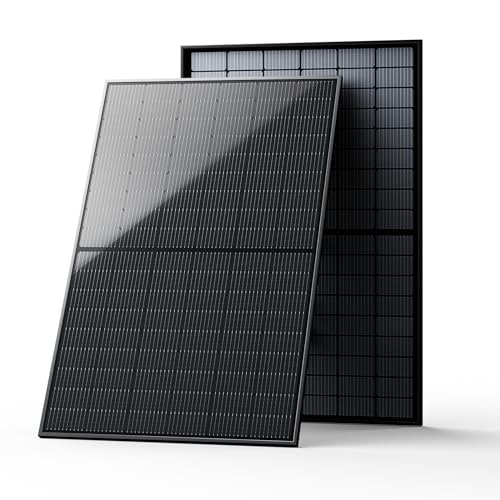
Epoch offers a two-pack configuration totaling 400W per unit as 400W×2 for an 800W system in a bifacial design. The Class A+ grade N-Type cells deliver high conversion with a robust IP68-rated junction box for water resistance. Double-sided capture adds energy from reflected light, boosting daily harvest in varied terrains. Best for RV and off-grid boats where space is limited but demanding power is required.
Best for: RVs, boats, and off-grid cabins where compact high-output panels are paired with weatherproofing.
Caution: Data emphasizes durability and efficiency but real-world gains depend on installation angle and shading; plan for adequate tilt and orientation to maximize rear-face irradiance.
Futuresolar 720W Solar Panels

This pair of 360W modules uses Mono PERC Half-Cut technology to achieve up to 19.5% module efficiency and broad compatibility with off-grid, grid-tied, or hybrid systems. The half-cell design improves shade tolerance and reduces energy loss under partial shading, making it a flexible option for RVs, tiny houses, and marine installations. Best for: Versatile off-grid setups needing strong performance with space efficiency.
Best for: RVs, tiny houses, and hybrid installations where reliable output under variable shading is key.
Caution: While high efficiency is achieved, integration with pre-existing inverters should consider compatible voltages and wiring schemes for optimum results.
Renogy ShadowFlux 400W N-Type

Renogy’s ShadowFlux panels employ N-Type cells with 16BB design to deliver up to 25% efficiency and reduced hot spots. The anti-shading technology minimizes power loss when panels are partially shaded, while the compact 400W frame helps saving space on roof installations. Best for: Small to mid-size roofs where shading is a concern and space is constrained.
Limitation: The anti-shading benefit is most effective with thoughtful placement; avoid heavy partial shading from nearby obstacles to maximize gains.
Renogy 200W N-Type (200W×2)

This 200W panel pair uses N-Type cells with 25% efficiency and 16BB busbars, designed for 12V/24V systems. It is notably compact and lighter than older designs, making it suitable for tight spaces in vans, caravans, or small cabins. Best for: Class B vans and compact off-grid setups where space constraints drive a premium on efficiency and weight.
Limitation: The smaller size concentrates electrical design requirements; ensure mounting brackets and wiring lengths fit your vehicle or hull layout.
Buying Guide: Key Considerations for High-End Solar Panels
Choosing premium solar panels involves balancing power output, space, durability, and system compatibility. Consider these practical questions to guide your decision:
- What is my available installation space and system voltage (12V vs 24V vs 48V)?
- Do I need bifacial panels to harvest light from both sides, or is single-sided sufficient for my setup?
- How important is shading tolerance in my environment (trees, buildings, or reflective surfaces)?
- What mounting and electrical hardware is required (inverters, racking, connectors) for maximum efficiency?
- What climate conditions will the panels face (extreme wind/snow loads, hail, moisture)?
Performance explained simply: bifacial and N-Type designs often yield higher efficiency and better shading resilience compared to standard P-type modules. Half-cut or 16BB busbars reduce resistive losses and microcrack risks, extending service life in demanding conditions. Inverter compatibility, wiring, and mounting choices ultimately determine how much of the panel’s rated output you actually harvest.
Frequently Asked Questions
- What does “N-Type” mean for solar panels?
It refers to a higher-efficiency silicon cell type that reduces degradation and improves performance in high-temperature conditions.
- Are bifacial panels worth it for residential roofs?
They can be, especially when there is reflective ground surface or multiple roof orientations, but gains depend on installation specifics.
- What is “anti-shading” technology?
It refers to design features that minimize power loss when portions of a panel are shaded, improving overall energy reliability.
- How should I size an off-grid solar system with these panels?
Match the total wattage to daily energy needs, available space, battery storage, and inverter capacity, then plan for safe margins.
- Do high-end panels require special mounting?
Some premium modules are heavier or larger; verify rack strength, wind load ratings, and compatible mounting hardware.