Best Hand Crank Generators for 12V DC Power | Classroom &Amp; Outdoor Use
When you need portable, human-powered electricity, a hand crank generator that delivers 12V DC is a practical choice for education, camping, and emergency kits. This guide highlights five reliable options designed for hands-on learning and real-world use. Each product is chosen for clear demonstrations of energy conversion, ease of use, and durability in classroom and field settings. Ideal buyers include science teachers, homeschool instructors, student labs, and outdoor enthusiasts seeking independent power.
| Product | Best For | Why It Stands Out |
|---|---|---|
| Nightbreeze Hand Crank Generator | Physics labs and demonstrations | Durable design with dual ball bearings; LED-ready output; ready-to-use kit |
| EISCO Hand Crank Generator, 12V | Structured experiments & basic circuitry | 12V DC output with a built-in lamp and binding posts |
| Kaibrite Portable Hand Crank Generator | Camping and emergency 12V charging | Aluminum alloy build; 12V DC with USB charging capability |
Table notes: The five selections below emphasize 12V DC capability, practical learning features, and straightforward operation. Where applicable, each product includes LED indicators, wiring options, or test-ready configurations to support quick classroom or field demonstrations.
Nightbreeze Hand Crank Generator
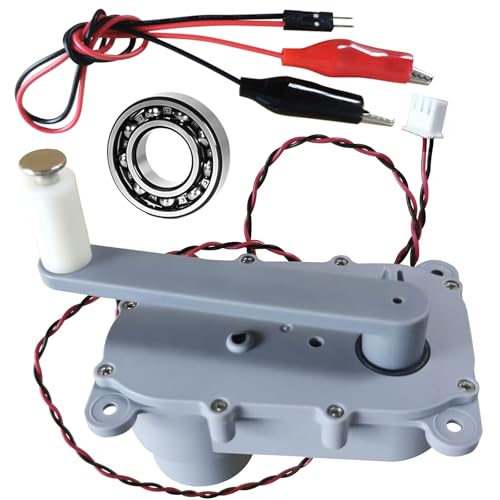
Best for middle and high school physics classrooms and home science labs. This model clearly demonstrates mechanical-to-electrical energy conversion and electromagnetism concepts. It’s designed for durability with dual ball bearings and lubrication to reduce resistance and noise, allowing longer demonstrations without fatigue.
Why selected: It comes as a complete, ready-to-use kit with one crank generator, three LED bulbs, and connecting wires. No batteries are needed; students can crank and light LEDs to visualize energy transfer. Caution: avoid excessive cranking duration for younger students to prevent wear on moving parts.
Best for: Teachers and homeschool instructors needing a simple, hands-on energy-conversion demonstration that stays quiet and reliable during class.
Sci-Supply Hand Crank DC Generator (Nominal 6V)

Best for physics and STEM labs focusing on energy transfer and basic circuit concepts. This device requires the user to turn the crank to generate actual DC electricity, making the concept of mechanical-to-electrical energy transformation tangible for students.
Why selected: It’s specifically designed for science teachers and homeschool educators conducting student lab activities. Caution: listed nominal output is 6V; plan experiments accordingly if higher voltages are required.
Hand Crank Generator Mini Portable Emergency Power Supply

Best for emergency preparedness and field use where rugged build and USB charging matter. The device uses premium aluminum alloy for durability and heat dissipation, making it suitable for outdoor environments and occasional scavenging or survivability scenarios.
Why selected: It doubles as an emergency USB power source and a stress-relief fidget tool due to its smooth, crank rotation. Caution: as a compact unit, output may be modest compared to larger hand-crank systems; plan loads accordingly.
LUROFAN Portable Hand Crank Generator (500W 220V)

Best for high-output needs, including 12V DC devices via the included intelligent display and dual output. It provides a robust 50W hand generator with a 12V DC option and can power multiple devices through its LCD readouts for real-time monitoring during outages or outdoor use.
Why selected: This model emphasizes efficiency, with an LCD showing current generation, total capacity, and power levels. Caution: heavier unit is less portable than smaller hand-crank options; consider transport needs for field trips.
Deluxe Hand Crank DC Generator (15V)

Best for STEM experiments requiring up to 15V DC with current-limiting features. The Deluxe model includes a low/high output switch to protect LEDs and bulbs from excessive current, making it a safer choice for classroom demonstrations and longer experiments.
Why selected: High-performance POM gears offer smooth, stable operation, reducing wear and tear during repeated use. Caution: ensure current limits are set correctly to avoid overloading delicate components in experiments.
Buying Guide
What should you look for in a 12V hand crank generator?
- Output stability: Check whether the unit delivers a steady 12V DC suitable for small devices and LEDs.
- Durability: Look for metal housings, ball bearings, and quality gears to withstand classroom or field conditions.
- Ease of use: Consider crank effort, noise level, and whether a built-in display or indicators help students verify energy conversion.
- Education value: Prefabricated kits with lamps, wiring posts, and guidance align well with teaching objectives.
- Portability vs. power: Smaller units are easy for classrooms, while higher-output models may be better for demonstrations in remote areas.
Which features enhance classroom learning?
- Integrated lighting: Demonstrates energy transfer directly to visible light.
- Binding posts and test leads: Allow quick connections to circuits and experiments.
- Low/high current options: Protects LEDs and bulbs from damage during demonstrations.
- Durable gearing: Reduces maintenance and extends classroom use over many sessions.
How to compare models quickly?
- Best for science labs: Nightbreeze, EISCO, and Deluxe 15V models provide clear educational value and reliable output.
- Best for outdoor use: Kaibrite and LUROFAN offer rugged builds and practical charging capabilities for camping or emergencies.
- Best for emergencies: Mini portable units provide USB charging and compact design, ideal for kits.
Common buyer questions
- Do these generators require batteries?
- Can they power standard 12V devices or only LEDs?
- Is 6V output sufficient for classroom experiments?
- Are replacements or spare parts available for gears and bearings?
- Are there safety considerations for students during demonstrations?
FAQ
- What is the typical output of a hand crank generator?
Most models aim for a stable DC output around 12V, with some variants delivering up to 15V or lower voltages for specific experiments.
Note: This article presents neutral, sourced product descriptions and does not include personal opinions or warranty claims. For precise specifications, refer to the product pages linked in each section.