Best Grow Room Fan Controllers for Climate Control
Maintaining stable temperature, humidity, and airflow is critical for successful indoor growing. A reliable fan controller system can automate ventilation, CO2 management, and grow cycles—reducing manual tweaks and optimizing plant health. Below, five top-rated products, chosen for performance, integration, and smart features, help you tailor your grow room environment with precision.
Summary of Selected Products
| Product | Brand | Key Capabilities | Link |
|---|---|---|---|
| AC Infinity CLOUDLINE PRO T4 | AC Infinity | Temp/Humidity/VPD control, WiFi app, automation, 4” inline duct fan | Amazon |
| AC Infinity CLOUDLINE PRO S6 | AC Infinity | 6” EC motor, wired speed control, intelligent programming compatibility | Amazon |
| AC Infinity Controller 67 | AC Infinity | Bluetooth smart control, temperature/humidity scheduling, dynamic speed | Amazon |
| VIVOSUN GrowHub E42A+ | VIVOSUN | WiFi-enabled environmental control, VPD, timer and cycle automation | Amazon |
| MARS HYDRO iControl | MARS HYDRO | Smart grow room controller, real-time VPD, stage-based automation | Amazon |
AC Infinity CLOUDLINE PRO T4

The CLOUDLINE PRO T4 is a 4-inch inline duct fan designed to ventilate hydroponic grow rooms, transfer heat and cooling, and exhaust odors. It features dynamic temperature and humidity programming, including timers, grow cycles, and a minimum speed setting to maintain a stable climate. The system can be remotely accessed via a WiFi app to view climate data and set automation, making it suitable for small to medium grow setups that require hands-free control and remote monitoring.
AC Infinity CLOUDLINE PRO S6

The CLOUDLINE PRO S6 is a 6-inch inline duct fan with a PWM-controlled EC motor, optimized for quiet operation and energy efficiency. It excels at circulating air in grow tents, transferring heating and cooling to rooms, and exhausting odors while keeping AV equipment and racks cool. It includes a wired 10-speed controller and is compatible with UIS controllers for scalable, intelligent programming, enabling precise, scalable climate management across larger setups.
AC Infinity CO2 Controller

The AC Infinity CO2 Controller is a smart outlet system designed to optimize indoor growth environments by managing CO2 output and removal. It supports and independently programs CO2 regulators and exhaust fans, enabling dynamic CO2 control based on ambient levels. Custom CO2 and fan programming can be configured to respond to CO2 thresholds, making it suitable for labs and larger growing environments where CO2 management is critical for plant health and yields.
VIVOSUN AeroWave E6 Gen2

VIVOSUN’s AeroWave E6 Gen2 is a grow tent clip fan with an EC motor delivering 320 CFM at a low 33 dB(A). It offers a local timer with three cycle settings and a 10-speed range with two modes (normal and natural) for tailored air movement. Its adjustable oscillation and obstacle-detection features help protect the motor while providing flexible coverage across different plant growth stages, making it ideal for targeted airflow in compact grow areas.
AC Infinity Controller 67
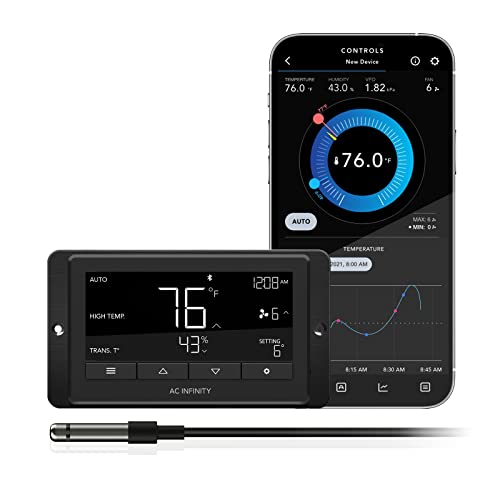
The Controller 67 is a smart Bluetooth controller that equips CLOUDLINE fans with dynamic speed control based on temperature and humidity. It supports auto triggers, timers, grow cycles, scheduling, minimum speed, and smooth transitions. This controller is designed to optimize airflow automatically in HVAC or grow environments, providing an easy upgrade path for existing fan installations and enabling more consistent climate management.
VIVOSUN GrowHub E42A+

The VIVOSUN GrowHub E42A+ consolidates environmental control with WiFi connectivity and one probe for temperature and humidity. It enables unified control of multiple devices, including fans, lights, and humidifiers, with programmable cycles and schedules. The platform supports monitoring data and automation throughout plant growth stages, helping managers optimize VPD and energy use across the grow space.
MARS HYDRO iControl
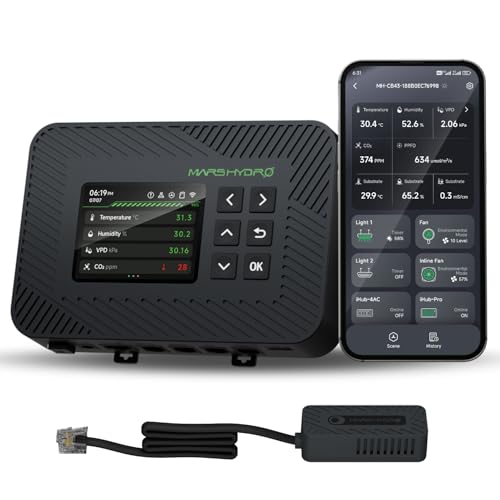
The MARS HYDRO iControl offers advanced temperature and humidity strategies with real-time VPD monitoring. It supports stage-based automation for different growth phases and can automatically adjust fans, humidifiers, and dehumidifiers (RJ12 required) for consistent climate control. Optional sensors for PPFD, soil moisture, and CO2 enable expanded environmental automation, providing data-driven insights for higher yields.
Buying Guide: Key Purchase Considerations
- Compatibility and scale: Consider how many devices you need to control and whether you require single-unit control or a scalable ecosystem that can be integrated with multiple fans, CO2 systems, and lighting.
- Smart features: Look for temperature and humidity triggers, VPD optimization, scheduling, auto transitions, and remote access. WiFi or Bluetooth control can simplify monitoring from a mobile device.
- Energy efficiency and noise: EC motors and PWM speed control help reduce energy use and noise, which is important in quiet home grow setups.
- CO2 integration: If CO2 enrichment is part of your strategy, ensure your controller supports CO2 regulators and exhaust management, with safe, automated activation based on ambient conditions.
- Ease of installation: Some systems install as standalone controllers, while others require adapters or integration with existing equipment. Check wiring requirements and whether a single hub can manage all devices.
- Expandability: For future growth, choose platforms that offer compatible add-ons, sensors, and third-party integrations to avoid overhauling your setup later.
- Data visibility: Access to real-time climate data and historical trends helps you fine-tune settings for stronger yields and less plant stress.
- Reliability and support: Look for reputable brands with strong after-sales support, clear documentation, and firmware update capabilities to fix issues and add features over time.
In summary, a well-chosen grow room fan controller combines precise environmental sensing, automated ventilation, and scalable integration. Whether you prioritize comfort, energy efficiency, or CO2 management, the options above provide robust pathways to maintain optimal growing conditions across various tent sizes and setups.