Best Group 27 Deep Cycle Batteries for RVs and Marine Use
Choosing the right Group 27 deep cycle battery can boost reliability for RVs, boats, and off-grid setups. This guide reviews five top options, highlighting dual-purpose and LiFePO4 choices with real-world suitability for starting engines, powering accessories, and long-cycle life. All selections fit Group 27 trays and offer distinct benefits in terms of lifespan, monitoring, and installation.
| Product | Format | Key Benefit | Approx. Capacity |
|---|---|---|---|
| WEIZE Dual Purpose AGM Battery BCI Group 27M | AGM | Dual-purpose for starting and deep cycling | 92Ah |
| LiTime 12V 100Ah Group 27 LiFePO4 Bundle | LiFePO4 | Long cycle life with Bluetooth monitoring | 100Ah |
| SUPER EMPOWER 12V 100Ah LiFePO4 Group 27 | LiFePO4 | High cycle life with built-in BMS | 100Ah |
| UPLUS BCI Group 27M Dual Purpose Marine Battery | AGM | Starts engines and deep cycles in one unit | 92Ah |
| VMAX XTR27-110 AGM Marine Battery | AGM | High performance sealed AGM with deep cycle capability | 110Ah |
Note: The table reflects five strong options that align with Group 27 sizing and a mix of AGM and LiFePO4 technologies. Each product section below provides in-depth details, including fit, features, and use cases for RVs, boats, and off-grid power systems.
style=”display:none;”>Intro Section
WEIZE Dual Purpose AGM Battery BCI Group 27M

WEIZE’s Group 27M is a dual-purpose sealed AGM battery designed for marine and RV use. It emphasizes high output and a long cycle life, claiming improved durability over traditional flooded batteries. It features quick charging and balanced terminals for easy integration into standard 12V systems.
LiTime 12V 100Ah Group 27 LiFePO4 Battery (2 Pack)

This LiFePO4 option fits Group 27 trays with 100Ah capacity and built-in Bluetooth 5.0 monitoring. It’s tailored for RVs, solar, and marine use, offering smart charge management and longer lifespans compared to lead-acid alternatives.
12V 100Ah LiFePO4 Battery – BCI Group 27 (SUPER EMPOWER)
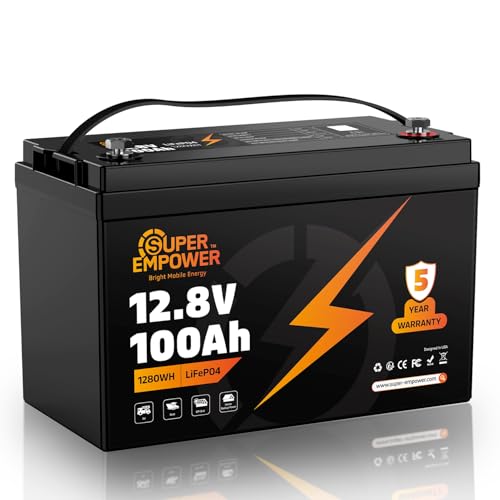
SUPER EMPOWER’s drop-in LiFePO4 solution provides a 100Ah capacity with a low self-discharge and a comprehensive BMS. It emphasizes safety, UL/FCC/UN38.3 certification, and extended cycle life for RV, marine, and solar applications.
UPLUS BCI Group 27M Dual Purpose Marine Battery
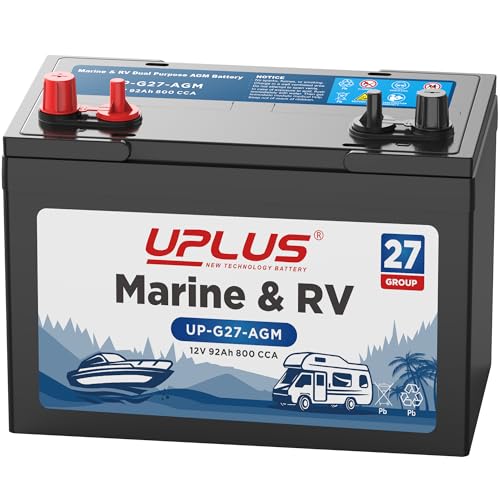
UPLUS’ dual-purpose unit combines starting power for engines up to 350HP with deep-cycle capabilities. The design emphasizes space-saving, vibration resistance, and sealed AGM construction for marine environments and RVs.
VMAX XTR27-110 AGM Marine Battery

VMAX XTR27-110 is a 12V 110Ah AGM battery designed for high performance and resilience against shocks. It features a sealed design suitable for various mounting positions and long life in deep-cycle applications for marine and RV use.
Buying Guide
Key considerations for selecting a Group 27 deep cycle battery include technology type, cycle life, and fit for your application. Below are perspectives to help you evaluate options:
- Technology: AGM batteries (sealed) offer maintenance-free operation and good vibration resistance, suitable for boats and RVs. LiFePO4 batteries provide exceptionally long cycle life, lower weight, and safer chemistry but may require balance and BMS considerations for system integration.
- Cycle Life: LiFePO4 options report thousands of cycles at various depths of discharge, often outperforming traditional lead-acid and AGM in long-term use. If you plan frequent cycling, LiFePO4 can be more cost-effective over time.
- Capacity and Load: Compare Ah ratings and how the battery handles peak starting power vs. deep discharge. Some units emphasize dual-purpose capability, while others maximize one function.
- Size and Fit: Ensure the battery tray and terminals match your RV or boat layout. Group 27 dimensions are a common standard, but terminal layout and height can vary.
- Monitoring and Management: Batteries with built-in BMS or Bluetooth monitoring provide real-time status, state of charge, and temperature alerts, aiding maintenance and safety.
- Charging Compatibility: Check recommended charging voltages and current limits. LiFePO4 cells often require specific charging profiles; AGM units may tolerate broader charging ranges but still benefit from controlled charging to extend life.
- Environmental Considerations: Temperature affects performance and cycle life. Some LiFePO4 models include low-temperature protections, while AGM designs may be more forgiving in varied climates.
When evaluating options, align the choice with your primary use—starting power, deep-cycle energy storage, or a balance of both—and your maintenance expectations. Reading product manuals and verifying compatibility with your inverter, solar controller, and engine accessories ensures reliable performance over time.