Best Group 24 Marine Battery Box Solutions for Boats and RVs
Answering the common buyer question: which Group 24 battery box is best for marine and RV installations? This guide reviews five top options, highlighting who they’re best for, key features, and any limitations. Ideal for boat owners, RV travelers, and anyone upgrading a Group 24 battery setup, these selections help you choose a secure, durable, and compliant power storage solution.
Buying at a glance: the following table summarizes the five recommended products, their primary use case, and standout benefits. Use this as a quick reference when comparing models side by side.
| Product | ||
|---|---|---|
| Attwood 9069-1 Standard Non-Vented Battery Box | Vessels with enclosed compartments | Acid-resistant, fits Group 24 batteries, non-vented lid for moisture protection |
| Seachoice USCG-Approved Battery Box | Regulated marine setups requiring compliance | USCG-approved, acid-resistant polyethylene, includes strap & mounting hardware |
| Camco Heavy Duty Battery Box | Rugged environments, RVs and boats | Durable, anti-corrosion polypropylene with included strap and hardware |
| Newport Vessels Newport Trolling Motor Smart Battery Box | Clean, portable power centers on small crafts | All-in-one power hub with USB and DC ports, external connections |
| GAQUECY Group 24 Battery Tray (2 Pack) | Secure, tool-free installs on multiple vessels | High-impact polypropylene, includes safety strap and quick install |
Attwood 9069-1 Standard Non-Vented Battery Box

Best for: boat owners with enclosed compartments needing moisture protection. This box securely holds standard marine or RV batteries up to 10.125 inches tall, with interior dimensions that support a stable fit. Its acid-resistant polypropylene construction stands up to extreme temperatures from -20°F to +120°F, suitable for challenging marine environments. The non-vented lid protects terminals from moisture and debris, making it ideal where OEM-approved enclosed compartments are used.
Why selected: it combines a precise Group 24 fit with durable, low-maintenance materials and a protective lid for dry, clean battery storage. The enclosure reduces exposure to splash and salt spray while keeping wiring tidy.
Caution: the non-vented design means it is not intended for batteries that require venting in high-heat or sealed compartments where venting may be necessary. Confirm OEM requirements before installation.
Seachoice USCG-Approved Battery Box

Best for: buyers needing Coast Guard-compliant storage for a single Group 24 battery. This acid-resistant polyethylene box provides a robust storage solution with the included hold-down strap and mounting hardware, making it simple to secure and install in a boat or RV. Its dimensions (approximately 10-1/2″ x 7-1/4″ x 10″) align with standard Group 24 battery sizes.
Why selected: USCG approval adds an extra layer of confidence for marine installations requiring regulatory compliance, while the integrated hardware reduces additional purchase needs.
Caution: as with any sealed option, ensure compatibility with your boat’s venting and mounting space. The box is designed for standard Group 24 sizes but always measure before installation.
Camco Heavy Duty Battery Box

Best for: RVs and boats where durability and corrosion resistance are priorities. This Camco box uses lightweight, heavy-duty corrosion-resistant polypropylene and includes a lift-off lid, hold-down strap, foot clamps, and stainless steel screws. It’s designed to fit Group 24 batteries and withstand demanding marine and automotive environments.
Why selected: the included mounting hardware and security strap offer a quick, tool-free, wobble-free install, which is valuable for installations with movement or on rough water. The all-around protective design helps shield terminals from debris and moisture.
Caution: ensure the internal dimensions accommodate your exact Group 24 battery model, as minor variances can occur between brands.
Newport Vessels Newport Trolling Motor Smart Battery Box
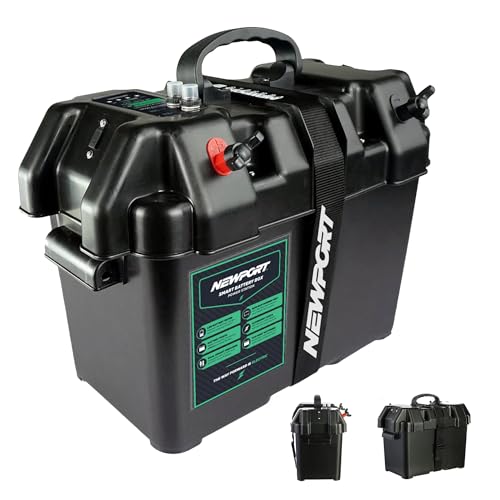
Best for: small boats or kayaks needing a compact, organized power hub. This smart battery box acts as an all-in-one power center with built-in USB and 12V DC ports, offering clean external connections to trolling motors, fish finders, and electronics without exposed terminals. It minimizes wiring clutter on deck or under seats.
Why selected: its plug-and-play design simplifies power management on compact vessels, reducing setup time and improving accessibility. External terminals allow quick connections without crawling into tight compartments.
Caution: while convenient for portable use, verify that the unit’s capacity and port configuration meet your trolling motor and device needs, especially if you require more than two USB ports or higher current draw.
GAQUECY Group 24 Battery Tray For Marine RV

Best for: straightforward, tool-free installation with a secure strap. This Group 24 tray includes a safety strap, buckle, and screws, and emphasizes a snug, secure fit for worry-free installs. The high-impact polypropylene construction resists gas, oil, acid, UV rays, and moisture, helping protect batteries and surroundings.
Why selected: the kit-style approach—strap, screws, and tray—facilitates quick installs without special tools. Raised strap guides promote tight holds for stable mounting on boats or vehicles.
Caution: confirm that the external dimensions fit your mounting space and that the strap’s length is adequate for your chosen battery height and configuration.
Buying Guide: How To Choose The Right Group 24 Battery Box
- Ventilation needs: Decide between vented vs non-vented designs based on battery type and mounting location. Some setups require venting to prevent gas buildup; others benefit from sealed boxes for moisture protection.
- Material and durability: Look for acid-resistant plastics (polypropylene or polyethylene) that withstand salt spray, UV exposure, and temperature variations. Corrosion resistance extends battery life and safety.
- Fit and dimensions: Confirm internal and external dimensions align with your Group 24 battery model and available space. A snug fit reduces movement and wear on terminals.
- Mounting and hardware: Check whether a box includes straps, screws, or mounting hardware. Tool-free installation is convenient for frequent relocations or tight spaces.
- Regulatory compliance: For boats subject to regulations, USCG or other certifications may matter. Compliance can simplify inspections and safety audits.
- Additional features: Built-in handles, external terminals, USB/DC ports, or voltmeters add utility. Consider whether you need a portable power hub or a simple storage box.
- Environmental conditions: For extreme climates, choose products rated for wide temperature ranges and resistance to moisture, oil, and battery leaks.
FAQ
- What is a Group 24 battery box best used for? It’s designed to securely store a single Group 24 battery on marine vessels, RVs, and vehicles, protecting terminals from moisture and debris while providing options for mounting hardware or straps.
- Should I choose a vented or non-vented box? Choose vented if your battery needs venting in your installation space; choose non-vented if your OEM setup requires an enclosed, moisture-protected environment and venting is not needed.
- Do these boxes require tools for installation? Some include straps and hardware enabling tool-free installation, while others may require basic screws or mounting brackets. Check the product details for included installation items.
- Are these boxes compliant with marine regulations? Some models are USCG-approved or designed for marine use; verify regulatory compatibility for your specific vessel and region before purchase.
- Can I use these trays for multiple battery types? Many trays fit Group 24 batteries and support various chemistries, but always confirm compatibility with your battery’s size and weight, plus mounting requirements.
- Is a built‑in USB port necessary? Built-in USB or DC ports are convenient for charging devices and powering accessories, but not required for basic battery storage. Choose based on your onboard power needs.