Best Generator Circuit Breaker Panel Solutions for Safe Off-Grid Power
The best generator circuit breaker panel solutions help you safely distribute standby power to essential circuits while protecting your home electrical system. This guide targets homeowners and small business users who want clear, reliable transfer switch and breaker options. Each product is evaluated for who it’s best for, why it stands out, and any notable limitations. Below is a concise summary table of the five selected products to help you compare at a glance.
| Product | Best For | Key Benefit |
|---|---|---|
| Mixizap 31406CWK 30 Amp 6-Circuit Pro/Tran Transfer Switch Kit | Homes needing a compact 6-circuit transfer panel | Complete portable generator integration |
| Connecticut Electric EmerGen Transfer Switch Kit | Users requiring 10 circuits and easy wiring | NEMA L14-30 compatibility with indoor/outdoor use |
| SIEMENS Q250 50-Amp Double Pole Type QP Circuit Breaker | Enclosures needing reliable 50A, 240V protection | Plug-in convenience and high interrupt rating |
| JINDOUZI THQL 8-Space 125A Main Lug Load Center | Indoor residential or light commercial power distribution | 8-space expansion with robust NEMA 1 steel enclosure |
| RKURCK Thermal Circuit Breaker 20 Amps | Compact, portable projects needing thermal protection | Push-to-reset, wide operating temperature range |
Mixizap 31406CWK 30 Amp 6-Circuit Pro/Tran Transfer Kit

The Mixizap transfer switch kit provides a 30-amp, 6-circuit solution for safely connecting a portable generator to home circuits. It is designed to distribute generator power to essential outlets during outages and is compatible with generators that output up to 7500 watts. This unit uses a 250-volt operating range and features an ON-OFF-ON operation mode with normally closed contacts.
Best for: Homeowners who want a compact, four-to-six circuit transfer option to power essential loads during outages. This kit is a solid pick when you need a dedicated, portable transfer panel for a smaller home or cabin setup.
Caution: Ensure your generator outlets match L14-20 or L14-30 configurations for stable connection. If you require more than six circuits, consider a larger panel or additional transfer equipment.
Connecticut Electric EmerGen Transfer Switch Kit
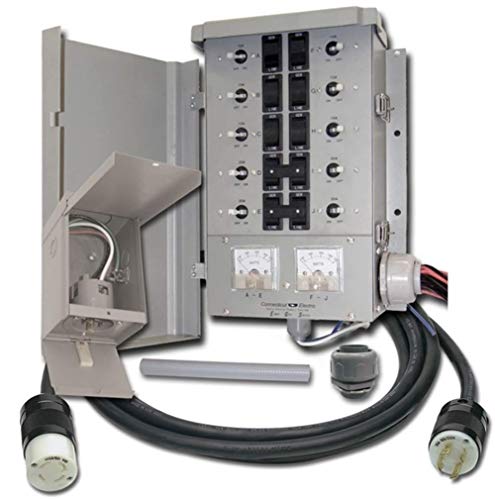
This transfer switch kit is designed for emergency generators up to 30 amps with a NEMA L14-30 receptacle. It provides four two-pole 240-volt circuits, with optional tie bars to add four single-pole circuits if needed. The unit is suitable for indoor or outdoor use and carries a rainproof rating (NEMA 3R) for flexible placement.
Best for: Users who need a reliable, weather-tolerant transfer switch that supports well pumps, sump pumps, or essential HVAC loads in smaller homes or cottages.
Limitation: Installation requires careful wiring and adherence to local electrical codes; outdoor mounting should consider weather protection and proper enclosure.
SIEMENS Q250 50-Amp Double Pole QP Circuit Breaker

This 50-amp double-pole QP circuit breaker delivers high interrupting capacity and convenient plug-in connections for compatible Siemens panels. It is designed for easy installation within Siemens enclosures and supports heavy-duty subpanel protection for larger generator-backed circuits.
Best for: Homeowners or builders using Siemens panels who want a robust, widely compatible 50A protective breaker for main or subpanel protection.
Limitation: Only suitable for Siemens QP-type enclosures; ensure compatibility with existing panel design before purchasing.
JINDOUZI THQL 8-Space 125A Main Lug Load Center
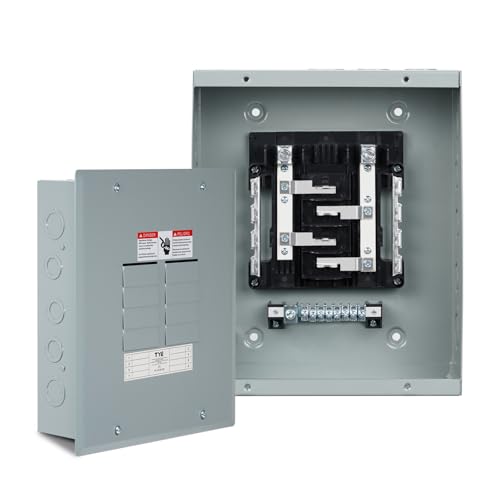
The THQL 8-space panel offers a 125A load center with NEMA 1 steel enclosure, suitable for indoor residential or light commercial power distribution. It supports up to eight one-pole breakers and provides sturdy protection for distributed circuits, enhancing safety and organization in electrical systems.
Best for: Users needing a durable indoor load center with room to expand for multiple circuits, especially in homes or small offices.
Limitation: An 8-space panel may require careful planning for future expansion; verify consumer wiring requirements and local code compliance.
RKURCK Thermal Circuit Breaker 20 Amps

These compact, single-pole push-to-reset thermal circuit breakers operate within a broad temperature range and support up to 20A. They are suited for simple, low-profile protection in smaller electrical projects or modular panels.
Best for: Applications requiring lightweight, thermally protected circuits where space is at a premium.
Limitation: Not a full panel solution—use as a supplementary protective device where thermal protection is specifically needed.
Buying Guide: How to Choose the Right Generator Circuit Breaker Panel
What is your generator and service size?
Identify your generator’s output (amperage and wattage) and the main service rating in your home. This helps determine how many circuits you can safely feed from the generator and which transfer switch or panel is appropriate. For example, a 30-amp transfer switch kit is suitable for smaller homes or essential loads, while 50-amp panels support more circuits and higher power needs.
How many circuits and what loads do you plan to power?
List essential devices (refrigerator, sump pump, furnace, lights) and estimate total load. If you anticipate needing many circuits, choose a panel with more spaces or a kit that expands beyond six circuits. For outdoor or storm-prone areas, ensure the transfer kit or panel offers weather-rated components or suitable enclosures.
Indoor vs outdoor installation considerations
Some transfer switches are designed for indoor use only, while others have rainproof or NEMA-rated features for outdoor mounting. Check enclosure materials (steel vs plastic), weather ratings, and mounting options before purchase to match your installation environment.
Compatibility with existing equipment
Ensure the breaker type (QP, THQL, L14-series, etc.) and the panel design match your current equipment. Mismatches can complicate installation or require buying adapters. If you already use Siemens products, a QP breaker is typically the best match; for other brands, verify compatibility with your enclosure.
Safety, codes, and professional installation
Transfer switches and generator panels involve critical safety considerations and must comply with local electrical codes. Many installations require a licensed electrician. If in doubt, select products with clear installation instructions and adequate protective features to simplify code compliance and reduce risk.
Maintenance and future upgrades
Consider whether you may expand loads or circuits in the future. Panels with additional spaces or modular transfer switches can simplify upgrades. Also, note if components like thermal breakers require periodic testing or replacement to maintain protection guarantees.
FAQ
- What is a generator transfer switch kit? A transfer switch kit safely connects a portable generator to a home’s circuits, allowing power to be routed to essential loads during an outage without backfeeding the utility line.
- How many circuits do I need for essential loads? This depends on your home’s critical devices. Common essentials include refrigeration, sump pump, lights, and furnace controls. A 4- to 6-circuit kit is typical for smaller homes; larger homes may require more circuits.
- Can I install a transfer switch myself? It is possible in some cases, but electrical work can be hazardous. Many jurisdictions require a licensed electrician for safety and code compliance. Always follow manufacturer instructions.
- Do I need a weatherproof transfer switch for outdoor use? If you plan to place the kit outdoors or in damp areas, choose units with appropriate NEMA ratings or weatherproof enclosures to protect against moisture and debris.
- Will a higher amp transfer switch protect my panel better? Higher amperage provides more capacity, but it must match your generator output and main service rating. Oversizing can create safety risks; undersizing may limit power delivery during outages.
- What is the advantage of a main lug load center? A main lug load center offers a compact, expandable option for distributing power across multiple circuits and is useful in indoor spaces where a dedicated main breaker is not required.