Best Gasoline Generators for Home and Outdoor Power
When choosing a gasoline generator, prioritize reliability, appropriate wattage, and whether you need inverter stability for electronics. This guide highlights five well-suited options for home use, camping, job sites, and emergencies. Best for portable, quiet operation is the Ford FG2500IS; best for general power with AVR protection is a GX390-based unit; best for budget AVR protection options include several GX390 models. Each selection targets different buyer needs, from quiet camping power to rugged on-site use.
Summary of selected products:
| Product | Best For | Key Reason |
|---|---|---|
| Ford FG2500IS | Outdoor use and camping | Inverter technology with multiple outlets; quiet operation; parallel capability. |
| GX390 Avr Gasoline Generator (GMOSAOHXU) | Backup power with AVR protection | Automatic voltage regulator and internal safeguards for stability. |
| GX390 Avr Gasoline Generator (Generic) | Economical AVR option | Voltage regulation features for steady output. |
| GX390 Automatic Voltage Regulator (OYFEKNKUZ) | Simple AVR-focused choice | Voltage regulation and core GX390 reliability. |
| Gasoline Generator GX390 AVR (AWPMPX3EP) | AVR-based power at lower cost | Voltage regulation-centric design. |
Ford FG2500IS 2500W Inverter Generator
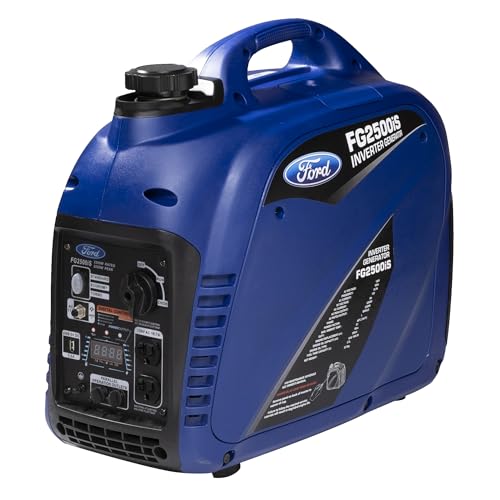
- Powerful 2500-watt peak, 2200-watt running output with a 3.7L fuel tank.
- Inverter technology delivers stable power for electronics.
- Outlets include 2 x 120V 20A, 1 x 12V DC 8A, and a USB port.
- Compact carrying case with easy transport and reduced noise.
Best for: Outdoor enthusiasts, campers, and small job sites that need clean power for laptops, lights, and small tools. The parallel capability option is useful for higher power needs if another unit is available.
Limitations: Moderate run time on a single tank; consider extra fuel or parallel operation for longer sessions.
GX390 AVR Gasoline Generator (GMOSAOHXU)

- Features an Automatic Voltage Regulator (AVR) for stable voltage output.
- Designed for reliable operation with standard GX390 architecture.
- Includes short-circuit protection on rotor excitation and loading output.
Best for: Home backup creators and small businesses needing consistent voltage without complicated controls. This model emphasizes safety and voltage stability.
Limitations: Primarily AVR-focused; may lack advanced outlets present on inverter-style units.
GX390 AVR Gasoline Generator (Generic)
- Voltage regulation features for stable electrical output.
- GX390-based platform suitable for a variety of tasks.
Best for: Budget-conscious buyers who want AVR protection without extra frills. Suitable for basic backup power and light workshop use.
Limitations: Availability and model variance may affect parts compatibility and serviceability.
GX390 AVR Gasoline Generator (OYFEKNKUZ)

- Voltage Regulators for steady output.
- GX390 base with AVR features for improved reliability.
Best for: Buyers seeking a straightforward, AVR-backed GX390 option for essential power needs. Helpful for emergency use and standby power at home.
Limitations: AVR-focused design may not meet all high-demand tool requirements without additional capacity.
GX390 AVR Gasoline Generator (MKJGGII)
- Short circuit protection on rotor excitation and loading output.
- Voltage regulation features for stable power delivery.
Best for: Individuals needing dependable AVR protection with straightforward operation and robust safety features.
Limitations: General AVR focus, so high-output tools may require models with higher wattage.
Buying Guide
What should you consider when choosing a gasoline generator?
- Power needs: Estimate starting watts and running watts for essential devices. Inverter models excel at electronics, while traditional GX390-based units cover higher-demand tools.
- Portability vs. durability: If you move the unit often, prioritize weight, handles, and a protective case.
- Voltage regulation: AVR or inverter stabilization helps protect sensitive electronics and prevents voltage fluctuations.
- Fuel capacity and runtime: Larger tanks provide longer runtimes; plan fuel needs for camping or job sites.
- Outlets and compatibility: Check outlet types (AC, DC, USB) and charging options for your devices.
- Noise level: Inverter units generally run quieter, which is important for camping and residential use.
- Maintenance and parts availability: Choose models with widely available parts and service support.
Choosing the right generator depends on balance among power, portability, and protection features. For electronics-heavy needs or quiet operation, prioritize inverter technology. For steady, general-purpose power, AVR-based GX390 models offer reliable performance at lower cost.
Frequently Asked Questions
- What is the difference between an inverter generator and a standard gasoline generator?
– An inverter generator uses advanced electronics to produce stable AC power suitable for sensitive electronics, often with lower noise and better fuel efficiency. A standard generator provides straightforward power without inverter stabilization, typically louder and less precise for electronics. - How much wattage do I need for essential home backup?
– For basic essentials like a fridge, lights, and a few outlets, consider 2,000–4,000 watts running capacity with surge capability for starting motors. - Are AVR generators enough for home use?
– AVR (Automatic Voltage Regulator) generators provide stable voltage, which helps protect devices. For sensitive electronics, an inverter unit may be preferable for the clean energy output. - Is parallel capability useful?
– Yes, parallel capability allows pairing two compatible units to increase available power, useful for higher-demand scenarios without upgrading to a larger single unit. - What maintenance steps are essential for GX390-based generators?
– Regular oil checks, air filter cleaning, spark plug inspection, and fueling with clean gasoline help maintain performance and longevity. - Can I run these generators indoors?
– No. Gasoline generators emit carbon monoxide; always operate them outdoors in a well-ventilated area and follow manufacturer safety guidelines.