Best Gasoline or Propane Generator Options for Home Backup and Outdoor Use
Looking for a reliable dual‑fuel generator that can run on gasoline or propane? This guide highlights five top options, detailing who each model is best for and why. The focus is on dual‑fuel capability, run time, and safety features like CO sensors or shutdowns. Ideal buyers include homeowners seeking whole‑house backup, campers needing quiet operation, and job sites requiring flexible fuel choices.
| Product | Brand | Fuel Types | Peak Watts / Running Watts | |
|---|---|---|---|---|
| Westinghouse 4650 Peak Watt Dual Fuel | Westinghouse | Gasoline, Propane | 4650 / 3600 (Gas); 4650 / 3240 (Propane) | RV & home backup with multiple outlets |
| DuroStar DS13000MX | DuroStar | Gasoline, Propane | 13,000 / not specified (Gas); 12,000 / not specified (Propane, typical) | High‑power outages or remote job sites |
| PowerSmart 3800 Watt Dual Fuel | PowerSmart | Gasoline, Propane | 3800 / 3300 (Gas); 3500 / 3100 (Propane) | Quiet, portable home backup and camping |
| Westinghouse 13500 Peak Watt Dual Fuel | Westinghouse | Gasoline, Propane | 13500 / 10500 (Gas); 12500 / 9500 (Propane) | Medium‑to‑large home backup with remote start |
| Genkins 4500 Watt Dual Fuel | Genkins | Gasoline, Propane | 4500 / 3600 (Gas); 4200 / 3300 (Propane) | Budget‑friendly dual‑fuel for essential loads |
Westinghouse 4650 Peak Watt Dual Fuel Portable Generator
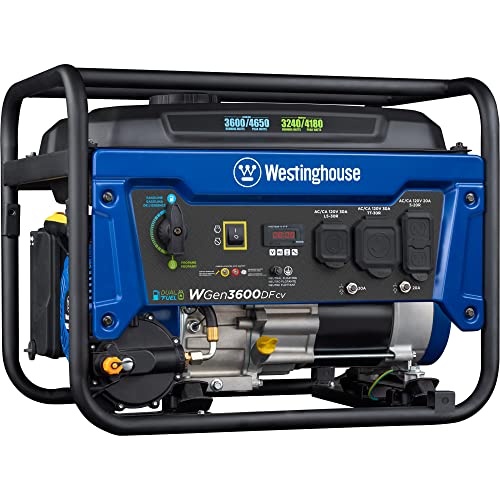
The Westinghouse 4650 Dual Fuel generator offers 4650 peak watts with 3600 running watts on gasoline and 3240 running watts on propane. It runs up to 14 hours per tank on a 4‑gallon fuel tank and includes essential outlets: one 5‑20R 120V, one TT‑30R 30A RV, and one L5‑30R 30A receptacle. With a CO sensor and safety outlets with rubber covers, this unit is suitable for RVs and home backup in moderate power needs. Best for smaller homes or RV setups where dual fuel flexibility and safety are priorities. Caution: shorter run time on propane compared to gasoline can affect longer outages.
DuroStar DS13000MX 13,000‑Watt Dual Fuel Generator

The DS13000MX delivers high‑capacity power with dual fuel capability (gasoline or propane) and remote electric start for easier operation during outages. It is a strong choice for whole‑home backup, job sites, or RV use where maximum wattage is necessary. A CO alert enhances safety by detecting dangerous fumes. Consider this model for larger electrical loads, but be aware of its larger footprint and higher fuel consumption under full load.
PowerSmart 3800 Watt Dual Fuel Inverter Generator
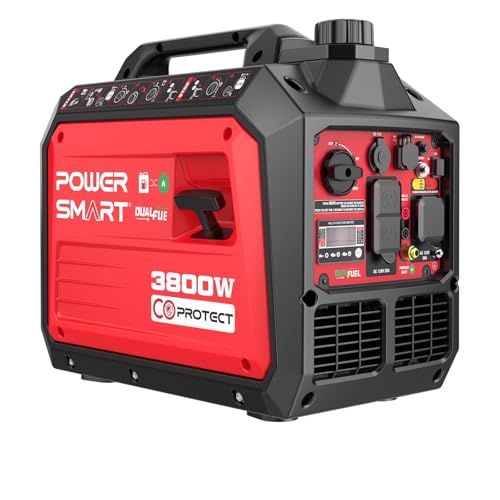
The PowerSmart unit provides 3800 starting watts and 3300 running watts on gasoline and 3500 starting watts and 3100 running watts on propane. It features a quiet inverter design, producing clean power suitable for sensitive electronics (less than 3% THD). It includes RV Ready outlets, a CO sensor, and efficient operation for camping or home backup. Choose this when you need quiet operation and reliable electronics protection. Limitation: lower peak output compared to larger dual‑fuel models.
Westinghouse 13500 Peak Watt Dual Fuel Home Backup

This Westinghouse model provides substantial power with 13500 peak watts (gas) and 12500 peak watts (propane), plus 10500 and 9500 running watts, respectively. It includes a remote start, transfer switch readiness, and a 9.5‑gallon fuel tank with a gauge. Best for larger homes needing robust backup and transfer switch integration. Caution: heavier and less portable than smaller dual‑fuel units.
Westinghouse Outdoor Power Equipment 14500 Peak Watt Dual Fuel

This dual fuel model delivers 14500 peak watts and 11500 running watts on gasoline and 13500 peak / 10500 running watts on propane. It is designed for strong backup capability with remote electric start and transfer switch readiness. Best for larger homes or contractors needing portable, high‑output power. Limitations may include higher cost and larger size.
Westinghouse 5000 Peak Watt Dual Fuel Inverter

Note: This option offers 5000 peak watts and 3900 running watts, with dual fuel capability and an inverter design for clean power. It includes a 30A RV outlet and USB outlets, suited for travel trailers and home backup. Best for users who need a balance of portability and reliable AC power with USB charging capability. Limitation: not the best for heavy, continuous high‑load appliances.
Buying Guide: Key Purchase Considerations
What size power needs should you plan for? Determine the peak wattage you might draw from essential appliances, tools, and devices during an outage. For RV use, prioritize 30A outlets and RV‑ready receptacles. Is fuel availability a concern? Dual‑fuel models offer flexibility when gas stations or propane supply is limited. How important is noise and emissions? Inverter generators typically run quieter and produce cleaner power, better for sensitive electronics. Safety features such as CO sensors, low‑oil shutdown, and rubber outlet covers add protection in daily use. Consider transfer switches for seamless home backup pairing with your electrical panel.
What to compare across models
- Power output: peak vs running watts, and how that aligns with your needs
- Fuel type and run time per tank
- Safety features: CO sensors, low oil shutdown
- Outlets: RV, 120V household, USB, and parallel capability
- Portability: weight, wheels, handle design
Frequently Asked Questions
- What does “dual fuel” mean? It refers to generators that can run on gasoline or propane, providing flexibility in fuel availability and storage.
- Is a CO sensor important? Yes, it can automatically shut down the engine if dangerous carbon monoxide levels are detected, improving safety.
- What is running watts vs peak watts? Running watts indicate continuous power; peak watts represent maximum surge power needed for starting appliances.
- Which is best for sensitive electronics? Inverter generators with clean power output (low THD) are preferred for devices like laptops and CPAP machines.
- How do I choose the right size? Start with your essential loads; add a buffer for startup surges; select a model with higher running watts than your total running load.
- Do I need a transfer switch? For home backup, a transfer switch enables safe, automatic transfer of power from the grid to the generator when outages occur.