Best Gas Welding Hose Options for MIG and TIG Welders
Finding the right gas welding hose pipe depends on your setup, gas type, and workspace. This guide highlights five top options best suited for different needs—short lengths for tight spaces, long runs for large shops, and versatile hoses for TIG and MIG welders. Each pick emphasizes durability, compatibility, and clear usage guidance to help you choose confidently.
Buying Quick Reference
| Product | Best For | Length | Key Benefit |
|---|---|---|---|
| RX WELD Argon Hose 5FT | Compact setups | 5 ft | Flexible, high burst rating |
| Pidnsrozo 15FT Argon Hose | Standard TIG/MIG rigs | 15 ft | Balanced reach and stiffness |
| Pidnsrozo 50FT Argon Hose | Long runs, fixtures | 50 ft | Long reach without excessive slack |
| OYHBO 6.56FT Argon Hose | Versatile, cold environments | 6.56 ft | Good torque resistance and toughness |
| RainBello Oxygen/Acetylene Twin Hose | Cutting and brazing sets | 25 ft | Color-coded, twin-line safety |
RX WELD Argon Hose 5FT — Best for Tight Workspaces
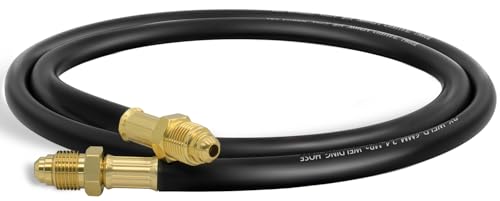
The RX WELD 5FT Argon Hose is designed for MIG and TIG welding with a 1/4″ ID for stable flow at maximum torque. It features 5-foot maneuverability to minimize kinking and regulator pulls, and a 300 PSI industrial-grade rubber construction with a 900 PSI burst rating to prevent leaks under high pressure. This hose is best for compact shops or setups where hose length needs to stay tidy while preserving gas flow.
Best for: welders working in tight spaces, detailed TIG work on aluminum, and users seeking minimal hose slack from tank to torch. Caution: shorter hoses can limit reach in large setups; pair with a longer line if you need more distance.
Pidnsrozo 15FT Argon Gas Hose — Balanced Reach

This 15FT hose from Pidnsrozo offers a middle-ground length for TIG/MIG systems and is compatible with standard regulators and argon/CO2 mixtures. It uses a three-layer, explosion-proof design with rubber core, polyester braid, and a UV-resistant outer layer, rated for up to 200 PSI working pressure. It’s suited for typical shop layouts and adapters common in TIG/MIG setups.
Best for: general-purpose welding operations needing more reach than a 5 ft line without going to the full 50 ft. Limitations: avoid using in environments with extreme heat where longer lines are impractical.
Pidnsrozo 50FT Argon Hose — Long-Run Reliability

The 50FT Argon Hose from Pidnsrozo is ideal for larger shops or fixed-line setups where mobility is less critical than reach. It delivers a 200 PSI maximum working pressure and a 900 PSI burst pressure, with premium rubber construction designed to resist abrasion and withstand cold and hot environments. It’s best for fixtures, benches, and welding stations that require distance between gas source and work area.
Best for: shops with fixed workstations or long runs between regulator and torch. Caution: longer hoses can be bulkier; ensure your pathway allows smooth routing and reduces trip hazards.
OYHBO Inert Gas Hose 6.56FT — Durable All-Rounder

The OYHBO hose offers 6.56FT of flexibility with 300 PSI working pressure and 600 PSI burst pressure. It uses crimped 5/8 UNF-18RH fittings at each end and is built for durability in tough environments, including cold weather tolerance. The rugged rubber and protective design make it suitable for TIG/MIG welding with argon, CO2, or helium mixtures.
Best for: users needing a reliable mid-length hose with strong pressure tolerance in varied temperatures. Limitation: ensure you have compatible fittings on your regulator for a secure seal.
VECKYJL Argon Hose 30FT — Wide Compatibility
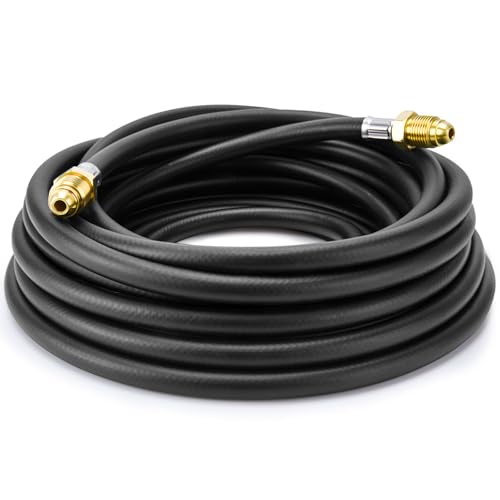
This 30-foot argon hose by VECKYJL combines durability with wide compatibility, featuring a 300 PSI working pressure and 300 PSI capacity. It uses a rubber body with brass fittings to improve leak resistance and reduce cracking. The length makes it suitable for workshops with distant regulators or when routing hoses around complex workspaces.
Best for: welding stations requiring a longer reach without excessive bulk. Caution: longer hoses increase potential for tangling; use hose reels or clips to manage routing.
Buying Guide: Gas Welding Hose Pipe Essentials
- Length considerations: Choose a length that minimizes slack without creating tripping hazards or kinking risk. Short hoses suit tight benches; long hoses suit fixed stations.
- Pressure rating: Confirm working pressure and burst rating match your regulator and gas supply. Higher PSI ratings provide greater safety margins for TIG/MIG tasks.
- Fittings and compatibility: Ensure 5/8″ UNF-18RH or matching fittings align with your regulators and flowmeters. Check end fittings on both ends.
- Material and durability: Rubber hoses are common and flexible; look for abrasion resistance, oil resistance, and ozone resistance for longevity in shops.
- Environmental tolerance: Temperature range matters. Some hoses tolerate -40°F to 150°F or more for outdoor or cold environments.
- Safety features: Explosion-proof layers and UV-protected outer sheaths can prevent leaks and extend hose life in harsh settings.
- Gas compatibility: Inert gases (argon, CO2, helium) are used for MIG/TIG. Ensure the hose is rated for your gas mix and regulator setup.
- Protection and routing: Consider hoses with protective covers or braided reinforcements to reduce wear and tangling over time.
Frequently Asked Questions
- What length should I choose for a small shop?
– A 5–15 ft hose is typically best to minimize clutter while keeping a comfortable reach. - Can I use any gas hose for TIG and MIG welding?
– Use hoses rated for inert gas systems and confirm compatibility with your regulator and flowmeter. - What is a safe working pressure for argon welding hoses?
– Most common hoses handle up to 200–300 PSI working pressure; confirm with your regulator specifications. - Are there advantages to a longer hose?
– Yes, longer hoses reduce the need to reposition tanks, but they can add weight and routing complexity. - Should I choose a multi-layer protection hose?
– For harsh environments, a three-layer or protective cover hose helps prevent leaks and damage. - Is twin-line hose safer for oxy-acetylene?
– Twin-line hoses are color-coded for oxygen and acetylene, improving identification and reducing cross-connection risks.