Best Gas and Electric Heaters for RVs, Homes, and on-the-Go Use
If you’re shopping for reliable space heating or water heating solutions, you want options that are safe, efficient, and easy to install. This guide highlights five purpose-built products that cover both gas and electric heat needs, including portable heaters and RV water heaters. It’s ideal for RV owners, tiny-house enthusiasts, campers, and homeowners needing versatile heating. Each product is chosen for clear use-cases, practical features, and straightforward installation. A quick comparison will help you decide which unit fits your space, power source, and hot-water demands.
Summary table of selected products:
| Product | Type | Best For | |
|---|---|---|---|
| Mr. Heater 9,000 BTU Portable Buddy | Gas space heater | Small spaces, indoor/outdoor use | Portable, radiant heat, 225 sq ft coverage |
| KINGRVER 6 Gallon RV Water Heater (Gas/Electric/Hybrid) | RV water heater | Off-grid trips, mixed heat modes | Three modes: gas, electric, hybrid |
| Rheem RTGH 8.4 GPM Tankless Water Heater | Gas tankless water heater | Residential indoor hot water, continuous supply | High flow (up to 8.4 GPM) |
| Orbek RV Tankless Water Heater | Gas on-demand water heater | RV families, quick hot water | 60,000 BTU/min output; 12V ignition |
| KINGRVER 6 Gallon RV Hybrid Water Heater | Hybrid RV water heater | Faster hot-water recovery | Gas and electric modes; direct spark ignition |
Mr. Heater 9,000 BTU Portable Buddy Radiant Propane Heater
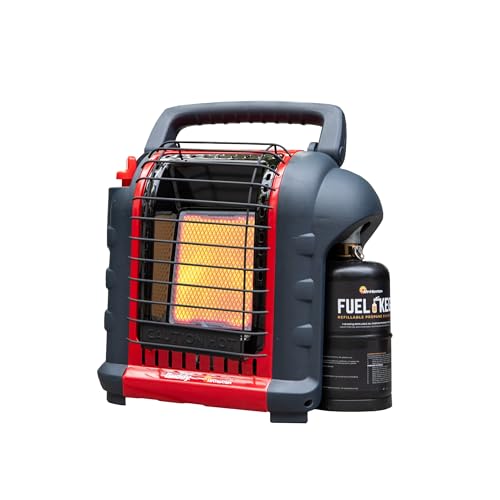
The Mr. Heater Portable Buddy provides 4,000 or 9,000 BTU/hr radiant heat for small to midsize spaces. It is designed and approved for indoor and outdoor use and is best for compact rooms, workshops, or tents where portable warmth is needed. This model emphasizes instant heat with simple controls, making it a solid choice for a temporary heat solution. A limitation is that radiant heat can be less efficient in very large spaces or rooms with poor ventilation. Best for anyone needing quick, portable warmth in tight areas.
KINGRVER 6 Gallon RV Water Heater — Gas, Electric & Hybrid

This KINGRVER model supports gas, electric, or hybrid heating, tailored for most 4–6 gallon RV water heater cutouts. It offers a three-mode system and a quick installation guide, with 24/7 support for setup questions. It is best for RV travelers who want flexibility to heat water with available power sources and who value DIY-friendly installation. A potential drawback is depth and space requirements for installation, so measure your cabinet carefully before purchase.
Rheem RTGH Series 8.4 GPM Tankless Water Heater
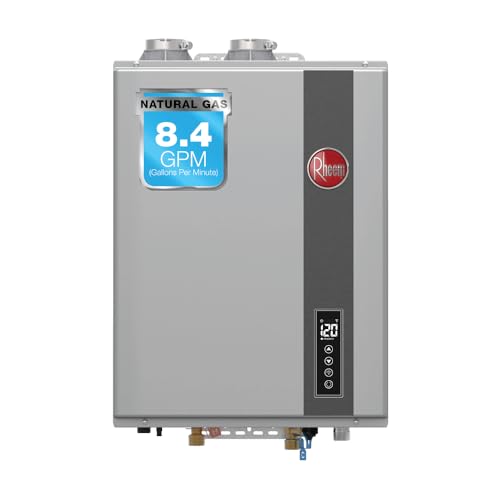
The Rheem RTGH84DVLN3701171 offers a flow rate up to 8.4 GPM with heating temperatures ranging from 100 to 140 F, default at 120 F, and electric ignition. It’s designed for residential indoor use where continuous hot water is important. Choose this for steady, on-demand hot water without storage tanks. A consideration is that installation may require venting and proper clearances for indoor use, which should be planned during site assessment.
Orbek RV Tankless Water Heater
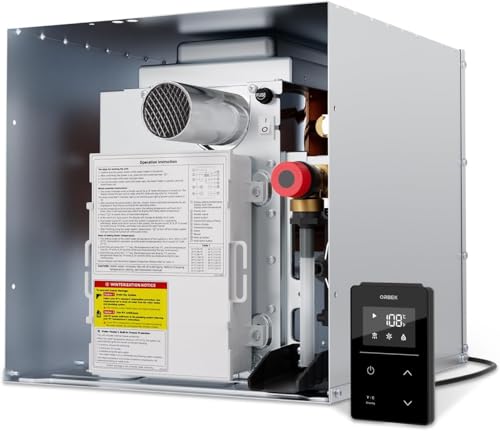
The Orbek RV Tankless Water Heater provides instant hot-water supply with 60,000 BTU/min output and a 12V DC ignition system designed for RV operation. It’s best for families on the move who need rapid hot water for showers and dishes. It’s notable for high altitude suitability and energy-conscious staged combustion. A limitation is the requirement for proper RV electrical and gas infrastructure to support ignition and operation.
KingRver 6 Gallon RV Hybrid Water Heater

This hybrid model supports both gas and electric heating modes, usable separately or together to speed up hot-water recovery. Its porcelain-lined steel tank and Direct Spark Ignition (DSI) enhance reliability in RV environments. Best for RV users who want flexible heating and faster hot water, especially during peak-demand periods. A caution is that combined heating may require attention to propane supply and electrical availability in your campsite setup.
Buying Guide
What should you consider when choosing a gas or electric heater or water heater?
- Space and installation: Measure the area where the unit will sit and verify clearances and venting requirements for gas-fired appliances.
- Power source compatibility: Assess whether you have reliable electric supply, propane access, or both, to decide between electric, gas, or hybrid options.
- Hot-water demand: For showers and chores, calculate peak flow needs (GPM for tankless units) or anticipate storage capacity for tanks.
- Ventilation and safety: Ensure proper ventilation for gas systems and install CO detectors if required in enclosed spaces.
- Maintenance and service: Look for models with straightforward maintenance and readily available replacement parts or support.
- Installation complexity: Some units are DIY-friendly; others may require professional installation due to electrical, gas lines, or venting needs.
Practical comparison considerations
- Best for portability: Mr. Heater Portable Buddy is ideal for temporary warmth in small spaces.
- Better for RV hot water on the go: The KINGRVER and Orbek tankless options provide on-demand hot water with flexible fuel sources.
- Choose this if you want a steady indoor water supply: Rheem’s tankless system offers high GPM and reliable ignition.
- Avoid this if your space lacks venting or detection: Gas units require appropriate safety setups and clearances.
Frequently Asked Questions
- What’s the difference between gas and electric heaters for RVs?
Gas heaters provide fast heating and don’t rely on shore power, while electric units depend on available electrical supply and can be easier to install on limited setups. - Are tankless water heaters better than traditional tanks?
Tankless units deliver endless hot water and save space, but installation complexity and higher upfront cost can be considerations. - Can I install these heaters myself?
Some models are DIY-friendly, but others require venting, gas line work, or electrical wiring. Always follow manufacturer instructions and local codes. - What safety features should I look for?
Look for electric ignition, stable temperature control, carbon monoxide awareness, and proper ventilation in gas units. - How do I determine hot-water needs?
Estimate peak GPM for showers, sinks, and appliances; tankless units scale to higher demand, while tank models store a limited amount of hot water. - Do these units work in RVs at high altitudes?
Some models are designed to handle high-altitude operation; verify performance specifications for your route.