Best Fuse Block With Negative Bus for Clean DC Wiring and Easy Maintenance
When selecting a fuse block with a negative bus, the goal is clear: secure, organized power distribution for 12–24V systems with reliable circuit protection. These blocks are best for boat, RV, automotive, and off‑grid setups where multiple fused circuits demand a shared ground. The top picks below balance capacity, ease of labeling, and durable construction. They’re ideal for tech enthusiasts, boaters, RV owners, and professional installers seeking a tidy, safe power distribution hub.
| Product | Circuits | Max Capacity | Ground/Bus | Notes |
|---|---|---|---|---|
| Blue Sea Systems ST Blade Fuse Block 12 Circuit (5026) | 12 | 100 A | Integrated negative bus | Best for larger DC systems needing many fused branches |
| Blue Sea Systems ST Blade Fuse Block 6 Way (5025) | 6 | 100 A | Integrated negative bus | Compact option for mid‑size systems |
| Nilight 6 Way Fuse Block | 6 | Max 30 A per circuit | Integrated grounding | Budget‑friendly, easy wiring |
| ELECTOP 6 Way Fuse Block | 6 | Max 20 A per circuit, 75 A panel | Integrated cover and negative bus | Durable, splash‑proof design |
| Cyrico 12 Circuit Fuse Block | 12 | 100 A | Negative bus | Includes labels and protective cover |
Blue Sea Systems ST Blade 12 Circuit with Ground and Cover

The 12‑circuit model provides a built‑in negative bus for shared ground connections, with a total capacity up to 100 amps and up to 30 amps per circuit when used with standard blade fuses. The insulated, clear cover locks securely and includes space for spare fuses and recessed labeling for straightforward maintenance. This option is best for larger boats, off‑grid rigs, or RV systems that demand many separate, fused branches. It is better for users who prioritize a single‑unit, high‑circuit solution with organized ground management.
Best for: moderate to large DC systems needing many fused outputs with integrated grounding. Consider this if you anticipate wiring multiple accessories or components that require independent protection under one enclosure. Limitation: per‑circuit fuse sizing should align with planned loads to avoid exceeding individual circuit current.
Blue Sea Systems ST Blade 6 Way Fuse Block with Negative Bus
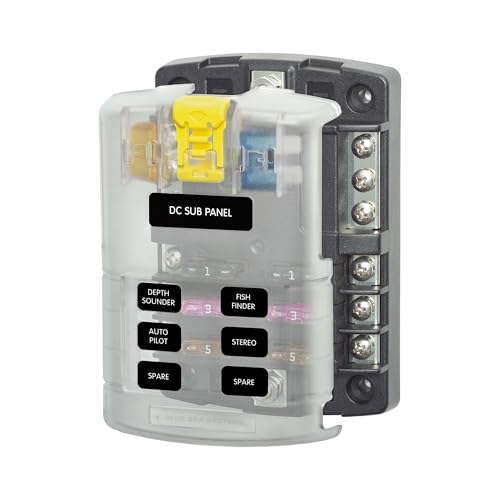
This six‑circuit block combines fused branches and a ground bus in a single unit, rated up to 100 amps total capacity with support for up to 30 amps per circuit when using standard ATO or ATC fuses. The insulating cover features a push‑button latch, integrated spare fuse storage, and recessed label areas for easy circuit ID. It’s well suited for compact installations, such as smaller boats or vehicles where space is at a premium. However, users should plan fuse sizes carefully to avoid under‑ or overloading individual circuits.
Best for: compact systems needing a reliable, ground‑protected distribution point. Choose this if space is limited but you still require organized, multi‑circuit protection. Limitation: 6 circuits may be insufficient for expanding setups.
WUPP 12 Volt Fuse Block with LED Indicator
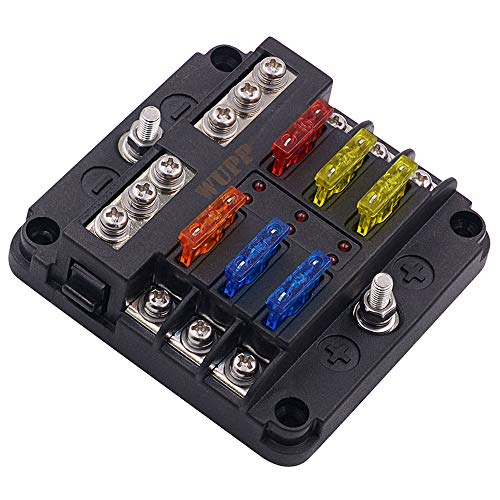
WUPP’s 12‑volt fuse block provides six circuits plus a negative ground bus, with an LED warning indicator for quick fault identification. It is designed for 12–24V systems and includes six fuses and six grounding points to keep wiring neat and accessible. The unit supports a total input rating of 32V and 100A, with each circuit producing a maximum of 30A. This block suits boaters and RV operators who want visible fault cues and tidy wiring. Caution: some voltage may remain across a circuit even after a fuse is blown due to internal indicators and lighting circuits.
Best for: users who value onboard fault indication and straightforward installation. Choose this if you want visible alerts and simple maintenance. Limitation: LED indicators may require periodic battery maintenance depending on usage patterns.
ELECTOP 6 Way Fuse Block With Negative Bus
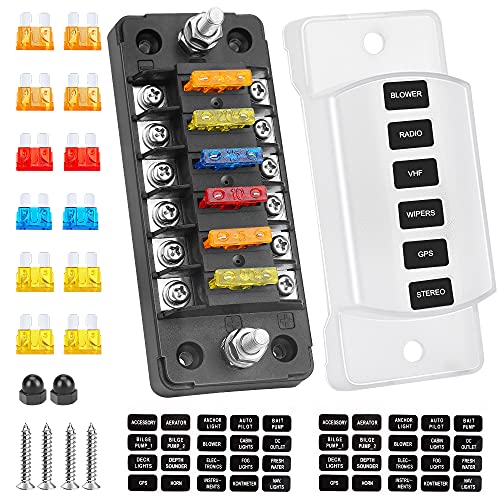
Electop’s 6‑circuit block accepts 1A–20A ATC/ATO blades and includes both positive and negative screw terminals for quick, clear wiring. The device supports up to 32V DC and up to 20A per circuit, with a 75A panel total. It uses a durable, environment‑friendly PBT body with a transparent splash‑proof cover and DIY labels for circuit identification. This block is best for users needing a robust, easy‑to‑troubleshoot panel with easy labeling. Limitation: per‑circuit capacity tops at 20A, which may require parallel protection for higher‑draw devices.
Cyrico 12 Circuit Fuse Block With Negative Bus

The Cyrico 12‑circuit block provides a full negative bus, 100 amp total capacity, and includes a protective cover plus pre‑printed labeling stickers. It’s designed to offer neat wiring with 12 separate circuits and a grounding bus, making it suitable for larger vehicles, boats, or RV systems that demand extensive protection and easy circuit identification. Best for: large setups needing comprehensive circuit distribution. Caution: ensure the included labeling meets your organization needs, as mismatched labels can hinder maintenance tasks.
Buying Guide
What should you look for when choosing a fuse block with a negative bus?
- Total circuit count: Match the number of branches you plan to protect with the block’s capacity (6, 12, etc.).
- Grounding integrity: A built‑in negative bus simplifies grounding and reduces wire clutter.
- Maximum per‑circuit current: Ensure per‑circuit limits align with device needs; avoid undersized fuses for high‑draw equipment.
- Physical protection: A clear, locking cover helps prevent accidental contact and keeps dust out in harsh environments.
- Material durability: Look for flame‑resistant, insulated housings for added safety in automotive or marine settings.
- Labeling options: Reusable or pre‑printed labels save maintenance time and minimize wiring confusion.
Practical questions to consider
- Do I need a compact 6‑circuit solution or a larger 12‑circuit hub?
- Will I benefit from a visible LED indicator for blown fuses?
- Is the system likely to experience high current peaks requiring higher per‑circuit allowance?
- Do I operate in wet or splash‑prone environments requiring splash resistance?
- Will I need easy spare fuse storage integrated into the cover?
Installation considerations
- Plan fuse types: ATC/ATO fuses are common; ensure compatibility with your chosen block.
- Organize wiring by function: group deep‑cycle loads, lighting, and accessories separately.
- Leave slack for future expansion: choose a block with spare circuits if you anticipate adding components.
FAQ
- What is a negative bus in fuse blocks?
A negative bus is a shared ground connection that ties all circuits’ return paths to a common reference point, simplifying wiring and troubleshooting.
- Can I mix different brands of fuses on a single block?
Yes, if the block supports the fuse types (ATO/ATC) and the per‑circuit ratings match the fuses you use.
- Is a splash‑proof cover necessary for marine use?
Yes, splash protection reduces moisture ingress and extends the life of the fuse box in wet environments.
- Do these blocks require professional installation?
Not always, but proper wiring practices and fuse sizing are essential for safety and reliability; consult a professional if unsure.
- How do I identify a blown fuse quickly?
Many models feature a clear cover and/or LED indicator for blown fuses, enabling fast inspection and replacement.
- What maintenance is needed after installation?
Regularly check labeling, inspect for corrosion, and verify that all connections remain tight and clean.