Best Fuel Injected Portable Generators for Reliable Power on the Go
If you need portable, fuel-efficient power that’s safe for sensitive electronics, these fuel-injected portable generators deliver cleaner power, quieter operation, and flexible fuel options. They’re ideal for home backup, RV trips, camping, or tailgating where you need dependable power without loud noise or voltage issues. The top picks below are best for: homeowners needing backup power, frequent campers, RV owners, and users who value inverter stability for electronics.
Summary table of selected products
- PowerSmart 3800 Watt Dual Fuel Inverter Generator
- WEN 5,600-Watt Dual Fuel Portable Generator with Wheel Kit
- WEN 6800-Watt Dual Fuel RV-Ready Inverter Generator
- WEN Quiet and Lightweight 4800-Watt Dual Fuel Inverter Generator
- PowerSmart 4400-Watt Dual Fuel Portable Inverter Generator
PowerSmart 3800 Watt Dual Fuel Inverter Generator
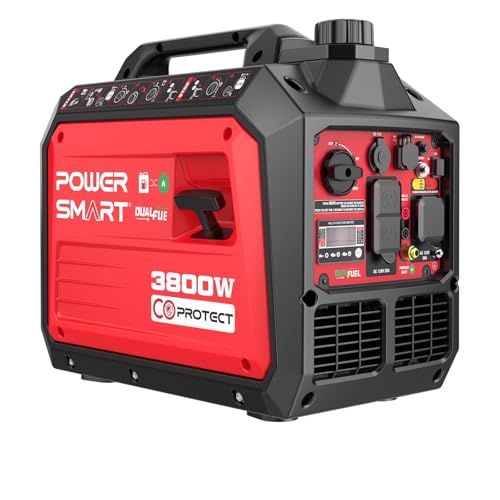
Best for quiet residential use and versatile fuel options. This model provides 3800 starting watts and 3300 running watts on gasoline, with up to 10 hours runtime, plus 3500 starting watts and 3100 running watts on propane for longer emergencies. It uses an inverter system to deliver clean, stable power with less than 3% total harmonic distortion, making it suitable for charging phones, tablets, laptops, and CPAP machines. It operates at around 65 dBA at 23 feet, which is comparable to a normal conversation.
Who it’s best for: small households needing reliable backup with quiet operation, and campers who want dual-fuel flexibility without sacrificing electronics safety. Choose this if you prioritize low noise and budget-friendly dual fuel power.
Caution: dual-fuel performance depends on fuel quality and proper calibration; ensure you have fresh gasoline and appropriate propane supply for best results.
WEN 5,600-Watt Dual Fuel Portable Generator with Wheel Kit

Best for medium-duty home backup and RV use with electric start. This generator delivers 5600 surge watts and 4500 rated watts on gasoline, and 5000 surge watts with 4050 rated watts on propane. It includes an electric start for quick, hands-free operation and a CO Watchdog sensor to automatically shut down on dangerous CO levels. It’s a solid choice for users who want stronger power output while still enjoying dual-fuel flexibility.
Who it’s best for: households that expect longer outages or require higher peak power for essential circuits, and RV owners needing a more robust portable unit. Better for those who value ease of starting and CO safety features.
Limitation: heavier and larger than smaller dual-fuel units; maneuvering may require wheels and a strong setup.
WEN 6800-Watt Dual Fuel RV-Ready Electric Start Portable Inverter Generator

Best for high-demand scenarios and vehicle charging backups. The DF680iX runs on 224cc dual-fuel engine with 6800 surge watts and 5100 rated watts on gasoline, and 6000 surge watts with 4500 rated watts on propane. It features a bonded-neutral 240V configuration to support low-power Level 2 charging for battery and hybrid electric vehicles, plus a CO watchdog sensor for safety. It’s suitable for users who need substantial power for emergency home use or electric vehicle supplemental charging.
Who it’s best for: homeowners preparing for storms, campers who require heavy-duty power, and EV owners seeking a portable backup that can support Level 2 charging. Choose this if you need strong peak power and vehicle support in one unit.
Caution: higher wattage units can consume fuel quickly; plan fuel reserves accordingly.
WEN Quiet and Lightweight 4800-Watt Dual Fuel RV-Ready Inverter Generator

Best for budget-conscious users who still want inverter quality and quiet operation. This model provides 4800 surge watts and 4000 rated watts on both gasoline and propane, and is noted for exceptionally quiet operation—comparable to normal conversation in some settings. It delivers clean power suitable for electronics and daily devices and includes CO safety features as standard in similar WEN models.
Who it’s best for: individuals seeking a balance between portability, quiet operation, and adequate power for home or light RV use, without paying premium for extra watts. Avoid this if you need sustained full-house power for long outages.
Caution: at higher loads, noise levels may approach the upper end of its rating; plan usage accordingly.
PowerSmart 4400-Watt Dual Fuel Portable Inverter Generator

Best for robust home backup and camping with a practical runtime. This 4400 starting-watt, 3600-watt running unit emphasizes extended runtime with a 1.6-gallon fuel tank and up to 11 hours at 25% load. It’s designed for quiet operation at a reasonable sound level and provides clean power suitable for electronics, RVs, and job-site tools. It’s EPA compliant, signaling adherence to emissions standards.
Who it’s best for: homeowners needing steady backup power with decent runtime, campers who value fuel efficiency, and users who want EPA-compliant equipment for local use. Choose this if you want solid performance without sacrificing quiet operation.
Caution: runtime estimates depend on load; higher loads will reduce runtime and potentially increase noise slightly.
Buying Guide
What wattage do you really need?
Assess your essential loads—refrigerator, lights, modem, medical devices, and some outlets for tools. Start with running watts and add a buffer for startup surges. Dual-fuel models offer flexibility when fuel is scarce.
Is inverter power important?
Inverter generators produce clean, stable power with low THD, which is safer for sensitive electronics. If you run laptops, phones, CPAP machines, or power adapters, prioritize inverter technology.
How important is noise?
Quieter models are better for neighborhoods, campsites, and late-night use. If you’ll be near people or sleeping areas, look for units rated around 60–70 dBA at 23 feet.
Fuel options and runtime
Dual-fuel units offer gasoline and propane compatibility. Gasoline generally provides higher power, while propane can extend runtime during long outages. Consider your typical fuel availability and storage.
Safety features
CO sensors or watchdog sensors automatically shut off the generator if dangerous carbon monoxide levels are detected. Look for automatic shutoff features when planning for indoor or semi-indoor use.
Portability and maintenance
Wheel kits and lighter frame designs improve portability. Regular maintenance—oil changes, air filters, spark plugs, and fuel stabilization—extends lifespan and performance.
Frequently Asked Questions
- What does “dual fuel” mean? Dual fuel means the generator can run on two different fuels, commonly gasoline and propane, increasing flexibility for fuel availability and longer runtimes.
- Are these generators safe for sensitive electronics? Yes, inverter-based models provide clean, stable power with low THD, reducing risk to electronics.
- How loud are these generators? Noise varies by model, typically between 60 and 76 dBA at a standard distance; lighter, smaller units are quieter.
- Do they come with electric start? Some models include electric start for quick startup; others may use recoil start. Check the product listing for specifics.
- Can these run power-hungry appliances? Yes, units with higher surge watts are capable of starting and running heavier appliances, but verify continuous running watts to match load.
- What maintenance is required? Regular oil changes, air-filter checks, spark plug replacement, and fuel stabilization for stored gasoline help maintain performance.