Best Fire and Security Systems for Homes and Small Businesses
Direct answer: This guide highlights five reliable fire and security system kits and devices chosen for ease of setup, expandability, and clear monitoring options. The top picks include kits from Ring, Arlo, and ADT Blu, plus a classic fire/hazard reference book for professionals. These solutions are best for homeowners seeking scalable security, small business owners needing modular protection, and renters wanting straightforward installation. Below you’ll find concise, comparison-friendly sections to help you decide which kit fits your space and risk tolerance. A quick buying table is provided to summarize core details of each product.
| Product | Best For | Notes |
|---|---|---|
| Ring Alarm 14-Piece Kit | 2-4 bedroom homes | Expandable with accessories |
| Ring Alarm 8-Piece Kit | 1-2 bedroom homes | Smaller footprint, flexible monitoring |
| Arlo Home Security System | DIY installation, flexible sensing | Wired keypad, multi-sensor hub |
| Design of Special Hazard and Fire Alarm Systems | Reference and study | Educational book |
| ADT Blu Home Safety Essentials Kit | Smoke/CO, leaks, temp monitoring | App-based control |
Ring Alarm 14-Piece Kit

This Ring Alarm 14-Piece Kit is a comprehensive starter package for medium-sized homes. It includes a Base Station, two Keypads, eight Contact Sensors, two Motion Detectors, and a Range Extender. The kit targets 2-4 bedroom homes and supports app-based control with 24/7 professional monitoring available as an option. Best for homeowners who want a scalable system that’s easy to expand with additional sensors and accessories. The included keypad simplifies arming and disarming, and Ring’s wireless design eases installation. A potential limitation is the need to purchase expansion sensors separately to extend coverage beyond the base kit.
Ring Alarm 8-Piece Kit

The Ring Alarm 8-Piece Kit is ideal for smaller spaces, such as 1-2 bedroom homes or small offices. It comes with a Base Station, one Keypad, four Contact Sensors, one Motion Detector, and a Range Extender. The intuitive keypad supports quick arming and disarming, and contact sensors alert on door/window activity. This kit is best for renters or first-time smart security adopters who want straightforward setup with room to grow. A limitation to note is the smaller sensor count, which may require additional sensors to cover larger layouts.
Arlo Home Security System

The Arlo Home Security System provides a robust DIY installation option with a plug-in keypad and wire-free sensors. Its 6-in-1 Sensor Hub supports multiple sensing functions, enabling flexible placement for comprehensive coverage. The kit is well-suited for tech-savvy homeowners and small businesses seeking a modular solution with rapid setup. Best for those who want a unified app experience and quick emergency response controls. A potential caveat is that some users may prefer a wired, non-wireless backup in areas with spotty Wi-Fi.
Design Of Special Hazard And Fire Alarm Systems

This reference book provides foundational knowledge on special hazard and fire alarm system design. It is best for students, facility managers, or security professionals seeking theoretical grounding and best-practice frameworks. It is not a consumer home security device but helps contextualize the architecture and compliance considerations involved in professional-grade systems. A limitation is that it does not function as a live monitoring solution or deliver real-time alerts.
ADT Blu Home Safety Essentials Kit
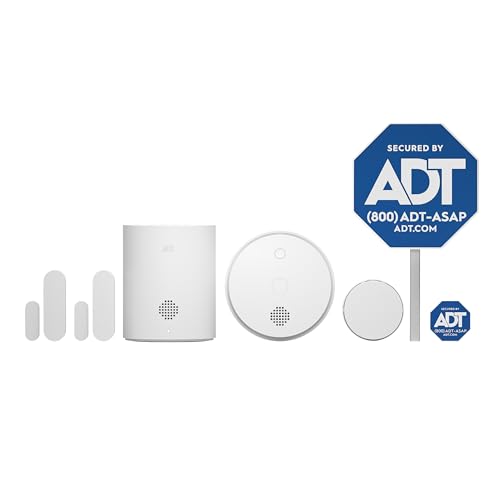
The ADT Blu Home Safety Essentials Kit combines smoke and carbon monoxide detection with water leak sensing and temperature monitoring, all managed through the ADT Blu app. It is best for households that prioritize life-safety integration and want a straightforward app-based control. The inclusion of multiple safety sensors makes it suitable for homes with children or elderly residents. A caution is that ongoing monitoring requires a subscription, and monthly costs apply for professional monitoring services.
Buying Guide
What should I consider when choosing a fire and security system?
- Coverage area: Measure your home or space and map entry points to ensure sensors cover doors, windows, and key zones.
- Monitoring options: Decide between self-monitoring, professional monitoring, or hybrid plans. Consider whether 24/7 monitoring is necessary for your risk level.
- Expandability: If you expect changes to your space, choose systems that support additional sensors and accessories later.
- Installation: Look for DIY-friendly kits with intuitive apps and minimal wiring requirements if you prefer quick setup.
Security features to compare
- Sensor types: Contact sensors, motion detectors, smoke/CO sensors, water leak detectors.
- Control: Keypad availability for quick arming/disarming vs. app-based control only.
- Alerts and response: How alerts are delivered (push notifications, emails, calls) and whether rapid emergency response can be triggered.
Home vs. business use considerations
- Business environments may require larger sensor networks and stronger integration with professional monitoring.
- Residential setups benefit from tighter, simpler configurations with easy expansion options.
FAQ
- What is the difference between a wired and wireless security system? Answer: Wired systems use physical cables for sensors and hubs, while wireless systems rely on Wi-Fi or radio signals. Wireless setups are usually easier to install and expand, but may depend on reliable wireless connectivity.
- Can I add sensors later to my Ring or Arlo kit? Answer: Yes. Both Ring and Arlo kits are designed to be expanded with additional sensors and accessories sold separately.
- Is professional monitoring worth it? Answer: It depends on risk tolerance. Professional monitoring provides round-the-clock response and certified monitoring centers, while self-monitoring relies on app alerts and manual actions.
- Do these systems support fire and life-safety integration? Answer: Some kits include smoke/CO detectors or IFTTT-style integrations; check each product’s features for exact capabilities.
- Can I use these systems in a rental unit? Answer: Yes, especially kits designed for easy installation and wireless components. Confirm landlord policies and any required permissions before installation.
- Will these systems work without Wi-Fi? Answer: Some features may work offline, but reliable monitoring and notifications often depend on internet connectivity.