Best Fire Alarm and Burglar Alarm Systems for Home Safety
Answering the question, which fire burglar alarm system fits best for a home or small business? The top picks below cover wired and wireless options, easy DIY installs, and electromagnetic/visual signaling. Each product is suited to different needs—from traditional wired systems for robust reliability to wireless kits that pair with mobile alerts. The summary table helps you compare key use cases at a glance.
| Product | Brand | Best For |
|---|---|---|
| QWORK Wired Emergency Sound and Light Fire Alarm Station | QWORK | Traditional wired systems; visible activation and manual pull |
| D1D9 24pcs Wireless DIY Home Burglar Alarm System | D1D9 | Wireless, no monthly fees; whole-home coverage |
| Honeywell VISTA-128FBPT | Honeywell | Professional-grade control unit for larger or integrated systems |
| AGSHOME Security Alarm System 99+7 Zone | AGSHOME | Remote alerts via GSM; flexible zones for DIY setups |
| Relaxweex 8 Pcs Fire Alarm Pull Station Set | Relaxweex | Dual-action pull stations with visual alerts; quick deployment |
QWORK Wired Emergency Sound and Light Fire Alarm Station

The QWORK unit is a traditional wired fire alarm interface designed to integrate with existing fire alarm systems. It features a dual-action manual call point and a visible “ACTIVATED” indicator when the switch is engaged. Best for buyers who need a pull-station style alarm that works within established wired networks. The design supports 12/24V DC operation, making it compatible with common commercial and residential setups. A key limitation is reliance on a wired power source; if the building lacks wiring, this solution may require extensive installation work.
- Best for: installations with existing wired fire alarm infrastructure
- Why selected: clear manual activation with dual-action safety and visible status
- Caution: requires proper mounting and wiring; verify voltage compatibility with your system
D1D9 24pcs Wireless DIY Home Burglar Alarm System
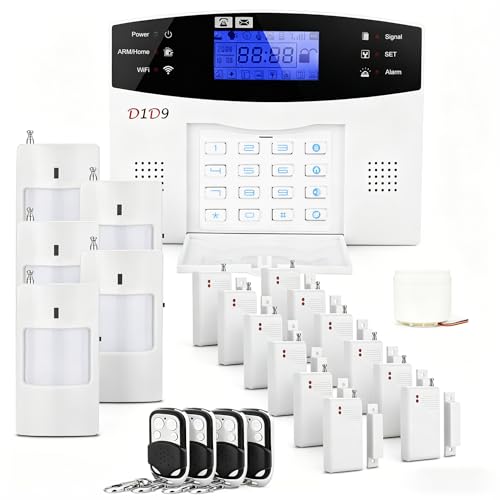
The D1D9 kit is a wireless DIY home security solution with 4G/WiFi connectivity and a wide sensor array, including door/window sensors and motion detectors. It supports real-time alerts via an app and does not require ongoing monthly subscription fees. This option is better for renters or small homes where quick, non-invasive installation is preferred. A potential drawback is dependency on network connectivity and a SIM card or WiFi; outages could affect alert delivery.
- Best for: wireless, no-monthly-fee security for homes or small offices
- Why selected: complete coverage kit with remote alerts and easy setup
- Limitations: relies on SIM card or WiFi; ensure network reliability
Honeywell VISTA-128FBPT Turbo Fire Burglary Control Unit

The Honeywell VISTA-128FBPT is a robust control unit intended for more complex alarm configurations. It excels in environments needing reliable centralized management and compatibility with multiple sensors. This option is best for buyers planning a larger, future-proof system or professional installation. Its data sheet notes a DACT (dialer) capability, which supports remote signaling. Caution: installation and programming can be technical; consider professional setup for optimal results.
- Best for: larger homes or small business setups needing centralized control
- Why selected: proven reliability and scalable integration
- Limitations: higher setup complexity; may require licensed installer
AGSHOME Security Alarm System 99+7 Zone
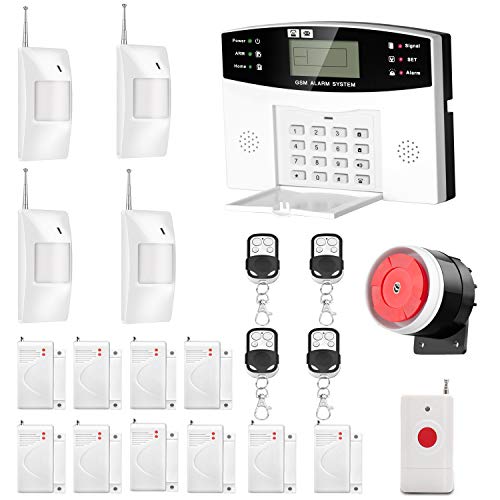
The AGSHOME system provides GSM-based remote signaling with up to 99 zones plus 7 auxiliary zones. It supports multiple alert methods and does not require a traditional wired connection for operation, though it expects a SIM card for GSM communication. This kit is well-suited for homes and small offices seeking flexible remote monitoring with cellular backup. A limitation is the need for a compatible GSM plan to enable alerts.
- Best for: GSM-based remote alerts and multi-zone configuration
- Why selected: strong alerting options without long-term contracts
- Limitations: requires GSM SIM card and service plan
Relaxweex Fire Alarm Pull Station Kit

The Relaxweex pull station set combines dual-action manual call points with a built-in audible and visual signaling system. It is designed to be quickly deployed in homes or offices and features a bright yellow “ACTIVE” indicator for immediate recognition. Best for: retrofits or updates to existing fire response workflows where a visible and audible alert is critical. A potential limitation is limited integration outside of standalone pull-station use without a full distribution network.
- Best for: rapid-fire emergency signaling with visible status
- Why selected: clear, simple operation for immediate evacuation
- Limitation: may require integration planning for larger systems
Buying Guide
Key purchase considerations help narrow choices to fit your space and security goals:
- Wired vs wireless: Wired systems offer reliability in fixed installations; wireless kits favor quick DIY setups and retrofits.
- Scale and monitoring: Multi-zone options suit larger homes or offices; GSM and app-based alerts work well for remote monitoring.
- Activation method: Dual-action pull stations reduce accidental activations; visual indicators assist in emergencies.
- Connectivity: Ensure network compatibility (4G/5G, WiFi) for real-time alerts and control.
- Power and installation: Verify voltage requirements and whether professional installation is needed for complex units.
- Maintenance: Consider longer-term maintenance needs and whether subscription-free monitoring is an option.
Frequently Asked Questions
- What’s the difference between wired and wireless alarm systems?
Wired systems rely on physical cables and tend to be more stable; wireless systems use wireless signals for easier installation and flexible placement. - Can I install a fire alarm system myself?
Many wireless kits are designed for DIY installation; wired systems may require professional wiring and compliance with local codes. - Do alarm systems require ongoing service fees?
Some systems offer no monthly fees with local monitoring, while others use cellular or app-based alerts that may incur service charges. - What is the role of a control unit like the Honeywell VISTA-128FBPT?
It serves as the central hub to manage sensors, zones, and alert outputs for a larger or more integrated setup. - What should I consider when choosing GSM-based alerts?
Ensure you have a compatible SIM plan and service coverage for reliable remote notifications.