Best Fiber Optic Fusion Splice Options for Pros and DIYers
Direct answer: For reliable fiber fusion splicing, the best picks balance speed, battery life, and core-alignment accuracy. The top five below are suited for FTTH projects, field technicians, and bulk splice work, offering core-alignment or advanced auto-focus with long battery life. Use these based on your environment, whether harsh outdoor conditions, tight splice windows, or portable field kits.
Buyer profile overview:
- Field technicians performing on-site splices: prefer robust, six-motor core-alignment splicers with long battery life and fast splice/heat cycles.
- FTTH installers and contractors: benefit from user-friendly interfaces, built-in gauges (OPM/VFL), and reliable sleeves/holders for bulk work.
- DIY or occasional users: value affordable options with auto-focus and clear visualization features.
| Product | Brand | Key Benefit | Best For |
|---|---|---|---|
| Fusion Splicer AI-6A | ZHUOSHI | Core-alignment with auto-focus; long battery; 8s splice | Field technicians needing fast, accurate splicing in harsh environments |
| FX39 Fusion Splicer | KOMSHINE | 6 motors, 7800mAh battery, low splice loss | Professional FTTH and bulk splicing with high electrode life |
| SD-9C Fusion Splicer | TUYMDENG (SENDUN) | 4.3″ touch screen; OPM and VFL; 7200mAh battery | Versatile field use with built-in diagnostics and large screen |
| AI-9 Fusion Splicer | QIIRUN | 5s splice; upgraded 5″ touch screen; 6 motors | Beginner-friendly with professional results and rapid splicing |
| Fiber Splice Sleeves (Bulk) | Sysotek / VFLTOOL | Bulk, preshrunk sleeves; stainless steel pins; clear tubing | Bulk protection for many splices in trays or enclosures |
Fusion Splicer AI-6A Fiber Splicer With Auto Focus

Best for: Technicians who need automatic core-alignment and fast splice times in challenging environments. This device uses six motors and core alignment for higher precision over cladding methods, with 8-second fusion and 18-second heating cycles. The large 5200 mAh battery supports extended field work. A caution: device performance may depend on fiber type and connector compatibility.
FX39 Fusion Splicer With Long Battery Life

Best for: Professionals seeking a durable, multi-motor splicer with a high-capacity battery and long electrode life. Features include 6 motors, automatic fusion, and decent splice loss averages. Limitation: heavier unit, which may affect portability on very tight jobs.
SENDUN SD-9C Fusion Splicer With OPM and VFL

Best for: Field teams needing built-in Optical Power Meter and Fault Locator. The 4.3-inch touch screen simplifies operation, and a 7200 mAh battery enables longer splicing sessions. Caution: GUI reliance may require initial setup of device-specific software or apps.
QIIRUN AI-9 Fusion Splicer
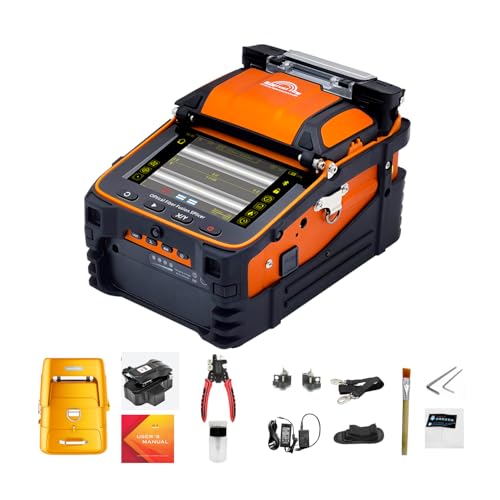
Best for: Users who want a beginner-friendly interface with professional results. The AI-9 offers a 5-s splice time with a 6-motor core-alignment system and a large 5″ touch display for intuitive operation. Limitation: actual battery life depends on usage and screen activity.
Bulk Fiber Splice Sleeves 60mm 2.6mm 600Pcs

Best for: Technicians performing high-volume splicing in splice trays and enclosures. Each sleeve is preshrunk with stainless steel pin for reliable fusion points. Considered a cost-effective bulk supply for ongoing projects. Caution: wash and storage conditions affect sleeve longevity and performance.
Bulk 600pcs Fiber Splice Sleeves
Best for: Bulk kits and pro installers needing consistent, durable sleeves. Features similar to bulk sleeves from Sysotek, with clear tubing and stainless steel support for dependable splices. Limitation: may require compatibility checks with existing splice-tray systems.
Buying Guide
Key considerations when choosing a fiber optic fusion splicer and accessories:
- Splice speed and accuracy: Core alignment tends to deliver lower splice loss than cladding alignment. Look for auto-focus and precision measurement.
- Battery life and portability: High-capacity batteries extend field work between charges. Consider weight and ergonomic design for on-site use.
- Display and interface: Large touch screens and intuitive GUIs reduce training time and improve accuracy in challenging conditions.
- Diagnostics and built-in tools: OPM and VFL functions help locate faults quickly and validate splice quality in the field.
- Compatibility and accessories: Ensure sleeves, clamps, and fiber holders fit your typical cables (SM/MM, drop cables, multi-fiber cables).
- Durability and environment: For harsh environments, select rugged housings and dust/moisture resistance suitable for desert, altitude, or cold.
- Maintenance and life: Electrode life and heat-shrink longevity affect long-term cost and downtime. Consider spares availability.
Frequently Asked Questions
- What is core alignment in fiber splicing?
- Why is battery capacity important for field splicing?
- What is an OPM and a VFL in a fusion splicer?
- Are bulk splice sleeves compatible with all splicers?
- What should I avoid when selecting a splicer?
- Is auto-focus necessary for beginners?
Core alignment uses precise adjustment to align the fiber cores, typically achieving lower splice loss than cladding-based methods.
Long battery life reduces the need to return to a power source, increasing productivity on remote jobs.
OPM measures optical power to verify connections; VFL (visual fault locator) helps locate breakages and splice issues visually.
Bulk sleeves are designed for common 60 mm × 2.6 mm sizes, but always verify compatibility with your splicer and tray systems.
Avoid models with limited battery life, non-intuitive interfaces, or poor availability of spare parts and sleeves.
Auto-focus simplifies setup and reduces manual adjustment, but users should still verify splice quality with test results.