Best Fiber Optic Distribution Box Solutions for Home and Business Networks
Choosing the right fiber optic distribution box is essential for reliable network terminations, clean cable management, and durable protection for outdoor and indoor installations. This guide highlights five top options that balance port counts, weather resistance, and ease of installation. Each product is selected for its relevance to FTTH and fiber distribution needs, from compact 4-port boxes to robust 12-port enclosures. Explore features, suitability, and practical considerations to help you pick the best fit for your network.
| Product | Mounting Style | Material | ||
|---|---|---|---|---|
| PNGKNYOCN 4 Core FTTH Box | 4 Core | Wall-Mounted | Durable plastic | Residential FTTH, compact setups |
| PNGKNYOCN 6 Core FTTH Box | 6 Core | Wall-Mounted | Durable plastic | Small business or home networks |
| PNGKNYOCN 12 Core FTTH Box | 12 Core | Wall-Mounted | Durable plastic | Larger FTTH installations |
| KETGUFF 4-Port Box | 4 Ports | Wall/Surface Mounted | ABS Plastic | Outdoor/indoor use, waterproof |
| KETGUFF 12 Core Box | 12 Ports | Wall/Surface Mounted | ABS Plastic | Outdoor/indoor, robust distribution |
PNGKNYOCN 4 Core FTTH Distribution Box

The 4-core optical fiber distribution box is designed for fusion splicing, splitting, wiring transmission, and other terminal functions. It effectively terminates and protects optical cables, making it a practical essential for network transmission. This model features four FTTH ports and a sturdy, wall-mounted design with materials chosen for durability, impact resistance, corrosion resistance, and weather sealing. Suitable for SC, FC, and E2000 adapters, it supports reliable indoor or guarded outdoor installation.
fyboptwu 12 Core FTTH Distribution Box
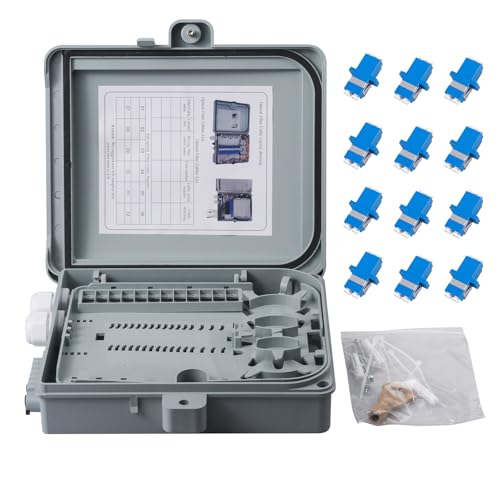
This 12-core fiber optic distribution box is designed for fusion, winding, storage, and distribution of fibers. It includes twelve ports for FTTH branch cables and features a robust IP65-rated exterior, suitable for both indoor and outdoor use. The wall-mounted design simplifies installation and maintenance, while the durable PC+ABS construction provides long-term protection against the elements and aging components.
KETGUFF 12 Core Fiber Distribution Box

This 12-port fiber distribution box is designed to terminate, protect, and manage fiber cables. Its rotatable baffle offers easy access and adjustable angles up to 180 degrees, simplifying fiber routing and installation. Built with durable ABS plastic, it provides sealing and waterproof capabilities, suitable for both indoor and outdoor deployments in various environments.
KETGUFF 4-Port Fiber Optic Distribution Box

This 4-port distribution box provides reliable terminaling and protection for fiber cables. It is compact, lightweight, and designed for straightforward installation. The ABS construction ensures durability, along with sealed and waterproof capabilities for versatile use in challenging environments.
PNGKNYOCN 12 Core FTTH Box

This 12-core distribution box supports fusion splicing, splitting, and comprehensive optical cable management. It is designed to terminate and protect 12 cores, with a large internal splice area for efficient fiber reeling. The box uses sturdy, durable materials, delivering sealed, waterproof protection and reliable long-term performance for network transmission.
Buying Guide: Key Purchase Considerations
When selecting a fiber optic distribution box, consider these factors to match your installation needs and environment:
- Port count and expansion: Determine current requirements and whether future growth is likely. Boxes come in 4, 6, 12, and more-port configurations; ensure there is room to add cables or adapters later.
- Indoor vs outdoor use: IP65 or higher ratings protect against dust, water, and UV exposure. Outdoor boxes require weatherproof shells, gasketed seams, and durable materials.
- Material and durability: ABS plastic and PC+ABS blends balance cost and resilience. For harsher environments, select rugged, corrosion-resistant materials and sealed designs.
- Mounting method: Wall-mounted or surface-mounted enclosures simplify installation and maintenance. Ensure mounting hardware is included or readily available.
- Adapter compatibility: Verify adapter types (SC/FC/LC, PLC) and whether the box accommodates plug-in splitters or direct-connect adapters.
- Splice and routing space: Look for a roomy interior with a dedicated splice tray or trunk routing area to ease fiber handling and rework.
- Accessibility: A rotatable or hinged baffle can improve access for rework or maintenance, especially in tight spaces or outdoor enclosures.
- Size and footprint: Consider the space available on walls or enclosures to ensure a proper fit without obstructing other equipment.
- Security and tamper resistance: Some environments may require sealed cabinets or locks to prevent unauthorized access.
In summary, the best choice hinges on port requirements, environmental exposure, and ease of installation. For compact residential setups, 4-core options may suffice, while larger installations or FTTH distributions benefit from 6- or 12-core configurations with weatherproof features. Always verify compatibility with your existing adapters and the physical constraints of your installation site.