Best Fan Coil Thermostat Line Voltage Solutions for Homes and Businesses
Choosing the right line-voltage fan coil thermostat can optimize heating performance, energy usage, and comfort. This guide reviews five widely applicable options, highlighting features, installation suitability, and how they perform in typical residential and commercial environments. Each product is evaluated for compatibility with common line-voltage systems, ease of use, and reliability.
Summary of selected products:
| Product | Brand | Key Features |
|---|---|---|
| TB6575A1000 SuitePro | Honeywell | Non-programmable, large backlit display, 3-speed fan control |
| TB8575A1000 SuitePRO | Honeywell | Simple UI, digital ambient display, 3-speed fan, heat/cool changeover |
| TL7235A1003 Line Volt Pro | Honeywell | On-demand backlight, low-noise operation, indicator for heat |
| SWT1F Stelpro | Stelpro | Versatile with many heating products, simple dial, easy 2-wire install |
| TB155-046 Peco | Peco | Two-pipe on-off, up to 3-speed fan switching, solid-state |
Honeywell TB6575A1000 SuitePro Fan Coil Thermostat

The TB6575A1000 SuitePro is a non-programmable line-voltage thermostat designed for fan-coil systems. It features a large, backlit display for easy viewing in low-light conditions and supports three-speed fan control, enabling users to tailor airflow and comfort. The straightforward controls and robust mechanical construction make it suitable for hotels, multi-family buildings, and residential installations where reliability is critical. Installation is typically compatible with standard line-voltage wiring, and the unit is intended for simple, durable operation.
Honeywell TB8575A1000 SuitePRO 24 VAC 2 or 4 Pipe Fan Coil Thermostat
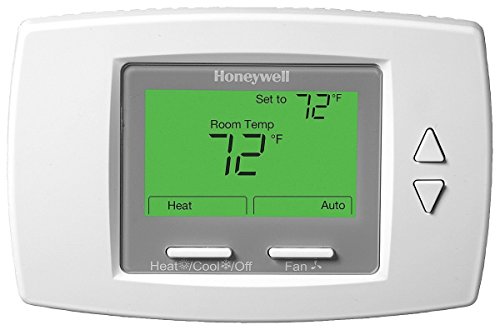
The TB8575A1000 is designed for 24 VAC systems with 2 or 4 pipe configurations and offers a three-speed fan with manual or auto heat/cool changeover. Its user-friendly interface and modern styling suit hotels, condos, and other multi-occupancy spaces where digital readouts and intuitive controls are valued. It provides clear indicators for ambient temperature, set point, and system status during energy-saving operation, helping staff monitor performance and adjust settings efficiently without specialist training.
Adjustable Manual Line Volt Thermostat By Buachois
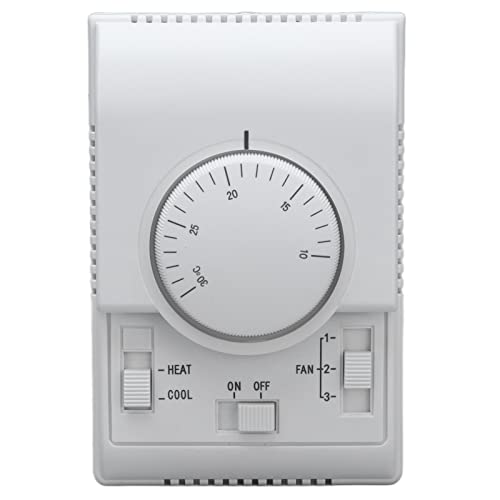
The Buachois adjustable manual line-voltage thermostat focuses on mechanical reliability. It supports multiple working modes and wiring options, including single or double line configurations, giving users flexibility with various central HVAC setups. The device emphasizes stable performance using metal diaphragms and high-capacity contacts rated for 220V, with praise for long-term durability. It is designed for external embedded installation and typically ships with mounting hardware for quick setup, suitable for both homes and small commercial spaces.
Honeywell TL7235A1003 Line Volt Pro Thermostat

The TL7235A1003 Line Volt Pro provides a digital, non-programmable temperature control for 240-volt systems. It includes an on-demand backlight for readability in various lighting conditions and a heating indicator to confirm when heat is active. Its design prioritizes clear feedback and straightforward operation, making it a practical choice for baseboard heating and similar line-voltage applications in homes and light commercial spaces where simple, reliable control is essential.
Stelpro Single Pole Line Voltage Thermostat SWT1F

The SWT1F Stelpro thermostat is a single-pole, 240-volt device designed for compatibility with a wide range of heating equipment, including electric baseboards and fan heaters. It uses a mechanical dial for easy temperature adjustments and supports quick, simple 2-wire installation, making it a solid option for both residential and commercial applications where rapid setup and dependable operation are needed. The unit emphasizes broad compatibility and straightforward control in a compact form factor.
Peco TB155-046 3 Speed Fan Coil Programmable Thermostat

The TB155-046 from Peco provides a three-speed fan option and on-off control for line-voltage circuits. Its solid-state design offers dependable performance, and the ability to switch among multiple fan speeds can help tailor comfort in larger spaces or rooms with diverse heating needs. This thermostat is well-suited for installations requiring programmable control over fan operation while maintaining reliable line-voltage performance in baseboard or fan-forced systems.
Honeywell Home CT410B Manual Baseboard/Line Volt Thermostat

The CT410B is a manual 4-wire line-voltage thermostat designed for electric baseboards, convectors, and non-inductive fan-heaters. It uses a bimetal temperature sensor to provide simple, worry-free operation. This model emphasizes durability and straightforward adjustment, making it a practical option for conventional baseboard heating setups where straightforward analog control remains preferred.
Buying Guide: Key Purchase Considerations And Comparisons
- Voltage and compatibility: Verify the thermostat supports your system’s voltage (120V/240V) and wiring configuration (single- or two-pipe, or 2-wire/4-wire connections) to ensure proper installation and safe operation.
- Control type: Decide between manual (dial) and programmable or digital controls. Manual models are typically simpler and more durable, while programmable units can improve energy efficiency by scheduling temperatures.
- Fan control: For fan-coil and baseboard systems, consider whether a thermostat offers 2- or 3-speed fan control and how easily you can adjust fan behavior to balance comfort and energy use.
- Display and usability: Large backlit displays and clear indicators help with visibility in varied lighting. A backlight is especially useful for settings with limited access to light switches.
- Installation context: Hotels, condos, and offices may benefit from intuitive interfaces and robust construction. Residential homes might prioritize ease of mounting and simple wiring.
- Reliability and durability: Metal diaphragms, solid-state components, and rated contact life contribute to longer service intervals in high-use environments.
- Safety and compliance: Ensure devices are UL-listed or equivalent for electrical safety and meet local building codes for line-voltage HVAC controls.
- Maintenance and support: Consider brands with broad support networks and replacement part availability to minimize downtime.
In choosing among these options, users should weigh how much manual control versus programmable automation is needed, the complexity of installation, and the specific heating equipment in use. For commercial environments, prioritizing reliability, ease of service, and clear digital feedback can drive lower lifecycle costs. For residential setups, ease of installation and straightforward operation may be the deciding factors. Across all contexts, selecting a model with compatible wiring, robust construction, and clear status indicators supports dependable year-round comfort.