Best Extractor Fan Speed Controllers for Ventilation and DIY Projects
Extractor fan speed controllers let you tailor airflow, noise, and energy use for bathrooms, kitchens, hydroponics rooms, and workshops. The following picks cover a range of AC motor controllers suitable for resistive loads like inline exhaust fans and ceiling fans. Each product offers adjustable speed, overload protection, and clear readouts to help you manage airflow precisely in American homes and workspaces.
| Product | Brand | Notes | Amazon Link |
|---|---|---|---|
| CDmall AC Motor Speed Controller | CDMALL | 15A max, LED display, overload protection | View |
| BN-LINK Variable Fan Speed Controller | BN-LINK | Three-speed inline control, grounded plug | View |
| ReeMoo AC Motor Speed Controller | ReeMoo | 15A, LED readout, belt-clipped design | View |
| CavalliFun AC Motor Speed Controller | CavalliFun | Resistive-load optimized, 15A, LED display | View |
| DEWENWILS Variable Speed Controller | DEWENWILS | 3 sockets, adjustable speed 40–100% | View |
CDmall AC Motor Speed Controller
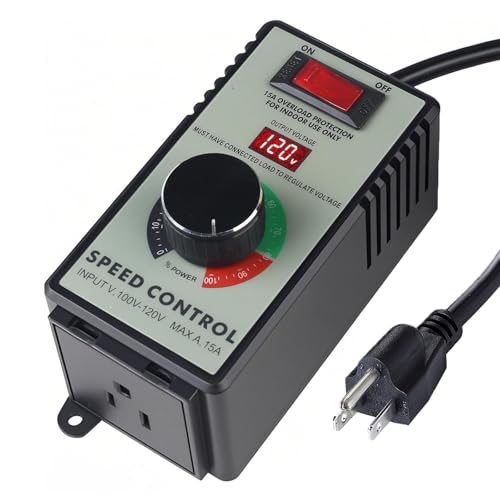
The CDMall model targets 110-120V circuits with a maximum current of 15A and provides resistive and inductive load handling up to 2000W and 1500W respectively. It ships with a three-foot grounded power cord and includes an overload protection switch for safe operation. A high-precision LED voltage meter gives at-a-glance readings, which is helpful when dialing in airflow for hydroponics inline duct fans or ceiling exhaust. Note that it is designed for AC brushed motors and should not be used with brushless motors, ensuring compatibility with common fan configurations.
Key features include independent overload protection, a sharp LED display, and a robust casing designed for electrical reliability. Practitioners seeking tight speed control for larger inline fans will appreciate the 15A capacity, while users focusing on quiet operation may leverage the adjustable output to minimize noise without sacrificing airflow. Installation is straightforward in standard outlets and inline duct systems when using compatible AC brushed motors.
BN-LINK Variable Fan Speed Controller

The BN-LINK controller is a plug-in, three-speed regulator designed for duct inline exhausts, ventilation fans, and AC motors. It emphasizes safety with a grounded outlet plug and a durable build. The three speed settings—Low, Medium, and High—allow quick adjustments to balance energy use, airflow, and noise. Its simple knob-based operation makes it a strong pick for DIY projects or quick retrofits without the need for extensive wiring changes. Suitable for a range of inline fans and small blowers, it provides dependable control for household exhaust applications.
From a practical standpoint, the unit’s ease of use and compact form factor fit well in tight spaces behind wall panels or inside nearby enclosures. While it offers straightforward control, users should ensure the connected fan’s power rating aligns with the 125V, 4.8A rating to avoid overloading. For users prioritizing minimal installation effort, this model delivers reliable control with minimal setup, making it a popular choice for venting, kitchens, and small workshop fans.
ReeMoo AC Motor Speed Controller

The ReeMoo AC motor speed controller is designed for 100-120V input and supports up to 15A with a stated 10A continuous rating. It features a back clip for belt attachment, a precise regulation knob, and an LED display to monitor voltage. Overload protection is included to safeguard both equipment and users. The unit emphasizes practical portability for job sites or temporary setups, making it suitable for use with routers, drills, fans, or polishing machines in workshops and DIY environments.
With its clear voltage readout and protective features, this controller helps users optimize performance while reducing risk. The flame-retardant casing adds an extra layer of security for high-heat environments or longer operation periods. When selecting this model, verify that your particular device is within the resistive or inductive load ranges described to avoid exceeding the rated 15A maximum. It is well suited for projects requiring reliable, adjustable speed control with visible voltage feedback.
CavalliFun AC Motor Speed Controller

The CavalliFun model is designed for AC resistive loads, with a 110-120V input and a 15A maximum current, delivering up to 2000W for resistive loads and up to 1000W for inductive loads. It emphasizes safety with a robust, flame-retardant shell and multiple protection features including surge and spike protection along with RC absorption. The independent overload switch automatically shuts off when current exceeds 15A, ensuring device and user protection. It is ideal for fans, heaters, and lamps where precise speed control is needed without sacrificing safety.
Heads-up for users: this controller is best used with fixed, compatible AC motors that do not require complex electronics. The product’s emphasis on safety features makes it suitable for workshops and utility rooms where reliable performance matters. Coupled with the LED display, operators can monitor voltage levels while selecting the appropriate speed for the given application, balancing airflow against noise and energy use.
DEWENWILS Variable Speed Controller
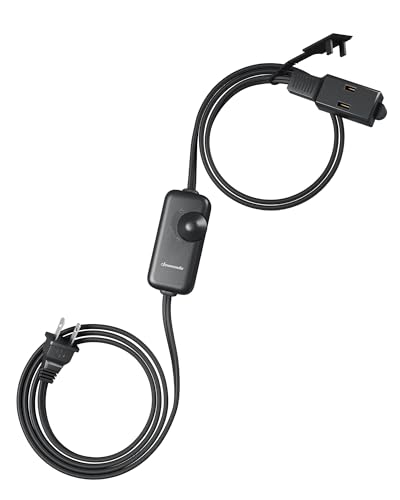
DEWENWILS offers a 100-125V AC controller capable of handling multiple sockets (1–3) for simultaneous fan adjustments. The speed range spans from about 40% to 100%, allowing tailored airflow for various projects, from radon mitigation to hydroponic ventilation. The plug-and-play design makes it attractive for DIY users who want to avoid a wired installation. It suits small to mid-sized exhaust fans and provides a straightforward method to balance ventilation and noise in a kitchen, bathroom, or grow room.
Considerations include ensuring your fan is compatible with a voltage-controlled, AC-based setup and that the combined load across the sockets stays within the unit’s capacity. The DEWENWILS model is a flexible option for users seeking simple, multi-fan control without heavy electrical modifications. It is particularly suited for temporary setups or where quick changes in airflow are beneficial.
Buying Guide: Key Purchase Considerations
- Load compatibility: Match the controller’s amperage and wattage ratings to your fan’s starting and running current. Resistive loads (fans, heaters, lamps) generally differ from inductive loads (motors with starting capacitors).
- Voltage range: Ensure the device operates at your household voltage (110–120V in the US) and supports the motor type you own (brushed AC motors are common; brushless require different handling).
- Protection features: Look for overload, short-circuit, surge, and spike protection. A flame-retardant housing adds an extra safety margin for hot environments.
- Display and monitoring: LED or digital voltage displays help with precise control and troubleshooting. A back clip for portable use can be convenient for workshops.
- Installation approach: Decide between plug-in controllers for quick setups and hardwired models for integrated installations. Grounded plugs reduce risk for inline fans.
- Number of controlled devices: If you need multi-fan control, choose models offering 1–3 sockets or individual channels without exceeding total current.
- Compatibility notes: Some controllers specify suitability only for resistive loads or for certain motor types. Follow manufacturer guidance to avoid damage.
- Ease of use: For quick adjustments, a knob-based regulator or simple dial may be preferable over digital presets, depending on your workflow.
- Durability and enclosure: A rugged, flame-retardant shell and proper insulation support longer life in garages, sheds, or hydroponic rooms.
In evaluating options, consider the primary use case: a single, quiet exhaust in a bathroom, a larger inline fan for a grow tent, or a workshop tool that requires frequent speed changes. Cross-check the product features against your fan’s specifications and the environment where the device will operate. The selections above provide a range of control styles—from LED-readouts and belt-clip portability to multi-socket setups—so you can balance performance with safety and convenience.