Best Extension Cables for Solar Panels: Durable, Low-Loss Power Leads
Finding the right extension cable for solar panels is essential for safe outdoor use, reliable power transfer, and long-term durability. This guide highlights five top options that balance conductivity, weather resistance, and ease of use. Read on for practical considerations, product highlights, and a quick buying guide to match your setup.
| Product | Length / Gauge | Key Benefit |
|---|---|---|
| Renogy 20FT 12AWG Solar Extension Cable | 20 ft, 12 AWG | UV resistant, waterproof; built for outdoor solar arrays |
| Vansdon 2×30 Feet Solar Panel Extension Cable | 60 ft total (30 ft + 30 ft), 10 AWG | Tin-plated copper, robust for long runs |
| Bateria Power 10AWG 30FT Solar Panel Cable | 30 ft, 10 AWG | Flame-retardant sleeving and high-temp tolerance |
| OYMSAE 25Feet SAE Extension Cable | 25 ft, 16 AWG (SAE) | Simple quick-disconnect for versatile setups |
| Jackery 16.4 ft DC Extension Cable | 16.4 ft, compatible with multiple ports | Flexible, durable for off-grid use |
These products cover a range of needs—from long runs with high-conductivity copper to easy quick-connect solutions for portable setups. Consider your panel type, expected weather, and whether you need two-conductor runs or full dual-wire assemblies when choosing.
Renogy 20FT 12AWG Solar Panel Extension Cable

Hard plastic connectors at each end, female and male connectors provide a secure connection. The black, UV-resistant cable extends and locks built-in cables, while being UV resistant and waterproof. TÜV tested, this extension cable is designed to withstand outdoor exposure and sunlight, helping maintain a stable connection over time.
Vansdon 2×30 Feet Solar Panel Extension Cable

This kit includes a paired 30-foot red and 30-foot black 10AWG cable. The tin-plated copper wire offers improved conductivity, lower resistance, and better oxidation resistance. The IP67-rated insulation with XLPE/XLPO double sheath provides flame-retardant, UV-resistant, and weatherproof performance for outdoor installations. Suitable for long cable runs in RVs and PV systems.
Bateria Power 10AWG 30FT Solar Panel Cable
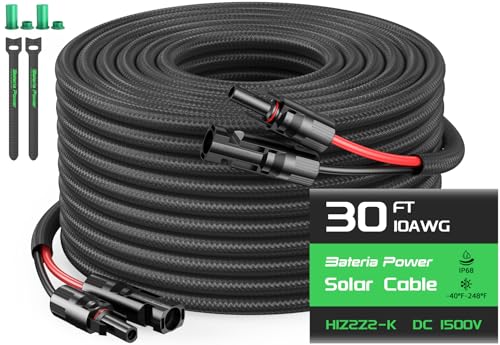
Features a heavy-duty flame-retardant protective sleeving for abrasion resistance and ease of handling. The 10AWG tinned pure copper conductors reduce resistive losses by about 30% compared with thinner gauges. Tin coating improves corrosion resistance, supporting 10+ years of reliable outdoor performance in harsh environments. TÜV-certified XLPO insulation adds strong flame resistance and temperature tolerance from -40°F to 248°F (-40°C to 120°C).
OYMSAE 25Feet SAE Extension Cable

This 25-foot copper wire uses SPT-2 16AWG with a standard two-pin SAE connector pair. The red wire indicates positive, the black wire negative, and the harness supports universal SAE ports for expansion or maintenance of batteries, solar panels, and other equipment. Durable construction allows use across a variety of outdoor charging and solar setups.
OWINUSTECH 3Ft 10AWG Solar Cable Kit

3 feet length with two connectors, 10AWG, and IP67 rating. The red and black design makes polarity obvious, reducing wiring mistakes. The PE outer material and PPO connector material resist wear, and the conductor is copper with a tee-high insulation thickness. Suitable for compact solar kits and tight installations requiring quick connect/disconnect and reliable weather resistance.
Buying Guide: Key Purchase Considerations
- Conductor size and resistance: Higher gauge numbers (like 10 AWG) reduce resistance and power loss over longer runs. For longer distances, prioritize 10 AWG or better.
- Weather and UV resistance: Outdoor solar cables should feature UV protection, weatherproof insulation, and flame-retardant materials to handle sun, rain, and snow over years of use.
- Connectors and compatibility: Ensure the ends match your panels and controllers. Some cables come with dual connectors, others with SAE quick-disconnects. Check voltage and polarity labeling to avoid miswiring.
- Durability features: Look for tin-plated copper conductors for corrosion resistance, protective sleeving, and robust jackets (XLPE/XLPO) for harsh environments.
- Length versus practicality: Longer cables offer flexibility but can introduce more resistance. Choose the minimum length that safely meets your layout without excess slack.
- Certifications and safety: TÜV, UL, CE, and RoHS certifications indicate adherence to industry safety and performance standards.
- Temporary versus permanent use: SAE extension cables and quick-disconnect options suit portable or temporary setups, while sealed, armored cables suit permanent outdoor arrays.
- Maintenance needs: Consider ease of storage, cable coiling, and the ability to weatherproof connections when the system is not in use.
When choosing, balance the need for low resistance with practical considerations like installation environment, cable management, and maintenance. The featured options provide a spectrum of lengths, gauge sizes, and connector types to fit various solar configurations—from small RV setups to larger fixed installations.