Best Explosion-Proof Limit Switches for Hazardous Environments
When selecting limit switches for hazardous or explosive atmospheres, reliability, rugged construction, and certification matter most. This guide highlights five leading explosion-proof limit switches and related devices, with concise specifications to help buyers compare options for safe, durable operation in industrial settings. Each product section includes a direct Amazon link, an image, and core features to aid quick assessment.
Summary of Selected Products
| Product | Brand | Key Rating | Link |
|---|---|---|---|
| Linemaster 597-EX Explosion Proof Foot Switch | Linemaster | Explosion-proof, Class I, Zone I | View Product |
| Honeywell LSXYAB4L Limit Switch | Honeywell | DPDT, Weather- and explosion-proof seal | View Product |
| Baomain WLCA12-2-Q Limit Switch | Baomain | 380V, 10A; momentary rotary lever | View Product |
| Eaton E50KL537 Limit Switch Operator | Eaton | Roller lever, adjustable length; suitable for hazardous setups with proper heads | View Product |
| TWTADE ME-8108 Adjustable Roller Lever | TWTADE | NC/NO, 5A at 250V; compact roller lever | View Product |
Linemaster 597-EX Explosion Proof Foot Switch

The Linemaster 597-EX is designed for hazardous environments requiring explosion-proof protection. It features a full aluminum guard and a non-spark housing optimized for safety in Class I, Zone I applications. The device supports up to 15 amp at 125V and 10 amp at 250V, with a robust base plate and mounting flexibility for floor or equipment installation. This model emphasizes rugged construction and compliance with explosion-protection standards, making it suitable for heavy-duty automation and safety interlocks in challenging facilities.
Honeywell LSXYAB4L Limit Switch (Explosion-Ready)

The Honeywell LSXYAB4L is a side-rotary limit switch with DPDT contacts and heavy-duty sealing designed for hazardous locations. It offers zinc die-cast housing and a weather-and-explosion-proof seal, enabling operation in outdoor or indoor hazardous atmospheres. The double-throw arrangement supports flexible control schemes, while the rugged construction provides reliable switching in environments where safety and performance are critical.
Baomain WLCA12-2-Q Momentary Rotary Lever
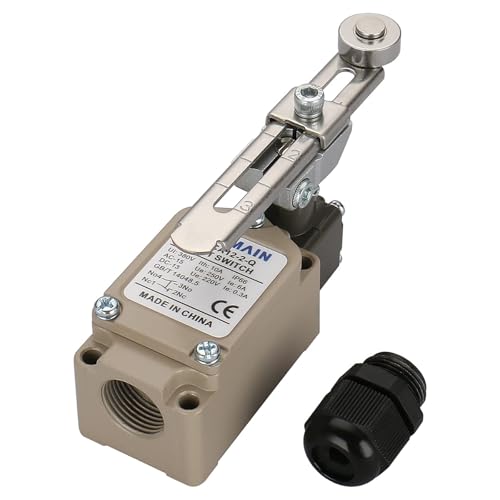
The Baomain WLCA12-2-Q offers a momentary 380V, 10A rating with an adjustable rotary roller lever. It features a 1NC + 1NO contact configuration and provides a compact option for explosion-protected or hazardous-area projects when paired with proper enclosure and installation practices. This switch is suitable for OEM equipment safety interlocks and automation tasks requiring a reliable, adjustable lever action in constrained spaces.
Eaton E50KL537 Limit Switch Operator

The Eaton E50KL537 features an adjustable nylon roller actuator and is designed to connect with a side-shhaft rotary operating head. It includes a socket-head screw for secure shaft attachment and provides a versatile lever length range from 1.0 to 3.75 inches. While not explicitly labeled as explosion-proof, it is commonly selected for installations where hazardous-area-rated components are combined with appropriate enclosures and safety practices in mind.
Baomain BM-3104 Limit Switch

The Baomain BM-3104 is a TZ-3104 roller lever limit switch with a 1NC+1NO configuration and IP67 waterproof rating. It is designed as an OEM-style replacement for CNC machines and automated doors. This model emphasizes reliability in wet or challenging environments, with a compact footprint suitable for tight installations in industrial automation where environmental sealing matters.
Furnace Limit Switch OEM 47-22861-01

The Furnace Limit Switch OEM 47-22861-01 is a roll-out SPST thermostat designed for furnace safety and temperature regulation. It features a bimetallic temperature control for quick response and reliable operation without arc phenomena. This switch is positioned for quick replacement and straightforward installation in systems requiring reliable roll-out protection and temperature-based safety control.
TWTADE ME-8108 Adjustable Roller Lever

The TWTADE ME-8108 is an adjustable roller lever limit switch with NC-NO (DPDT) configuration. It supports AC 250V at 5A and features a roller dimension of 18 x 7 mm. This compact switch is suitable for CNC mills, routers, and automation tasks where a compact, reliable limit switch with a momentary action is required in restricted spaces. Proper enclosure considerations ensure safe operation in potentially explosive environments.
Buying Guide: Key Considerations For Explosion-Proof Limit Switches
- Explosion protection rating: Look for switches certified for specific hazardous zones (e.g., Class I, Zone I). Ensure the enclosure and wiring meet the relevant standards for your facility.
- Contact configuration: Choose NC/NO or DPDT configurations based on the safety lockout or interlock logic required in your system.
- Actuator type and range: Roller lever actuators offer precise positioning; consider the lever length and mounting compatibility with your machinery.
- Environmental sealing: IP ratings (e.g., IP65, IP67) indicate resistance to dust and moisture; select according to the installation environment.
- Electrical ratings: Verify voltage and current ratings align with your control circuits and power supplies, including AC and DC requirements.
- Mounting and installation: Assess mounting hole sizes, thread specifications, and mounting surface rigidity to ensure reliable operation.
- Materials and construction: Die-cast housings, aluminum guards, and corrosion-resistant materials improve longevity in harsh environments.
- Maintenance and replacement: Favor devices with OEM compatibility and clear service instructions to minimize downtime during part replacement.
- Integration with safety systems: Ensure compatibility with existing interlocks, safety relays, and cut-off circuits to maintain overall risk reduction.
- Cost vs. risk: Explosion-proof devices may have higher upfront costs but reduce the risk of ignition and downtime in hazardous areas.
Note: For hazardous environments, always follow local electrical codes and manufacturer installation instructions. Use proper enclosures, grounding, and wiring methods when integrating these components into industrial systems.