Best Explosion-Proof Conduit Body Options for Tough Environments
When selecting an explosion-proof conduit body, the focus is on safety, reliability, and ease of installation in hazardous locations. This guide presents five top options for professional use, each suited to different installation needs. The selections cover varied materials, hub configurations, and compatibility to help buyers choose confidently for industrial environments, offshore platforms, or chemical plants. The table below highlights the best use case for each product to speed your decision.
| Product | Brand | Best For |
|---|---|---|
| Conduit Outlet Body, Iron, T, 3/4 In. | Appleton | Rugged steel, compact 3/4″ conduit outlet for standard hazardous locations |
| Crouse-Hinds GUP215 Conduit Junction Box | Crouse-Hinds | Flexible hub configurations; explosion-proof and rain-tight |
| Conduit Body Cover, 3-1/2 and 4 in., FM7 | Appleton | Extension covers for FM7 systems in hazardous areas |
| Crouse & Hinds GUAD-26 3/4″ Conduit Body | Crouse-Hinds | Compact 3/4″ body with appropriate hub size for tight installs |
| Thomas & Betts E987D Carlon Rigid PVC Type-C | Thomas & Betts | Non-metallic option for lightweight, corrosion-resistant needs |
Conduit Outlet Body, Iron, T, 3/4 In. — Appleton
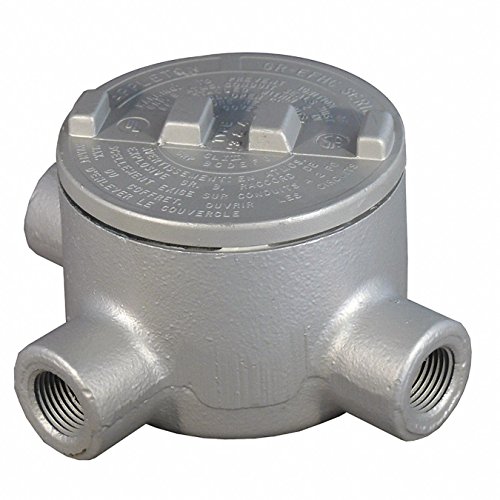
Best for: Maintenance crews needing a compact, heavy-duty 3/4″ conduit outlet in hazardous locations. This iron, explosion-proof model offers robust construction for reliable service in demanding environments. It is suitable for standard 3/4″ conduit runs and fits common wiring methods used in hazardous zones. Caution: check exact hub arrangement and ensure compatibility with your existing conduit system.
Crouse-Hinds GUP215 Conduit Junction Box

Best for: Projects needing flexible hub options in explosion-proof enclosures. The GUP215 ships with multiple hub configurations and is designed to be dust-ignition-proof and rain-tight, making it well-suited for outdoor or harsh indoor sites. Why selected: adaptable hub count supports various wiring layouts. Caution: verify the specific hub/plug combination fits your conduit footprint and local code requirements.
Conduit Body Cover, 3-1/2 and 4 in., FM7

Best for: Upgrading or replacing covers on FM7 conduit bodies in hazardous locations. The FM7 cover, with gasket and captive screws, is designed for secure sealing. Why selected: compatibility with Appleton FM7 Unilet conduit outlets; designed for robust protection in Class I, Division II environments. Caution: ensure compatibility with your existing outlet body model and gasket seating.
Crouse & Hinds GUAD-26 3/4″ Conduit Body GUAD26

Best for: Reduced-size conduit runs where 3/4″ hub is sufficient. The GUAD-26 provides a compact option with an appropriate hub size. Why selected: efficiency in tight spaces without sacrificing explosion-protection features. Caution: confirm that the cover and hub match your installation’s standard configuration.
Thomas & Betts E987D Carlon Rigid PVC Type-C

Best for: Lightweight, non-metallic conduit needs in hazardous locations where metal is not required. This Type-C PVC option offers corrosion resistance and ease of handling. Why selected: helpful for reducing weight in complex layouts. Caution: PVC options may have different temperature and chemical resistance compared with metal bodies; verify compatibility with your environment.
Buying Guide
- Explosion-proof rating: Confirm that the conduit body is rated for the specific hazardous location class and division (for example, Class I, Division II) relevant to your site.
- Material choice: Choose steel for durability or non-metallic/PVC for corrosion resistance or lighter weight, depending on exposure and regulatory needs.
- Hub size and configuration: Ensure available hub sizes (e.g., 3/4″, 3/2″, 4″) align with your conduit runs and future expansions. Consider whether plugs or extra hubs are included or needed.
- Compatibility: Verify model compatibility with your existing conduit outlets and covers, especially when mixing brands or when upgrading components.
- Sealing and gaskets: Look for models that include gaskets or caps to maintain seal integrity in dusty, wet, or oily environments.
- Installation considerations: Check whether the unit requires special mounting hardware or has captive screws and clip-on designs for easy servicing.
- Environmental exposure: For rain-tight or dust-ignition-proof needs, confirm protection levels and ingress resistance for outdoor or harsh indoor settings.
- Code and standards: Ensure compliance with local electrical codes and the standards referenced by the manufacturer (UL, CSA, etc.).
FAQ
- What is the main difference between explosion-proof and dust-ignition-proof conduit bodies?
– Explosion-proof and dust-ignition-proof designs target different ignition hazards; the former prevents ignition in explosive atmospheres, while the latter prevents dust-induced ignition in dusty environments. Always match the product to your hazard class. - Do I need a metal or non-metallic conduit body for hazardous locations?
– It depends on corrosion exposure, weight considerations, and local code. Metal bodies offer durability; non-metallic options reduce weight and resist certain chemicals. - How do I verify hub size compatibility?
– Check the product’s hub size specification and compare it with your conduit diameter and number of conductors. Some hubs support multiple configurations; verify exact fit before ordering. - Can I mix brands for conduit outlets and covers?
– Mixing is possible if dimensions and sealing interfaces align, but compatibility is not guaranteed. Prefer matching families when possible to ensure optimal sealing and mounting. - What maintenance considerations exist for explosion-proof conduit bodies?
– Regular inspection of gaskets, screws, and housings is advised. Ensure seals remain intact and replace damaged parts to preserve protection ratings. - Are these products suitable for outdoor installations?
– Many models advertise rain-tight or weather-resistant features; always confirm the product’s rating and installation instructions for outdoor use.