Best Exhaust Fans With Dehumidifiers for Damp Spaces
Answering the buyer’s search intent, these exhaust fans with built-in dehumidification help ventilate damp areas while controlling humidity. They’re ideal for crawl spaces, basements, garages, attics, and hydroponics setups. The top picks below balance airflow, humidity control, and climate-based operation to reduce condensation, odors, and mold risk. Suitable buyers include homeowners renovating damp spaces, DIY builders seeking energy-efficient venting, and hobbyists managing humidity in grow tents.
Overview of selected products
- CADPXS Crawlspace Ventilation Fan – 220 CFM with humidistat and dehumidistat
- Pewoaoa 240 CFM Crawlspace Vent Fan – thermostat and humidistat, auto-trigger for humidity or temperature
- OREiN 3-in-1 Bathroom Exhaust Fan – humidity-sensing vent with light, 160 CFM
- Abestorm 260 CFM Crawlspace Ventilation Fan – IP-55 rated with humidistat thermostat
- JOEAONZ 110 CFM Bathroom Exhaust Fan – quiet, easy install, basic humidity response
| Product | Airflow | Special Features | Best For |
|---|---|---|---|
| CADPXS Crawlspace Ventilation Fan | 220 CFM | Humidistat & dehumidistat, freeze protection | Small to medium crawl spaces needing balanced humidity |
| Pewoaoa Crawlspace Vent Fan | 240 CFM | Thermostat & humidistat, auto-stop at extreme temps | Moist environments requiring climate-triggered control |
| OREiN 3-in-1 Bath Exhaust | 160 CFM | Humidity sensor, integrated light, 3 color temps | Bathrooms or damp rooms needing lighting plus venting |
| Abestorm Crawlspace Ventilation Fan | 260 CFM | IP-55 isolation mesh, metal shell, adjustable faceplate | Humid, dusty, or damp crawl spaces with rugged use |
| JOEAONZ Bathroom Exhaust Fan | 110 CFM | Quiet operation, simple install | Small bathrooms or enclosed rooms needing basic humidity control |
CADPXS Crawlspace Ventilation Fan
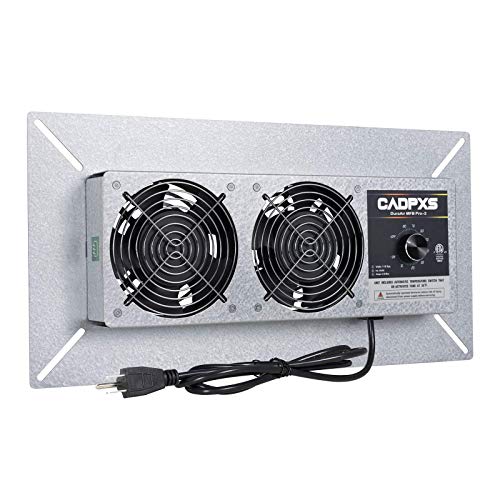
Airflow: 220 CFM. 18″ x 9″ x 2″. Dual fans with a 6.56-foot grounded power cord. Built-in humidistat with a 20%–80% RH range. Includes a dehumidistat for moisture control and a freeze protection thermostat to prevent malfunction in cold weather. Ideal for crawl spaces, basements, garages, attics, and hydroponics tents.
Best for: Small to mid-size crawl spaces needing active humidity control and radon or odor mitigation. Limitations: Dehumidistat range may be less precise for very tight RH targets in extremely damp environments.
Pewoaoa 240 CFM Crawlspace Vent Fan

Airflow: 240 CFM. Dual-fan design with thermostat and humidistat. Auto-activates when humidity or temperature exceeds preset levels to prevent condensation, mold, and damp odors. Low-temp protection helps avoid backflow in cold weather. Suitable for crawl spaces, basements, attics, garages, and laundry rooms.
Best for: Climate-controlled spaces where both humidity and temperature thresholds need automation. Limitation: Auto-start logic may require initial setup to suit room conditions.
OREiN 3-in-1 Bathroom Exhaust Fan

Airflow: 160 CFM. Humidity sensor triggers auto-ventilation at 60% humidity. Includes a 1500-lumen LED light in 3 color temps (3000K, 4000K, 5000K) with a night light. Designed for easy room-side installation, fits standard 11.81″ x 11.02″ ceiling openings with a 6″ duct.
Best for: Bathrooms or damp rooms needing integrated lighting and humidity-driven venting. Limitation: No external venting options beyond standard 6″ duct compatibility noted.
Abestorm 260CFM Crawlspace Ventilation Fan

Airflow: 260 CFM. IP-55 rated with a built-in isolation mesh to prevent intrusions, and a rugged aluminum-zinc shell for weather resistance. The unit includes an adjustable faceplate and easy knob controls, designed for crawl spaces, garages, attics, and other damp areas.
Best for: Harsh environments where moisture, dust, and potential pests are a concern. Limitation: Higher airflow may be noisier in tight spaces if not acoustically treated.
JOEAONZ Bathroom Exhaust Fan

Airflow: 110 CFM. Quiet operation with 4-inch duct compatibility, suitable for enclosed rooms or small bathrooms. Basic humidity response helps reduce moisture buildup without complex automation.
Best for: Small bathrooms or compact spaces needing simple, affordable humidity control. Limitation: Lower airflow compared to larger crawl space units; may be less effective in very damp, large areas.
Buying Guide
What should you consider when choosing an exhaust fan with a dehumidifier feature?
- Airflow vs. space size: Match CFM to the room or crawl space volume to ensure effective ventilation and humidity control.
- Humidity and temperature controls: Look for built-in humidistats and thermosensors that auto-activate at your target RH or temperature ranges.
- Additional features: Integrated lighting, freeze protection, isolation meshes, and IP ratings can improve usability and durability in damp environments.
- Installation and ducting: Check ceiling opening sizes and duct compatibility; some units are designed for easy room-side installation with standard duct sizes.
- Maintenance and durability: Consider metal or stainless components, warranty coverage, and ease of cleaning when moisture exposure is high.
- Noise levels: For spaces like bathrooms or living areas, prioritize models with low decibel ratings or quiet operation.
How to choose by use case
- If you need strong venting in a crawl space with humidity control, prioritize higher CFM and dual humidistat/thermostat features (Pewoaoa or Abestorm models).
- If you want lighting plus venting in a bathroom, choose a 3-in-1 unit with a reliable humidity sensor and multiple color temperatures (OREiN).
- For tight spaces with minimal noise and straightforward installation, a compact, low-CFM option can still manage moisture effectively (JOEAONZ).
Installation tips
- Verify duct runs and locations before mounting to minimize backdrafts.
- Seal duct connections to prevent leaks and ensure maximum efficiency.
- Set humidity and temperature thresholds according to seasonal humidity changes for optimal performance.
FAQ
- What size crawl space should I vent with 220–260 CFM fans? Choose larger spaces carefully; if the area feels consistently damp, a higher CFM may be necessary to exchange air effectively.
- Do all models automatically adjust based on humidity? Many include humidistats; some also use temperature sensors for auto-activation. Check the product features for exact behavior.
- Is IP-55 rating important? For damp or dusty environments, an IP-55 rating helps protect the unit from water spray and dust ingress.
- Can these fans replace a dedicated dehumidifier? They reduce moisture by improving ventilation but may not achieve the same RH targets as a stand-alone dehumidifier in very damp spaces.
- What about installation in a finished bathroom? Look for models with standard ducting and room-side installation options to avoid attic access.
- How loud are these fans? Noise varies by model; larger, high-CFM units tend to produce more sound, but many offer quiet operation modes.