Best EV Charging Station for Residential Use: Top 5 Home Chargers
The best residential EV charging stations combine safety, ease of use, and smart features for daily charging comfort. This guide highlights five top options ideal for single-family homes, duplexes, or small multi-family setups. Each pick targets a specific buyer profile—from budget-conscious homes to tech-savvy households needing remote control and data insights. Use the quick reference table below to compare core specs at a glance.
| Product | Max Amps / kW | Cable Length | ||
|---|---|---|---|---|
| LEDVANCE 48 Amp Level 2 | 11.5 kW / 48A | 25 ft | SAE J1772 | |
| Autel MaxiCharger Level 2 | Up to 80A / ~19.2 kW | 25 ft | J1772 | |
| GROWNEER Level 2 48A | 48A / 9x faster than Level 1 | 25 ft | J1772 (Tesla adapter included) | |
| EMPORIA Level 2 48A | 48A / up to 46 miles/hour | 25 ft | NEMA 14-50 / NACS optional | |
| ChargePoint HomeFlex | Level 2, up to 50A | 25 ft | J1772 / NACS compatibility |
LEDVANCE 48 Amp Level 2 EV Charger Residential Charging Station

LEDVANCE offers an 11.5 kW Level 2 charger with a 25-foot cable and a SAE J1772 connector. It targets single-family homes and small facilities, supporting Plug & Play use or full control via the SYLVANIA WiFi app for scheduling and charging sessions. Best for buyers who want simple setup with optional remote monitoring and a reliable residential option.
Best for: Homeowners seeking a straightforward, app-enabled charger that balances power and ease of use. Limitation: May require a WiFi setup for full feature access.
Autel MaxiCharger Level 2 Electric Vehicle Charger
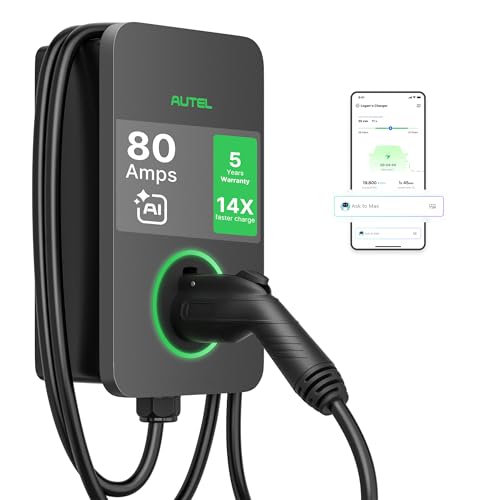
Autel MaxiCharger Level 2 delivers up to 80A (about 19.2 kW) alongside AI-powered smart charging. Its app enables scheduling around time-of-use rates, remote session control, real-time energy data, and alerts. Dual-network Wi-Fi plus Wi-SUN promises high uptime. Best for: tech-forward households needing high power, predictive charging, and robust remote management. Caution: bundled features rely on app connectivity; rely on network stability for optimal performance.
EV Range Commercial EV Charging Station (OCPP-Compliant)

EV Range offers a commercial-grade, OCPP-compliant charger suitable for apartments, hotels, and fleets. It supports driver pay apps and custom pricing, with revenue-tracking features like monthly payouts and usage reports. Best for: multi-user or commercial settings seeking charging as a paid service. Limitation: designed with revenue features in mind, which may be more than what a single-family home needs.
GROWNEER Level 2 EV Charger 48 Amp

GROWNEER delivers 48A Level 2 charging with a 25-foot cable and a Tesla adapter included for expanded compatibility. It can be wall-mounted or portable, offering flexibility for fixed installation or on-the-go charging. Best for: users who want a 2-in-1 charger that can adapt to different setups. Caution: Tesla adapter usage may vary by vehicle and local regulations, so verify compatibility before installation.
EMPORIA Level 2 EV Charger

EMPORIA’s 48A Level 2 charger features NACS compatibility and a weather-ready build with a NEMA 14-50P preconfiguration for versatile installs. It can provide up to 46 miles per hour of charging on the hardwired path, with professional installation recommended for optimal safety. Best for: homes needing robust weather resistance and flexible connector options. Limitation: requires professional installation for certain configurations.
ChargePoint HomeFlex Level 2 EV Charger

ChargePoint HomeFlex offers flexible charging with 50A capability, a user-friendly mobile app, and access to a broad network of charging locations. Its installation supports hardwired or wall-mounted setups, and the app enables reminders, smart home integration, and charging data tracking. Best for: buyers who value network support, app control, and future-proofing. Caution: network features rely on service availability and app updates.
Buying Guide: Key Purchase Considerations
- Power needs: Assess your vehicle’s maximum charging rate and ensure the charger can deliver enough amps for timely replenishment.
- Installation flexibility: Decide between wall-mounted, portable, or mixed setups. Consider whether you need outdoor or indoor capability.
- Connectivity and app support: If you want scheduling, remote control, and usage data, prioritize models with robust mobile apps and cloud connectivity.
- Future-proofing: For larger or expanding EV fleets, choose higher amperage options and open standards (like OCPP) to adapt over time.
- Safety and weatherproofing: Verify NEMA rating and ingress protection (IP) for outdoor use, along with protection features like overcurrent and thermal monitoring.
- Cost and incentives: Consider total cost of ownership, potential rebates, and whether the charger supports energy management features to maximize savings.
Frequently Asked Questions
- What is Level 2 charging and why choose it for home use? Level 2 chargers provide faster charging than Level 1 by delivering higher voltage and current, reducing charging time for most daily needs.
- Do all Level 2 chargers fit every EV? Most use the SAE J1772 connector, which covers the majority of non-Tesla vehicles in North America. Tesla can be charged via adapters on some models.
- Can I install a Level 2 charger myself? Some models are designed for DIY installation, but many homes require a licensed electrician due to electrical panel and circuit considerations.
- Are there benefits to features like AI or smart scheduling? Smart features can help optimize charging costs by aligning charging with low utility rates and improving charger utilization in multi-user setups.
- Is a subscription or network service required? Many chargers offer optional cloud services or apps, but core charging functionality typically works without ongoing fees.
- What maintenance should I expect? Regular inspection of cables, connectors, and weatherproof enclosures is recommended; check for firmware updates as needed.