Best Energy Efficient Water Heaters for Modern Homes
When selecting a water heater, efficiency translates to lower energy use, steadier hot water, and long-term savings. This guide reviews top energy efficient options across tankless, point-of-use, and compact models to fit apartments, small homes, and whole-house setups. Each product highlights efficiency features, typical use cases, and key considerations to help you compare performance and installation needs.
| Product | Type | Efficiency Highlight | Best For |
|---|---|---|---|
| Rheem 18kW 240V Tankless Electric | Tankless | Self-modulation and precise 1-degree control | Small home, high hot-water demand |
| Rheem RTEX-24 24kW 240V | Tankless | Temperature control 1-degree steps | Whole-home hot water with robust flow |
| APUS 190,000 BTU Outdoor Tankless | Outdoor Tankless | High efficiency with remote control, 8.1 GPM | Whole-house hot water outdoors |
| BOSCH 2.5-Gallon Tronic 3000 | Point-of-Use | 97–98% thermal efficiency | Under-sink hot water for a sink or vanity |
| MIZUDO 10 Gallon Point of Use | Tank | Compact, fast heating, UL listed | Small spaces with booster needs |
Rheem 18kW 240V Tankless Electric Water Heater
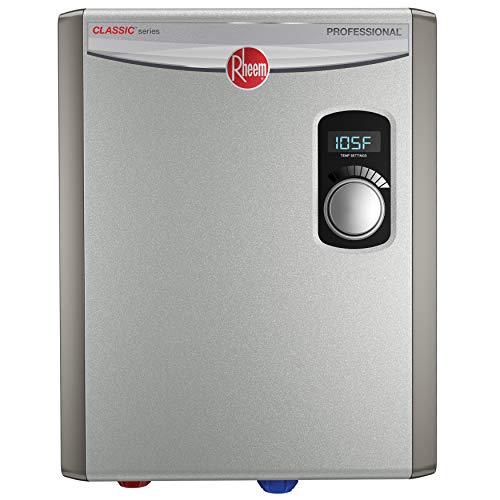
The Rheem 18kW 240V Tankless Electric Water Heater delivers on-demand hot water with external digital thermostatic control and LED display for precise heat management. Its self-modulation adjusts power to match hot water demand, minimizing energy waste. Built with durable copper immersion heating elements, it supports flow rates up to 4.4 GPM, suitable for running a shower and sink in compact spaces. Field serviceability means easier maintenance and extended life. Installation requires adequate electrical capacity and proper venting considerations for efficiency and safety.
Rheem RTEX-24 24kW 240V Electric Tankless
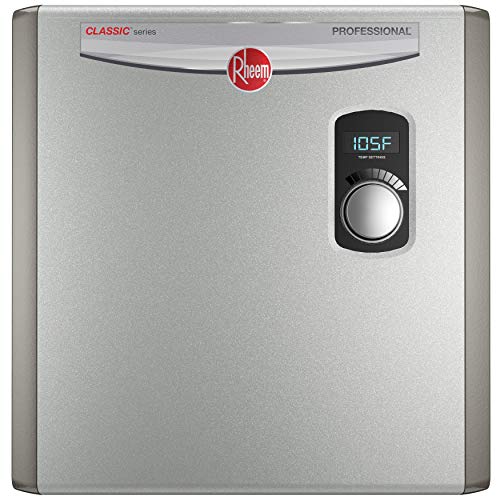
This unit targets whole-house performance with 24 kW of heating power and 3 x 40 amp electrical requirements. It provides continuous hot water and allows precise temperature control in 1-degree increments from 80–140 degrees Fahrenheit. Consider your home’s electrical panel capacity and space in the breaker box when planning installation. Groundwater temperature and flow rate influence the actual gallons per minute and temperature rise, so match expectations to your climate and household needs.
APUS 190,000 BTU Outdoor Tankless Water Heater

This high-efficiency propane tankless heater provides 8.1 GPM and up to 190,000 BTU for whole-house on-demand hot water. An ultra-low 0.79 GPM minimum flow ensures reliable operation under low water pressure. Smart temperature control enables remote adjustments via an app or wired controller across a 95°F–149°F range with ±1°F accuracy. Its outdoor-friendly, compact design simplifies installation, with standard 3/4″ water and gas connections, making it suitable for homes seeking energy efficiency without indoor space constraints.
BOSCH Tronic 3000 T 2.5-Gallon
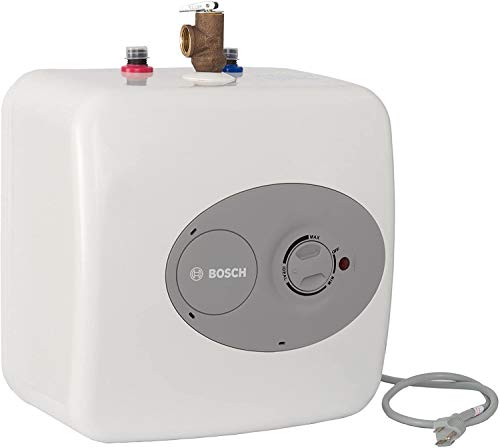
This 2.5-gallon point-of-use mini-tank is designed to fit under a sink, delivering hot water exactly where needed. It boasts a high thermal efficiency of 98% and compact dimensions (around 13.75 inches square and 10.75 inches deep). With a 120-volt plug-in setup, it’s easy to install independently or in-line with a larger hot water source, making it ideal for bathrooms, kitchens, or small offices seeking immediate hot water with minimal energy loss.
MIZUDO 10 Gallon Point of Use

The MIZUDO 10-gallon electric tank offers rapid heating with 1500W power, a UL listing, and a 10-gallon capacity suitable for boosting hot water at kitchens or bathrooms. Its compact, space-saving design supports independent installation or inline boosting with a larger source. A built-in adjustable thermostat helps tailor temperatures to prevent scalding and optimize energy use, while the integrated T&P valve adds a safety feature common to residential hot water systems.
Buying Guide
- Household demand and placement: Tankless models save space and reduce standby heat, but require adequate electrical capacity or gas supply. Point-of-use heaters are best for single fixtures, while whole-house systems need consideration of flow rates and fuel source.
- Power and fuel compatibility: Electric tankless units demand robust electrical panels (often 40–60 A circuits) and precise wiring. Gas and propane units require venting and vent caps designed for efficiency and safety.
- Flow rate and temperature rise: For tankless systems, evaluate gallons per minute (GPM) at your climate’s typical groundwater temperature. If multiple fixtures run simultaneously, ensure the unit supports the combined load.
- Energy efficiency features: Look for self-modulating controls, high thermal efficiency ratings, and features that minimize standby losses. Remote controls and app-based management add convenience and potential energy savings.
- Installation and maintenance: Field serviceability and ease of flushing are important for longevity. Compact units are easier to place in limited spaces, but ensure accessibility for service and maintenance.
- Safety and durability: UL listings, corrosion-resistant elements, and protective Thermostats with precise settings help maintain stable temperatures and reduce energy waste.
- Cost vs. savings: While initial costs vary, compute long-term energy savings and potential utility rebates when assessing value. Proper sizing is key to maximizing efficiency without sacrificing hot water availability.