Best Emergency Solar Power System for Off-Grid Peace of Mind
Power outages and outdoor adventures demand reliable, portable energy. This guide highlights five top-performing emergency solar power systems, selected for versatility, safety, and ease of use. Each entry summarizes core capabilities, charging options, and ideal scenarios—from camping off-grid to home backup. A quick buying guide follows to help compare capacity, charging speed, port selection, and safety features.
| Product | Brand | Key Feature |
|---|---|---|
| Portable Solar Generator, 300W | ZeroKor | 60W solar panel included; multiple outlets |
| Kepswin Solar Charger Power Bank | Kepswin | 4 built-in cables; 3 foldable panels |
| Jackery Solar Generator 1000 V2 | Jackery | 1000W output; 1070Wh capacity |
| Solar Power Bank 45800mAh | SolarTred | 4 panels; 5-device charging |
| MARBERO 88.8Wh Solar Generator | MARBERO | 21W panel; compact backup power |
The featured units offer a spectrum of power levels, from compact, portable units suitable for quick charging on the go to larger station setups designed for longer outages or home backup. All are designed to run essential devices—phones, tablets, lights, and small electronics—while also supporting off-grid camping, RV use, or emergency preparedness kits.
ZeroKor Portable Solar Generator With 60W Panel

This 300W portable power station includes a foldable 60W solar panel and a 280Wh battery. It provides essential charging via 2× 110V/300W max AC outlets, a DC port, USB ports, and a quick-charge USB port. A built-in SOS flashlight supports outdoor use. It can be recharged through wall outlets, the built-in MPPT solar panel, or carport, making it versatile for camping, RVs, or home outages. Note that devices exceeding 300W may stress the system, especially those with heat or built-in compressors.
Kepswin Solar Charger Power Bank 49800mAh
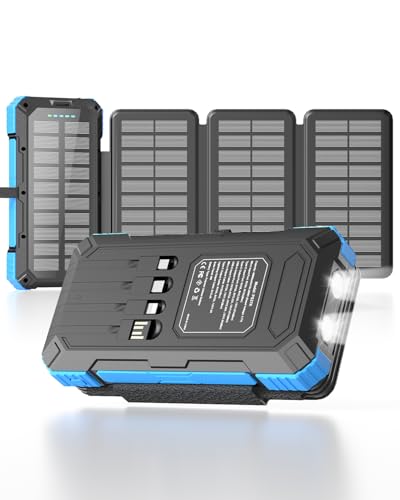
The Kepswin power bank features four built-in cables (iOS, USB-C, USB-A, Micro) and three ports (Type-C, Micro, USB-A), enabling concurrent charging for several devices. With 49800mAh capacity, it delivers extended usage for phones, tablets, and small gear. Built-in safety protections cover temperature, overvoltage, overcurrent, and short circuits. The four solar panels provide improved charging efficiency, offering a practical option for outdoor enthusiasts needing dependable power on multi-device setups.
Jackery Solar Generator 1000 V2

The Jackery 1000 V2 combines a 1,070Wh LiFePO4 battery with 1,500W continuous AC output and a 3,000W surge. It weighs about 23.8 pounds and includes a foldable handle for portability. One-hour fast charging can recharge via emergency charging in the Jackery App, with safe and efficient ChargeShield 2.0 technology. The unit provides long-term reliability with a 10-year-plus expected lifespan due to the durable battery chemistry, suitable for serious off-grid use or home backup during outages.
Solar Power Bank 45800mAh With 4 Panels
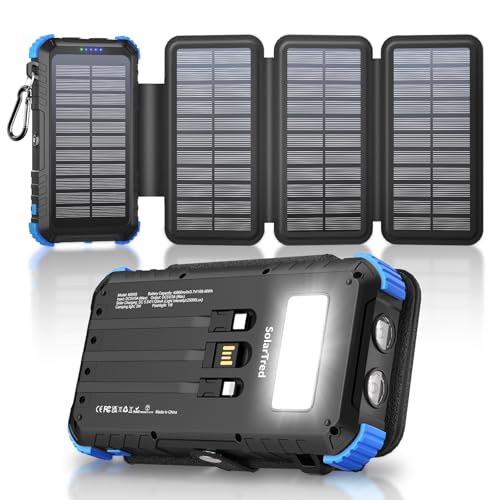
SolarTred offers a high-capacity 45800mAh solar charger with four integrated panels and three built-in cables. It supports simultaneous charging for up to five devices via USB-C, USB-A, and micro inputs/outputs. The four-panel design increases sun exposure for faster recharging, making it a practical option for extended trips, camping, or emergency prep. The unit supports flashlight and camping light features for night use and convenience during outages.
MARBERO 88.8Wh Solar Generator

MARBERO combines a compact 88.8Wh power station with a 21W solar panel for lightweight, portable backup power. This setup is ideal for short trips, small devices, and overnight stays where minimal bulk matters. Its combination supports charging essentials such as phones, lights, and small accessories during camping, hiking, or emergency scenarios. The small footprint makes storage easy in vehicle cabins or emergency kits, though it provides lower capacity compared with larger units.
Buying Guide: Key Purchase Considerations
- Power capacity and outlets: Assess running wattage needs for your devices. Look for units offering AC outlets for appliances, USB ports for devices, and DC outputs for direct charging.
- Recharging options: Consider solar panel compatibility, MPPT efficiency, car charging, and wall outlet recharging. More versatile units enable faster returns to full charge after use.
- Weight and portability: If you intend to carry the system on hikes or in a small RV, prioritize lighter models with handles or wheels and a manageable weight for your frame.
- Durability and safety: Check battery chemistry (LiFePO4 is noted for longevity), safety protections (short circuit, overvoltage, temperature), and rugged design for outdoor environments.
- Expandability and future use: Some systems offer add-on panels or expandable battery packs. Consider whether you need a system for home backup, car travel, or remote sites.
- Maintenance and longevity: Look for devices with clear charging guidelines and maintenance expectations to maximize lifespan (e.g., periodic full cycles, storage conditions).
- Emergency readiness: For critical outages, prioritize UPS features or uninterrupted power capabilities to keep essential devices running without interruption.
- Cost of ownership: While prices vary, compare total cost of ownership, including panel efficiency, battery chemistry, and expected lifespan.
These considerations help balance portability, capacity, and practicality across scenarios such as home backup, RV travel, and backcountry camping. By selecting a system that aligns with your typical power needs and environmental conditions, you can ensure reliable energy when you need it most.