Best Electronic Tensile Testing Equipment and Related Measurement Tools for Precise Material Testing
Whether you’re testing cables, polymers, papers, or electronic components, having the right tensile testing setup is essential. This article highlights five relevant products that support precise force, stretch, and material integrity assessments, along with a practical buying guide to help you choose the best equipment for your lab or workshop.
The following table summarizes the selected items, including their primary use, capacity, and key features to help you compare at a glance.
| Product | Brand | Primary Use | Capacity / Key Feature | Image |
|---|---|---|---|---|
| VIBICCK Manual Tensile Testing Machine – Horizontal Helical Type | VIBICCK | Material tensile testing on cables, films, rubbers, and components | 500 N maximum load; 220 mm stroke; fixture included | 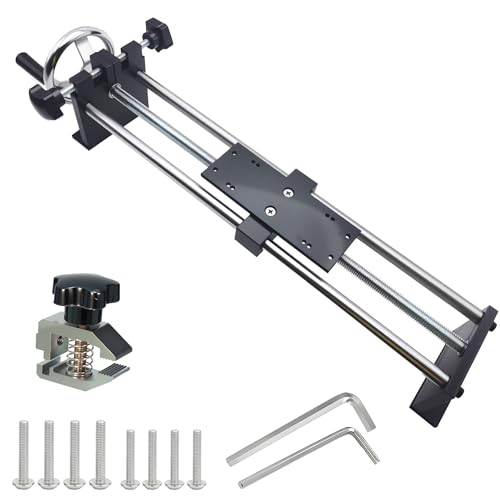 |
| Gold Density Meter Digital Purity Tester | generic | Purity and density analysis for gold and precious metals | HBM sensor; digital display; precise density readings |  |
| Electronic Grip Strength Tester | Enaud | Grip strength measurement for rehabilitation and fitness | 265 lbs capacity; multi-user profiles; durable housing |  |
| Kind Snail Die Cutters for Rubber Specimens (Die A) | Kind Snail | Specimen preparation for tensile tests | Sharp edge for clean cuts; ASTM D412 Die A |  |
| Kind Snail Die Cutters for Rubber Specimens (Die B) | Kind Snail | Specimen preparation for tensile tests | Sharp edge for clean cuts; ASTM D412 Die B | |
VIBICCK Manual Tensile Testing Machine
The VIBICCK manual tensile testing machine is a horizontal helical type setup that offers an effective stroke of 220 mm and includes a VI-001 fixture. It is designed for testing the tensile properties of various materials, including rubber, cables, papers, plastics, and electronic components. Its gear-based clamping increases friction during testing to ensure a firm grip on samples, reducing slippage and enhancing measurement accuracy. The device supports a maximum load of 500 N, providing robust clamping force for many standard lab tests.
Key considerations for selection include the stability of the testing platform, repeatability of measurements under low-speed loading, and compatibility with various fixtures. This model emphasizes simplicity and reliability for basic tensile testing tasks, particularly where horizontal orientation and controlled clamping force are advantageous.
Gold Density Meter Digital Purity Tester
The digital density meter is designed to accurately determine the purity of gold and other precious metals through density or specific gravity measurements. It uses an integrated weighing unit with low temperature drift and a high-performance microprocessor for precise readings. A digital display provides immediate density results, allowing for quick analysis of material composition. Long-lasting sensors and an overload protection mechanism contribute to consistent performance in repeated testing scenarios. This device is suitable for laboratories or workshops performing material authenticity checks and quality control on precious metals.
Important considerations include calibration requirements, sample preparation needs, and the stability of readings across temperature changes. While not a traditional tensile tester, density meters complement tensile testing by verifying material composition and potential alloy content that may influence mechanical properties.
Electronic Grip Strength Tester
This digital hand dynamometer measures grip strength with a high-precision strain sensor, offering a capacity up to 265 lbs (120 kg) and a resolution of 0.2 lbs / 0.1 kg. It supports multiple user profiles (up to 19) with demographic data to track progress over time—useful for rehabilitation, sports training, or ergonomic assessments. The device features a durable ABS housing with a stainless steel handle and reliable internal electronics, ensuring longevity under regular testing. While primarily used for hand strength testing, its data-logging and precision measurement concepts align with broader material testing workflows when assessing grip-related performance of samples or devices.
When selecting a grip tester, consider the required maximum force, measurement resolution, user management needs, and battery life. If data export or integration with other lab software is important, check for connectivity options or companion apps.
Kind Snail Die Cutter for ASTM D412 Die A
The Kind Snail die cutter for Die A provides precise edge quality for rubber specimen preparation used in tensile testing. A sharp cutting edge minimizes edge defects that could skew tensile results, supporting consistent sample dimensions and reduced debris that may interfere with grips or measurement sensors. This accessory is designed to work with standard tensile testing platforms and helps ensure standardized specimen geometry for reproducible results in D412 tests and related standards.
Important factors include cut quality, compatibility with sample materials, and the ability to produce repeatable specimen geometry across batches. A sharp, flaw-free edge is essential for minimizing testing anomalies and ensuring reliable data collection during tensile assessments.
Kind Snail Die Cutter for ASTM D412 Die B
The Die B variant from Kind Snail also focuses on producing clean, precise cuts for rubber specimens. Consistent specimen geometry is critical for obtaining comparable tensile test results under ASTM D412 Die B specifications. The tool supports efficient sample preparation workflows, reducing waste and potential variances introduced during manual cutting.
Key considerations include the availability of Die B for your testing standard, the edge integrity after repeated use, and ease of replacement when wear occurs. Using the right die helps ensure that test results accurately reflect material properties rather than specimen preparation inconsistencies.
PLEASANTLY RJ116p4c USB Modem Adapter

This adapter converts RJ11 connections to USB interfaces, providing a simple plug-and-play solution for digital testing setups that require USB-enabled devices to interface with telephone or modem equipment. It can be used in laboratory test rigs where digital data capture or remote sensing devices interact via USB. The 100 cm cable length offers flexible placement options in compact workstations.
uxcell LM10LUU Linear Bearings 10mm

The uxcell LM10LUU linear bearings are sealed with two rubber dust seals to prevent ingress of dirt and moisture. They provide smooth movement, low friction, and high rigidity—qualities useful for any tensile testing machine that requires precise linear motion. The bearings measure 10 mm bore, 19 mm outer diameter, and 55 mm length, making them compatible with common CNC and test rig configurations. They offer durability for long-term stability in repeatable testing cycles.
Buying Guide: Key Purchase Considerations For Tensile Testing and Related Measurement Tools
- Testing objective and material compatibility: Determine whether you need a dedicated tensile tester, a supplementary density meter, or specimen preparation tools. Align device capabilities (force range, stroke, fixture compatibility) with your typical materials (rubber, cables, polymers, metals).
- Fixture and accessory ecosystem: Ensure the system supports standard fixtures or includes fixtures appropriate for your samples. A robust clamping mechanism reduces slippage and improves repeatability.
- Measurement precision and calibration: Look for devices with high-resolution readings, low temperature drift, and built-in calibration or traceability options to meet lab accuracy requirements.
- Data management and integration: Consider whether the device supports data export, profiles for multiple users, and compatibility with lab software for trend analysis and reporting.
- Durability and maintenance: For bench-top or classroom environments, prioritize durable construction and components with long service life. Inspect availability of replacement parts (blades, seals, bearings) and ease of maintenance.
- Cost vs. benefit: Balance upfront cost against capabilities such as load capacity, stroke length, and accessory availability. For basic testing, entry-level models with reliable clamping and stable readings can be sufficient.
- Compliance and standards alignment: If your testing must adhere to standards (e.g., ASTM D412), verify that your specimen preparation tools and fixtures produce compliant results and that the device supports relevant standard test methods.
By evaluating these aspects—purpose, fixtures, precision, data handling, durability, and standards alignment—you can assemble a practical, reliable testing setup that covers both tensile testing and related material analysis tasks. The combination of a primary tensile tester, specimen preparation tools, and supplementary measurement devices offers a versatile workflow for quality control, R&D, and educational settings.