Best Electrical Sub Metering Devices for Accurate Energy Tracking
Sub metering devices help pinpoint energy usage across different circuits, appliances, and areas of a building. This article reviews five high-use, user-friendly options that support precise measurement, easy installation, and reliable data logging. Each entry covers key features, ideal applications, and installation notes to help readers compare options for residential, commercial, or small business sub-metering needs.
Summary Table of Selected Products
| Product | Brand | Key Use | Voltage / Amperage | Link |
|---|---|---|---|---|
| Universal Electric kWh Meter – Omnimeter I v.3 | EKM Metering | Whole-system submetering and web readout | 120-480V, 100-5000A | Amazon |
| Adfaga 3 Phase DIN Rail KWh Meter | Adfaga | DIN rail sub-metering in panels | 5(30)A to 30(100)A | Amazon |
| Digital 3 Phase 4 Wire DIN Rail Meter | plplaaoo | DIN rail meter with LCD display | 10(40)A range | Amazon |
| Briidea Electricity Usage Monitor | briidea | Two-outlet energy monitoring | Standard household | Amazon |
| Poniie PN2000 Plug-in Kilowatt Meter | Poniie | Plug-in submetering for individual devices | Max 16A | Amazon |
Universal Electric kWh Meter – Omnimeter I v.3

The Omnimeter I v.3 is designed for precise submetering of electrical loads with broad voltage ranges and multiple conductor options. It supports 120 to 480 volts and 100 to 5,000 amps, with 50 or 60 Hz capabilities for single-phase or three-phase configurations. A key feature is its web-readout capability, enabling remote monitoring and data collection across devices or locations. Accuracy is stated at 0.5%, making it suitable for energy auditing, facility management, and retrofit projects. It works with a wide selection of current transformers (CTs) to fit diverse wiring layouts.
Installation considerations include ensuring proper CT sizing and secure sensor placement to capture representative load data. For building sub-metering, pairing this meter with a compatible data platform or software can help centralize energy analytics. Potential use cases encompass apartment complexes, small commercial spaces, or critical electrical zones where precise, real-time monitoring improves energy efficiency.
Upgraded Watt Power Meter Plug Home Electrical Usage Monitor
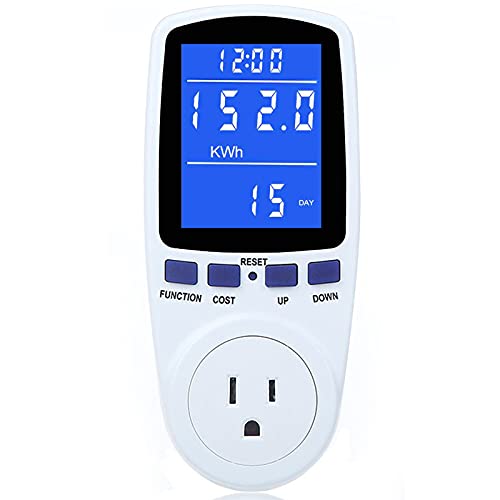
This plug-in monitor measures multiple electrical parameters for individual outlets or devices, including watts, kilowatt-hours, volts, amps, frequency, power factor, and estimated cost. It features seven display modes and a large backlit screen for easy reading in various lighting conditions. The device supports an adjustable backlight duration to balance visibility with power use. It’s well-suited for residents who want granular visibility into household appliance energy profiles and smarter budgeting. The user interface is straightforward, making it accessible for quick spot checks or daily tracking.
Consideration should be given to the maximum load per outlet and the need for controlling multiple devices simultaneously. While it excels at single-outlet monitoring, it isn’t a complete panel sub-metering solution. It’s ideal for home energy management, temporary measurements, or validating energy-saving strategies on a per-appliance basis.
Adfaga 3 Phase DIN Rail KWh Meter

This DIN rail-mounted meter targets professional sub-metering in electrical panels. It offers professional-grade accuracy, a clear six-plus-two digit LCD with backlight, and an anti-electromagnetic interference design suitable for demanding environments. Its current range supports multiple configurations from 5(30)A to 30(100)A, enabling versatile usage in commercial or industrial settings. The transparent housing facilitates visual inspection, and the 35 mm DIN rail mounting system simplifies installation in standard electrical cabinets. With robust performance and compact form, it serves as a reliable backbone for panel-level energy monitoring.
Users should verify compatibility with their existing DIN rail standards and confirm the current sensor sizing aligns with their load profiles. The meter’s durability and accuracy make it a strong candidate for continuous monitoring in distributed systems or energy audits within office buildings and small factories.
Digital 3 Phase 4 Wire DIN Rail Electric Meter
This DIN rail energy meter provides a compact, precise solution for three-phase, four-wire sub-metering. It features a 6+2 digit LCD with backlight, enabling clear real-time data readouts in facilities with limited visibility. The device’s compact form supports quick installation in industrial or commercial panels. It uses an impulse register to track energy consumption, with the LCD enabling straightforward monitoring and billing accuracy. The meter emphasizes reliability, low power consumption, and resistance to electromagnetic interference, making it suitable for environments requiring stable, long-term energy data.
Potential users include facilities managers, electrical contractors, and building owners seeking centralized energy accounting for tenants or equipment. Consider pairing with data loggers or building management systems to maximize the value of collected energy data and drive efficiency programs.
Briidea Electricity Usage Monitor
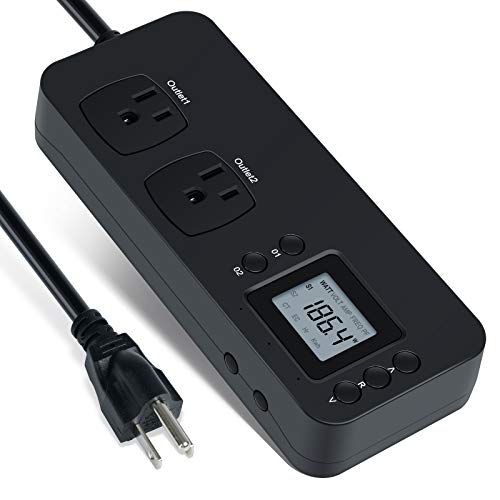
The Briidea monitoring device provides dual-outlet energy tracking to evaluate two devices independently. It includes a memory function to retain CT and kilowatt-hour data during power interruptions, ensuring continuity in energy data collection. The device uses a robust ABS housing with a heavy-duty extension cord, and it includes safety indicators such as overload warnings. It’s well-suited for households or small offices needing to compare energy profiles between two circuits or devices without installing a full sub-metering panel.
Note that this unit monitors at the outlet level rather than at the panel, so it’s best used for appliance-level studies or quick, on-site energy checks. For broader building-wide insights, combine with in-panel meters or a central data logger to aggregate usage data across circuits.
Electric kWh Meter, 120 Volt, 2-Wire

This single-phase meter is a straightforward solution for basic sub-metering needs in residential settings or small offices. It is rated for 120V and 60 Hz operation with a 2-wire configuration, providing essential energy data for a designated circuit. While simple, it can be effective for monitoring a specific outlet or line item in a limited energy audit. Suitable for quick checks or as a component within a larger metering strategy, especially when expanding panel-level metering tools is not immediately feasible.
When using this meter, ensure it’s installed in an area where the CT or sensor placement captures the intended circuit’s load. Its compact design and ease of use make it a practical entry point for readers new to sub-metering who want to start with a few targeted measurements before expanding to a full panel solution.
Buying Guide: Sub Metering Essentials
- Application scope: Choose between plug-in meters for device-level insights and DIN rail/panel meters for full-panel sub-metering. Panels support centralized data collection, while plug-ins are ideal for quick checks and specific appliances.
- Voltage and current range: Match the meter’s voltage and current ratings to your wiring setup. Panels often require higher amperage ratings and robust construction, whereas plug-ins suit standard household loads.
- Display and data access: Consider backlit LCDs for visibility in varied lighting and whether the device offers local readouts, web access, or integration with data platforms for remote monitoring.
- Accuracy and standards: Look for meters with high accuracy (0.5% to 1.0% ranges) and certification for electrical standards to ensure reliable data for budgeting or energy audits.
- Installation effort: DIN rail meters simplify cabinet installation in commercial settings, while plug-in meters minimize installation time but require awareness of outlet placement and load considerations.
- Data integration: If ongoing energy management is a goal, select devices with IP networking or compatibility with energy management software to centralize analytics.
- Maintenance and durability: Durable housings, EMI resistance, and long-term stability reduce maintenance. For industrial environments, prioritize rugged meters designed for continuous operation.
- Cost vs. value: Compare upfront costs with data value, potential savings, and expected panel upgrades. A mixed approach (panel meters for total load and plug-ins for appliance-level insights) often yields the best return.
With the right mix of sub-metering devices, building operators can gain granular energy visibility, support demand management, and improve efficiency. The five products highlighted above cover a spectrum from high-precision panel meters to practical plug-ins, offering options for varying budgets, installation environments, and data needs. Always align product choice with the specific monitoring goals—whether tracking whole-system energy flow, auditing individual devices, or assembling a scalable metering framework for future expansion.