Best Electrical Hot Work Gloves for Safety and Durability
Answer: For reliable protection during electrical tasks, choose insulated rubber gloves paired with leather protectors, selecting by voltage rating and job type. This guide highlights five top options suited for linemen, utility crews, electricians, and electrical contractors working with energized equipment. Each product is evaluated for best use cases, material quality, and practical limitations to help you compare quickly.
| Product | Voltage Rating | Includes | Best For |
|---|---|---|---|
| MAGID M011B9 Rubber Insulating Gloves | Up to 1,000 V AC / 1,500 V DC | Gloves only | Lineman electricians and contractors needing reliable 1,000 V protection |
| Enespro Class 0 Insulated Gloves Kit | Up to 1,000 V AC / 1,500 V DC | Gloves + leather protectors + bag | Utility crews seeking complete safety kit |
| Enespro Class 2 Electrical Gloves Kit | Up to 14,000 V? (Note: Rated for Class 2 usage) | 14″ gloves + leather protectors + bag | Higher-voltage environments and long wear sessions |
| DongChu Insulated Electrician Gloves 1000V | Up to 1,000 V | Gloves only | Budget-conscious workers needing basic 1,000 V protection |
| GOL-SIV Electrician Gloves 1000V | Up to 1,000 V | Gloves only | Rugged, non-slip grip for electricians |
Magid Rubber Insulating Electrical Safety Gloves, Class 0

Best for budget-conscious linemen who need compliant insulation up to 1,000 V AC. These gloves use premium natural rubber latex for elasticity and puncture resistance, providing a reliable barrier when paired with leather protectors. Choose this if you primarily work with standard low-to-mid voltage tasks and require a simple protective layer without leather components included.
Limitations: They are gloves-only; durability and lifespan improve with leather protectors worn over them. Regular inspection for cracks or tears is essential to maintain safety.
Enespro Class 0 Insulated Gloves Kit
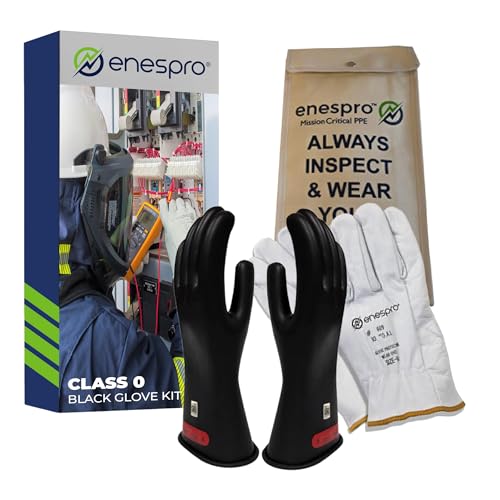
Best for utility crews needing a complete kit: gloves, leather protectors, and a storage bag. These are rated for 1,000 V AC / 1,500 V DC and integrated with leather protectors to extend glove life and practicality on long jobs. The kit approach reduces the risk of mismatched components on-site.
Caution: Inspect before use for any cracks or tears; replace compromised gloves promptly to ensure consistent protection.
Enespro Class 2 Electrical Gloves Kit

Best for higher-voltage or longer-duration tasks in the field. This 14-inch Class 2 kit includes leather protectors and a storage bag, offering enhanced durability and a formal verification date on each glove pair for traceability. Use with leather protectors to maximize glove life.
Limitation: The Class 2 rating implies higher voltage contexts; ensure compatibility with your specific job’s NFPA 70E requirements and on-site protocols.
DongChu Insulated Electrician Gloves 1000V

Best for workers needing 1,000 V protection with a simple, non-slip design. Insulated palms and textured anti-slip grip help maintain control during tasks. The gloves are flame-retardant, adding a layer of safety for higher-risk electrical work.
Limitation: Gloves are sold as a standalone item; consider leather protectors for added durability in high-wear scenarios and to extend glove life.
GOL-SIV Electrician Gloves 1000V

Best for electricians needing a robust, rubberized palm with an anti-slip grip. These gloves meet typical 1,000 V standards and emphasize a strong grip and flame-retardant properties. They are a solid choice when you require reliable handling of tools in energized environments.
Limitation: As with many glove systems, pairing with leather protectors can significantly extend glove life and safety in harsh conditions.
Buying Guide
What voltage rating do you need?
- Class 0 gloves protect up to 1,000 V AC / 1,500 V DC. Ideal for many telecom and general electrical tasks.
- Class 2 and higher kits are designed for higher voltage environments or extended exposure. Always match the glove class to the job’s voltage and NFPA 70E guidelines.
Should you use leather protectors?
- Yes. Leather protectors provide abrasion resistance, extending the life of rubber insulating gloves and improving grip over time.
Glove length and fit considerations
- 11″ to 14″ gloves offer different coverage areas. Longer gloves provide more forearm protection but can affect dexterity; choose based on task requirements and comfort.
- Proper sizing is essential for a secure seal and predictable performance. Follow manufacturer sizing guidance.
Inspection and maintenance
- Inspect before each use for cracks, cuts, punctures, or glazing. Replace gloves with any damage.
- Store away from extreme heat and direct sunlight. Use a clean, dry storage bag or container to prevent deformation and contamination.
Kit versus glove-only options
- Kit options with leather protectors and bags simplify on-site readiness and reduce missing components.
- Glove-only options are budget-friendly and flexible when protectors are already owned or supplied separately.
FAQ
- What gloves are best for 1,000 V work?
– Look for Class 0 insulated gloves with leather protectors; kits with protectors offer comprehensive protection for 1,000 V tasks. - How should I inspect insulated gloves?
– Check for cracks, tears, glazing, or holes before each use and replace if compromised. - Do I need different gloves for AC and DC work?
– The voltage rating covers both AC and DC ranges; follow the glove’s specified limits and safety standards. - Can gloves be reused after minor wear?
– No. Any visible damage warrants replacement to ensure full protection on subsequent uses. - How do I extend glove life?
– Use leather protectors, proper storage, and avoid unnecessary exposure to heat or chemicals.