Best Electric Water Heaters for Hydronic Heating
Hydronic heating relies on accessible, reliable hot water to transfer warmth through radiators, floors, or air handlers. The right electric water heater can improve efficiency, space use, and control over heat delivery in residential and light commercial setups. This guide highlights five top options from reputable manufacturers, chosen for compatibility with hydronic systems, ease of installation, and energy-conscious operation. Each product section provides key features, installation considerations, and how it fits a hydronic circuit. A concise Buying Guide follows to help you compare performance, integration, and long-term value.
| Product | Best For | Key Benefit |
|---|---|---|
| Alecoil HHA50-Pro | Outdoor wood boiler systems and remote-controlled setups | Whisper-quiet operation and flexible temperature control |
| ALORAIR HydroX H50A | Garage, workshop, warehouse hydronic loads | Multi-connection options and energy-efficient heating |
| Warming Systems 2-Zone Panel | Multi-zone hydronic floors and radiant zones | Pre-assembled with expansion tank, pumps, and air separator |
| Warming Systems 1-Zone Panel | Single-zone radiant heating or boiler integration | All-in-one assembly with standard components |
| CAMPLUX 18 Gallon | Under-sink or compact domestic hot water | High capacity for small spaces with efficient heating |
Alecoil Hydronic Hot Water Hanging Unit HHA50-Pro
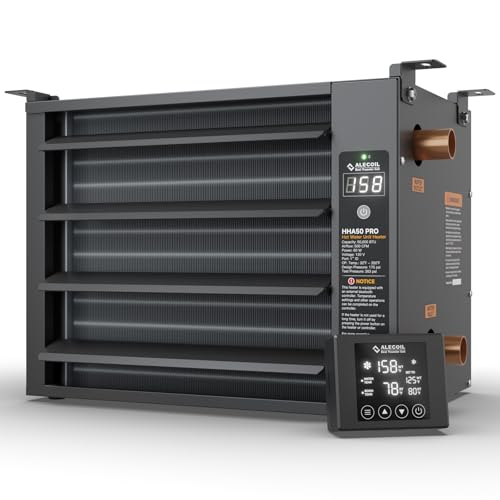
The Alecoil HHA50-Pro is a hot water hanging unit heater designed to run off a building’s hot water source, such as outdoor wood boilers, to supply a hydronic system with quiet, efficient heat. It includes a remote control to set water or room temperature and features a three-mode operation: Water Temperature, Room Temperature, and Dual Mode. The centrifugal blower provides low-noise performance, and an adjustable louver directs airflow for targeted comfort. This unit suits compact zones requiring flexible integration with existing hot water loops and remote temperature management.
ALORAIR HydroX H50A Hydronic Hanging Heater

The ALORAIR HydroX H50A is a 50,000 BTU hydronic hanging heater designed for garages, workshops, and warehouses. Its galvanized steel housing and aluminum tubing deliver robust durability and energy-efficient heating. The unit supports four connection types, enabling versatile integration with hot water or steam systems. A smart auto temperature control automatically runs the fan as the water reaches the target temperature, promoting steady, energy-conscious operation, while a remote controller allows convenient adjustments from afar.
Warming Systems Hydronic Radiant Heat Control Panel 2 Zone

This pre-assembled hydronic panel provides control for 1–4 zones and komtains an expansion tank, pumps, and an air separator. It is manufactured in the USA with standard name-brand components for reliable future service. The panel simplifies installation, enables easy flushing and filling, and is compatible with glycol systems. Boiler connections are 1″ copper with ¾” copper manifolds. It’s ideal for radiant floor heating or multi-zone hydronic projects where ready-to-connect components streamline setup.
Warming Systems Hydronic Radiant Heat Control Panel 1 Zone
This 1-zone hydronic panel offers a complete, ready-to-install solution for radiant heating. It includes essential components such as expansion tanks, pumps, and an air separator, designed for straightforward installation and dependable performance. As with the 2-zone model, it supports glycol compatibility and is built to facilitate service and expansion, making it suitable for single-area radiant floor projects or a primary zone in a larger hydronic network.
CAMPLUX Hot Water Heaters 18 Gallon

The CAMPLUX 18-gallon electric water heater is designed for compact spaces such as under-sink installations or RV use. It features a 1500W heating element, a built-in thermostat with adjustable range (approximately 91°F to 150°F), and insulation aimed at reducing heat loss. The unit’s larger storage capacity supports more consistent hot water availability in small hydronic access points or where a modest domestic water supply is needed to feed a hydronic loop indirectly via a separate heater or coil.
Buying Guide: Hydronic Heating Water Heater Considerations
When selecting an electric water heater for hydronic systems, consider the following factors.
- System compatibility: Confirm whether the heater is designed for direct hydronic use (hot water loop) or for boosting/domestic water applications that feed a separate boiler or heat exchanger.
- Output capacity and flow: For space heating, match BTU output to load calculations and ensure the unit can maintain target temperatures under anticipated flow rates.
- Connection options: Look for flexible connection types (copper, push-to-connect, threaded) to simplify integration with existing piping and pumps.
- Temperature control: Advanced controls (remote, room vs. water temperature modes) help optimize energy use and comfort in hydronic circuits.
- Noise and placement: Units with quiet blowers and compact form factors reduce installation limits and location constraints in garages, basements, or utility rooms.
- Expansion and service: Pre-assembled panels with expansion tanks and air separators support easier future maintenance and expansion of radiant zones.
- Warranty and support: Choose brands with USA-based support or comprehensive warranty coverage to minimize downtime in a heating system.
- Glycol compatibility: If using glycol antifreeze, verify that the panel or heater is rated for glycol mixtures and system pressures.
Hydronic installations vary from single-zone radiant floor systems to multi-zone panels and large garage or warehouse applications. The selections above cover direct-hydronic heaters, as well as ready-to-install control panels that simplify complex radiant networks. For accurate system design, consult with a hydronics professional to perform load calculations, confirm piping configurations, and select components matched to climate and building size. Always verify that wiring, electrical service, and safety clearances align with local codes.