Best Electric Sub Meter for Tenants: Simple Ways to Track Individual Usage
For renters who want visibility into their electricity usage without relying on a building’s meters, a compact sub meter can be a smart upgrade. This guide reviews reliable plug‑in and rail‑mounting meters that help tenants monitor power, cost, and consumption in real time. Below, you’ll find five top options with key features to match varied setups—from portable plugs to DIN‑rail solutions for shared electrical panels.
| Product | Brand | Type | Key Benefit |
|---|---|---|---|
| Universal Electric kWh Meter – Omnimeter I v.3 | EKM Metering | CT‑based submeter | Web readout and wide voltage range |
| Upgraded Watt Meter Plug Home Electrical Usage Monitor | MECHEER | Plug‑in energy monitor | Clear large display with 7 modes |
| Electric Meter, KWh Meter, Single Phase 4P LED DIN‑Rail | Walfront | DIN‑rail meter | DIN rail mounting for panel use |
| Schneider Electric METSEPM5330 Power Meter | Schneider Electric | Commercial power meter | Two relay outputs for load management |
| HBN Watt Meter Plug With Backlight | HBN | Plug‑in energy meter | 9 display modes with backlight |
Notes: All products listed are suitable for tenants seeking individual load tracking. Each option offers different installation methods, display formats, and data access capabilities. Consider your electrical setup, whether you need a plug‑in solution or a rail‑mount meter, and how you plan to read and use the data over time.
Universal Electric kWh Meter — Omnimeter I v.3

The Omnimeter I v.3 supports a wide voltage and current range, suitable for diverse tenant electrical circuits. It can measure 120–480 volts and 100–5,000 amps, with 50/60 Hz compatibility for both 1‑phase and 3‑phase systems. This meter provides accurate readings to 0.5% and supports a broad selection of current transformers (CTs). It is designed to meter any electrical load and transmit results over the web, enabling remote monitoring and data logging for tenants who manage shared or multi‑unit setups.
Upgraded Watt Meter Plug Home Electrical Usage Monitor
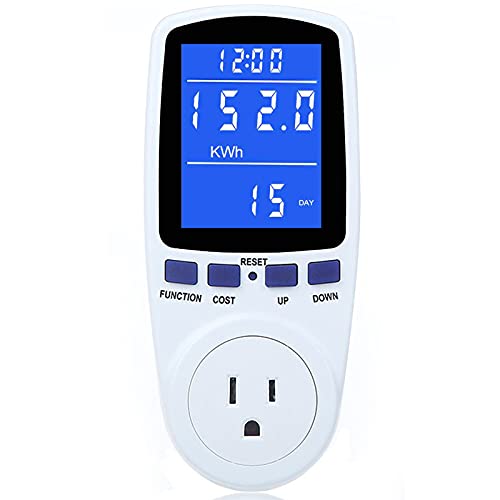
This plug‑in energy monitor provides a comprehensive set of readings, including power (W), energy (kWh), voltage, current, frequency, power factor, estimated cost, and minimum/maximum power. It offers seven display modes to view parameters simultaneously while a device is operating. The upgraded large backlit LCD (2.36″ x 1.85″) ensures readability day or night with a 180° viewing angle. Adjustable backlight time lets users tailor visibility, making it practical for living spaces or rental units without dedicated monitoring hardware.
Electric Meter, KWh Meter, DIN‑Rail Usage Monitor (Walfront)

Designed for panel installation, this DIN‑rail meter uses a 35 mm standard mounting with DIN EN50022 compatibility. It features a 5+1 LED digital display (up to 99,999.1 kWh) and a double‑color LED indicator for power and energy pulses. The device supports both passive and remote pulse outputs, enabling integration with AMR or building automation systems. This option is suited for tenants who require a more permanent, compact meter within a shared electrical panel or service entrance area.
Schneider Electric METSEPM5330 Power Meter
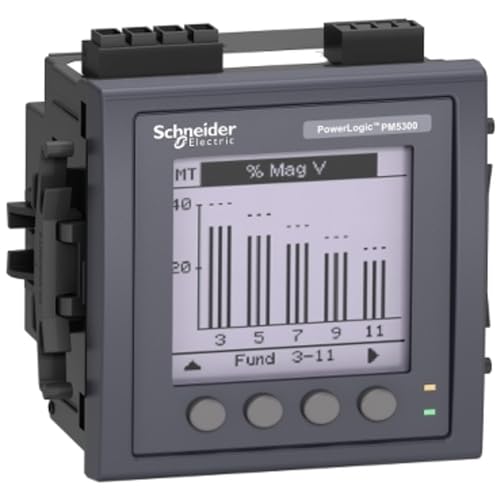
The METSEPM5330 is a PowerLogic meter designed for cost management and load monitoring with two high‑performance form‑A relay outputs. It supports digital inputs that can be wired directly to monitored switches, and the unit is well suited to applications where tenants or building management require direct control of circuit breakers or integration with automatic systems. This model is appropriate for more advanced tenants seeking robust data capture and integration within shared electrical systems.
HBN Watt Meter Plug With Backlight

This plug‑in meter from HBN offers a backlit display with 9 data modes, including power, apparent power, energy, time, frequency, power factor, voltage, current, and estimated cost. The backlight supports readability in darker areas, and the unit emphasizes easy interaction through a single button to switch views. It is a practical option for renters who want quick, on‑the‑spot insights into the energy usage of individual appliances or outlets without permanent installation.
Buying Guide: Key Purchase Considerations for Tenants
- Installation type: Choose between plug‑in meters for immediate use or DIN‑rail/mounted meters for a permanent setup in a panel. Consider whether you rent and whether you can access the electrical panel.
- Display and readability: Look for large, backlit displays and multiple display modes. Ensure the device is readable from typical viewing angles in your space and that the units match your preferences (W, kWh, V, A, etc.).
- Accuracy and range: Verify the meter’s accuracy (often around 0.5% to 1%) and whether it supports the voltage and current ranges in your circuits. For shared or high‑load tenants, a meter with broad CT compatibility or high current ranges is helpful.
- Data access: Consider whether readings are local only or transmittable via web or network. Web or app access can simplify long‑term tracking and comparison across devices or months.
- Safety and compliance: Ensure the meter meets relevant safety standards for your country, especially for DIN‑rail installations or meters integrated into panels. Look for UL/CE marks where applicable.
- Cost and maintenance: Factor in initial cost and any maintenance needs (battery life, display backlight settings, or potential need for CTs). For tenants, plug‑in options may offer a lower upfront commitment.
- Compatibility with existing systems: If your building uses a particular AMR or energy management setup, confirm compatibility to enable future data integration.
- Privacy and data handling: If remote monitoring is enabled, review data storage, access permissions, and potential sharing with property management.