Best Electric RV Antifreeze Pumps for Winterizing and Water Transfer
Answering the question “which electric RV antifreeze pump should I choose?” this guide highlights five top options that cover different needs—from fully automatic diaphragm pumps to portable hand-pump kits. The best pick depends on how you winterize, whether you want battery-free operation, or need compact setups for tight spaces. Ideal buyers include full-time RVers seeking reliable automation, weekend campers needing quick antifreeze transfer, and boaters who winterize multiple lines. Below is a quick summary table of the five products to compare at a glance.
| Product | Best For | Key Benefit |
|---|---|---|
| ECO-WORTHY 33-Series Industrial Water Pressure Pump | RVers needing automatic pressure control | On-demand pressure switch with adjustable range |
| VANPET RV Electric Antifreeze Pump Kit | Winterizing with built-in battery power | Rechargeable, Type-C charging, portable |
| Sun Walker RV Antifreeze Hand Pump Kit | Manual backup or budget winterizing | Simple, durable hand pump with hoses and clamps |
| FIDISP Water Transfer Pump | General water transfer tasks | High flow, durable metal construction |
| Camco RV Antifreeze Hand Pump Kit | Easy, DIY winterizing | Complete hand-pump kit with hoses and adapters |
ECO-WORTHY 33-Series Diaphragm Pump
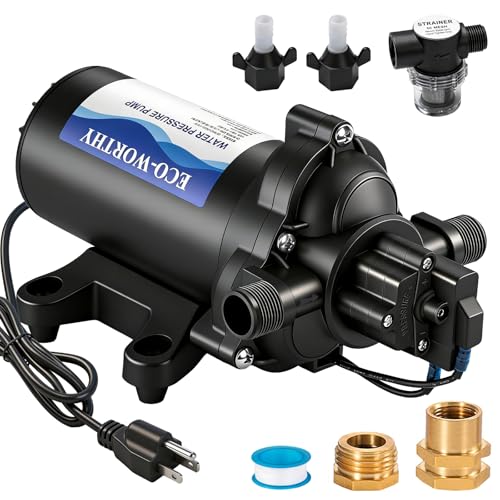
The ECO-WORTHY 33-Series is a 110V AC water diaphragm pump designed for 4.0 GPM at around 50 PSI. It’s self-priming up to 9.8 feet and can lift up to 131 feet, making it suitable for RV fresh-water systems that require dependable pressure. A smart pressure switch turns the pump on and off as water is drawn and released, reducing motor load. It includes an adjustable pressure range of 45-70 PSI and thermal overload protection for safety. Best for: RV owners who want automated, quiet operation without a battery. Caution: ensure your electrical supply is stable to prevent nuisance shutdowns.
VANPET RV Electric Antifreeze Pump Kit

The VANPET kit enhances winterization with a built-in rechargeable lithium battery (1200 mAh) and Type-C charging. It delivers rapid antifreeze transfer and offers up to two hours of continuous operation per charge. Includes two 1-meter hoses for reach. Best for: RVers who want cordless antifreeze transfer and easier access to tight plumbing spaces. Limitation: battery life depends on discharge rate and may require recharging for multiple cycles in a single session.
Sun Walker Antifreeze Hand Pump Kit

The Sun Walker kit is a manual siphon option that focuses on reliability and simplicity. It includes two hoses, two brass connectors, and clamps to secure hoses and prevent leaks. Best for: campers seeking a low-cost, dependable backup or a non-electric option for winterizing. Caution: manual operation requires physical effort and may be slower than electric pumps in larger systems.
FIDISP Water Transfer Pump

The FIDISP transfer pump is a 115V model rated at 1/10 HP with a claimed flow of up to 330 gallons per hour. It features a heavy-duty metal build and a durable copper motor design with corrosion-resistant zinc alloy pump volute. Best for: general water transfer tasks beyond RV antifreeze use, including draining pools or tubs. Limitation: designed for general transfers rather than specialized RV antifreeze dosing, so verify compatibility with antifreeze solutions.
Camco RV Antifreeze Hand Pump Kit

The Camco hand pump kit provides a DIY winterizing solution with one hand pump, one inlet tube, and one flexible outlet tube suitable for RV water lines. Best for: RV owners who prefer a straightforward manual setup and want a complete winterization package in one kit. Caution: not including antifreeze itself means you must source antifreeze separately and connect it correctly to your system.
Buying Guide: Key Considerations For Electric RV Antifreeze Pumps
- Power source and portability: Do you want a mains-powered unit (AC) or a battery-powered option for remote sites?
- Flow rate vs. system size: Is your RV’s water system large enough to benefit from higher GPM, or is a compact unit sufficient?
- Automatic vs. manual operation: Is hands-off operation a priority, or do you prefer a simple manual backup?
- Pressure control: Do you require an adjustable pressure range to prevent pipe strain while winterizing?
- Durability and materials: Will the pump cope with antifreeze solutions and colder temperatures without clogging or corrosion?
- Setup complexity: Are hoses, clamps, and connectors included, or will you need extra components?
- Maintenance and safety: Does the unit include overload protection, and how easy is maintenance?
Frequently Asked Questions
- Q: What defines an ideal RV antifreeze pump for winterizing?
- A: An ideal pump provides reliable transfer of antifreeze to all lines, minimal manual effort, and compatibility with the vehicle’s plumbing while offering safety features and easy controls.
- Q: Are battery-powered antifreeze pumps better than AC models?
- A: Battery-powered units offer portability and cordless operation, which is helpful for remote sites or tight spaces, but may require more frequent recharging for heavy use.
- Q: Can I use a general water transfer pump for antifreeze?
- A: General water transfer pumps are useful for basic draining or transferring liquids, but verify compatibility with antifreeze and check materials to ensure corrosion resistance and safe operation.
- Q: What maintenance helps extend pump life?
- A: Regularly inspect hoses and connections, keep seams sealed, ensure clean intake, and follow manufacturer instructions for storage to prevent corrosion and sediment buildup.
- Q: Which pump is best for a full-time RVer with multiple winterizing cycles?
- A: A diaphragm pump with a smart pressure switch and automatic on/off control provides consistent performance and minimizes manual effort across repeated winterizations.