Best Electric Pontoon Boat Motors for Quiet, Efficient Water Fun
If you’re seeking a reliable electric trolling motor system for a pontoon or larger small boat, these models offer quiet operation, respectable thrust, and easy maneuverability. The top picks here suit different boat sizes and water conditions—from compact pontoons to bigger vessels—making it easier to choose the right motor for your needs. This guide highlights five solid options and explains who benefits most from each one.
| Product | Best For | Key Strength |
|---|---|---|
| Newport NV-Series 55lb Transom | Mid-sized pontoons and light-to-moderate loads | Balanced thrust and 30″ shaft |
| Minn Kota Pontoon Bow-Mount 55lb | Pontoon boats needing easy deployment | PowerDrive foot pedal and quick-release bracket |
| Newport L-Series 86lb Transom | Larger boats and tougher conditions | Higher thrust with 40″ shaft |
| Minn Kota Endura C2 30lb Transom | Smaller craft and tight spaces | Lightweight, versatile 30″ shaft |
| Newport NT300 Electric Outboard | Extended trips and saltwater/freshwater mix | High range and quiet, 3HP-equivalent power |
The following sections present five compatible choices, each with a concise profile to help you decide quickly. Look for compatibility with your boat’s hull, shaft length, and battery setup as you compare.
Newport NV-Series 55lb Saltwater Transom Motor

Best for mid-sized pontoon boats that require steady thrust without excessive weight. This 55-lb 12V trolling motor features a 30-inch shaft, a 5-LED battery meter, and a 6-inch telescoping tiller for comfortable control. With 8 speeds (5 forward, 3 reverse), it delivers up to about 4 mph under typical conditions. The design emphasizes low end torque for smooth initial acceleration and reliable, quiet operation to avoid spooking fish. Best for anglers on moderate distances, or for smaller pontoons that still need robust performance.
Who it’s best for: boaters prioritizing balanced thrust and compact footprint, such as a saltwater-friendly pontoon or a medium-load craft. Choose this if you want a proven, quiet motor with straightforward controls and a readable battery indicator.
Caution: While designed for all-day use, performance varies with boat weight, water conditions, and wind; ensure battery capacity matches expected runtime.
Minn Kota Pontoon Bow-Mount 55lb Trolling Motor

Better for pontoon boats that demand convenient deployment and precise bow control. This bow-mount model includes a Deploy-Assist Lever and Aluminum Quick Release Bracket for fast, secure setup and removal. It also offers a responsive PowerDrive foot pedal with a long cord for flexible maneuvering. This choice excels in still-water cruising and shallow-water navigation on larger pontoons.
Who it’s best for: boaters who want easy bow-mount action and quick stowage, especially if you fish from a pontoon and value a reliable, quiet run.
Caution: The PowerDrive foot pedal is part of a specific setup; confirm compatibility with your pedal system and ensure the cord length fits your cockpit configuration.
Newport L-Series 86lb Saltwater Transom Motor

Designed for larger boats and tougher conditions, this 86-lb 24V motor delivers strong thrust with a 40-inch shaft, a 5-LED battery meter, and a 6-inch telescoping tiller. It offers 8 speeds (5 forward, 3 reverse) and a 3-blade propeller that delivers solid low-end torque for getting over heavier water resistance. The higher power target makes it a fit for windy days and bigger watercraft where turning and holding position are demanding tasks.
Who it’s best for: crews with larger pontoons or saltwater vessels that face wind, current, and longer runs. Choose this if you need reliable, high-thrust performance with durable construction.
Caution: Higher power means greater battery consumption; ensure an appropriate 24V setup and battery capacity for your typical trips.
Minn Kota Endura C2 30lb Transom Motor
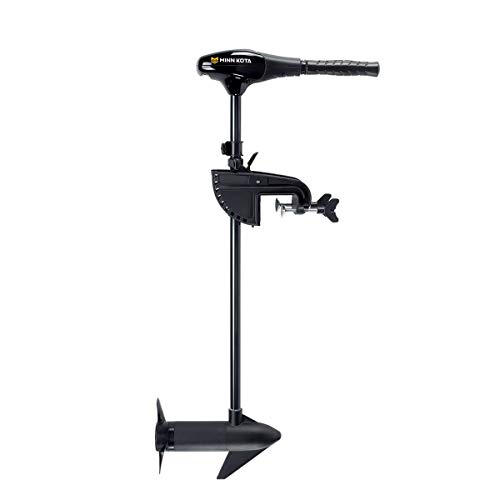
Best for smaller craft, tight quarters, or light fishing setups. The Endura C2 provides a compact, lightweight option with a 30-inch shaft and a telescoping tiller. It features a push-to-test battery meter and a 10-position lever lock bracket for easy angle adjustments. The motor’s reinforced composite construction resists UV damage and flexing, while the Power Prop is designed to help with vegetation and lighter cover.
Who it’s best for: anglers with kayaks, small boats, or lightweight pontoons who require a mobile, easy-to-handle motor. Choose this for a straightforward, durable option that won’t overwhelm a small craft.
Caution: Limited thrust means slower acceleration in heavy wind or current; not ideal for large boats or heavy loads.
Newport NT300 Electric Outboard

Great for extended trips and mixed water conditions, the NT300 offers 3HP-equivalent power (1300W) with 110 lb thrust in a 36V system. It targets both saltwater and freshwater use with a digital throttle and LCD display, and a 24.6-inch shaft paired with a 9.8-inch, 2-blade composite propeller. Trim/tilt angles and field-oriented control technologies support smooth operation, while a top speed around 6.5 mph and a range of up to 66 miles on a single charge suit longer outings.
Who it’s best for: boaters seeking a high-capacity, quiet propulsion option for longer trips or mixed water settings. Choose this if you require significant thrust and extended runtime per charge.
Caution: The 36V system requires compatible battery and charging arrangements; verify your electrical setup and maintenance requirements before use.
Buying Guide
What to consider when buying an electric pontoon motor
- Boat size and weight: Larger boats need higher thrust and longer shafts for clear water clearance and control.
- Shaf t length: Longer shafts help keep the propeller in clean water when cruising, but may add weight and complexity.
- Voltage and battery: Higher thrust motors often require 24V or 36V systems; match with your battery capacity and charging plan.
- Propeller design: A 3-blade propeller provides strong low-end torque; a two-blade propeller can improve efficiency and battery life in calm conditions.
- Control system: Foot pedals, tillers, and deploy mechanisms differ in ease of use and ideal mounting position. Ensure compatibility with your cockpit layout.
- Saltwater vs freshwater: Saltwater-rated motors resist corrosion and may require more robust seals and maintenance routines.
- Runtime expectations: Consider typical trip length and wind/current; higher thrust increases battery consumption.
Practical comparison questions
- Which motor is best for a mid-sized pontoon? The 55lb NV-Series offers balanced thrust and a 30″ shaft, suitable for mid-sized pontoons with calm to moderate conditions.
- Do I need a bow mount or transom mount? Bow mounts are ideal for accurate steering on pontoons while transom mounts are simpler for rear mounting and general maneuvering.
- Can I use a higher voltage motor on a smaller boat? Only if your battery setup and wiring are upgraded accordingly; otherwise, compatibility issues can arise.
- Which motor provides the best range for long trips? The NT300 Electric Outboard delivers extended range on a 36V system, suitable for longer excursions.
- Is a larger thrust motor always better? Not necessarily; consider boat size, load, and cruising conditions. Higher thrust increases battery use and weight.
- What maintenance is required? Regular inspection of corrosion protection, battery health, propeller integrity, and lubrication of moving parts helps extend motor life.
Frequently asked questions
- Q: Are these motors suitable for saltwater? A: Many are designed for saltwater use, but verify corrosion resistance and seals for your specific model.
- Q: How do I choose between transom and bow-mount? A: Transom mounts are simpler to install; bow mounts offer precise control for fishing from the bow.
- Q: What shaft length should I choose? A: Go with a shaft long enough to keep the propeller in water depth during normal hull draft and load.
- Q: Do these motors require special batteries? A: Higher voltage models require compatible battery systems; check manufacturer recommendations for compatibility.
- Q: Can I upgrade later if my boat grows? A: Many motors support different shaft lengths and thrust levels, but ensure mounting hardware and electrical capacity support upgrades.
- Q: Are these motors quiet? A: Yes, most models emphasize reduced noise and low vibration to minimize fish disturbance.