Best Electric in-Ground Pool Heaters for Efficient Year-Round Heating
Answering the common buyer question: these electric in-ground pool heaters use heat pumps or electric elements to raise water temperature efficiently, ideal for larger or year-round swimming setups. This guide highlights top options for different pool sizes and climate needs, with emphasis on energy efficiency, control options, and ease of use. Best for property owners seeking hassle-free temperature control, reduced ongoing fuel costs, and WiFi-enabled monitoring. The table below compares five models chosen for reliability, suitability for various pool sizes, and smart features.
| Product | Pool Size (Gallons) | Key Benefit |
|---|---|---|
| AQUASTRONG Inverter Heat Pump 9,000 gal | Up to 9,000 | Fast heating with app control |
| AQUASTRONG Inverter Heat Pump 21,000 gal | Up to 21,000 | High BTU for large pools |
| Varpoolfaye 12,000 gal Heat Pump | Up to 12,000 | Balanced heating and cooling with WiFi |
| AQUASTRONG 16,000 gal Top Discharge | Up to 16,000 | Compact design with strong COP |
| TURBRO Beluga 10,000 gal | Up to 10,000 | Flexible heating/cooling with WiFi |
AQUASTRONG Inverter Heat Pump, 9,000 Gallons
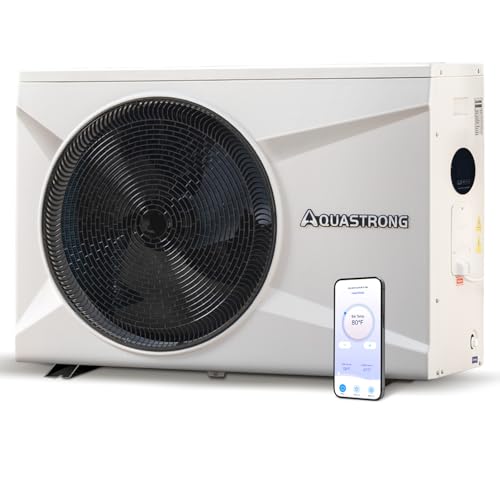
The AQUASTRONG 9,000-gallon model offers dual-mode heating and cooling with a precise control range of 47–104°F for heating and 47–83°F for cooling. It delivers rapid heating, about 35,000 BTU, making it suitable for mid-sized in-ground or above-ground setups. The inverter system promises energy savings and improved efficiency, with up to 70% energy savings versus electric resistance heating and higher efficiency than gas. Best for mid-sized pools in moderate climates. Caution: performance depends on ambient conditions and pool cover usage.
AQUASTRONG Inverter Heat Pump, 21,000 Gallons
This larger AQUASTRONG model provides up to 75,000 BTU heating, designed for pools up to 21,000 gallons. It supports app and control-panel management, enabling remote temperature adjustments, energy monitoring, and programmable schedules. Best for spacious in-ground pools or chilly climates where faster heating is needed. Better for users who need strong performance with smart control; consider proximity to outdoor living spaces to manage noise. Limitation: higher energy usage if not paired with an efficient cover or off-peak scheduling.
AQUASTRONG Inverter Heat Pump, 16,000 Gallons
Designed for up to 16,000 gallons, this model offers 55,000 BTU heating with inverter efficiency focused on energy savings. It supports WiFi and control panel programming for flexible scheduling. Best for homeowners with mid-size pools wanting reliable heating with smart control. Choose this if you want a balanced option between cost and performance; avoid if you have a significantly larger pool without stepping up to higher BTU models.
TURBRO 33,000 BTU Inverter Heat Pump
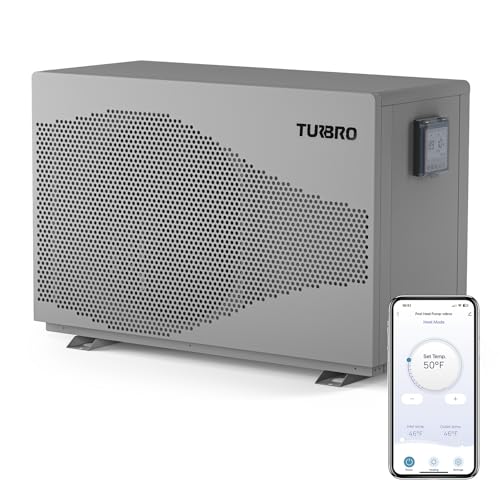
This TURBRO Beluga model delivers 33,000 BTU with inverter technology and a COP up to 15.8, making it a cost-effective option for outdoor pools in moderate climates. It supports heating and cooling across a broad range (46–104°F) and integrates with WiFi controls for remote adjustments. Best for energy-conscious users with mid-to-large in-ground pools. Limitation: lower maximum BTU than some larger units, which may impact heating speed for very large or very cold pools.
Varpoolfaye Inverter Electric Pool Heater, 120,000 BTU
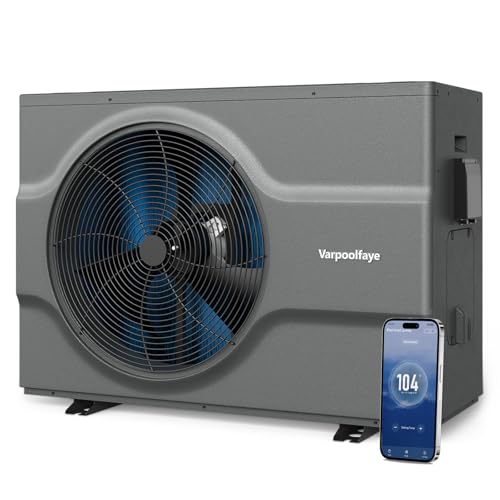
Designed for inground pools up to 33,000 gallons, this Varpoolfaye unit delivers 120,000 BTU with a COP of 12.3. It operates with inverter technology for longer equipment life, low energy use, and a quiet profile. Best for very large or commercial-style residential setups seeking rapid heating and flexible control via WiFi. Caution: very high BTU means it may be overkill for smaller pools; ensure electrical capacity is sufficient for installation.
Buying Guide
What to consider when choosing an electric in-ground pool heater:
- Pool size and BTU needs: Match BTU output to the pool volume. Too little BTU results in slow heating; too much can waste energy.
- Efficiency and COP: Inverter-driven heat pumps optimize power use. Look for COP values around 12–16 for efficient operation.
- Temperature range and climate: Check heating and cooling ranges to ensure year-round comfort in your local climate.
- Smart controls: WiFi app or control panel features help schedule heating, monitor energy use, and integrate with home automation.
- Installation and space: Top-discharge designs may save space and be better for tight setups; consider airflow and nearby obstructions.
- Maintenance and durability: Look for corrosion-resistant materials, especially for saltwater pools, and reputable service support.
Frequently Asked Questions
- What size heater do I need for my pool?
- Are inverter heat pumps more energy efficient?
- Can I use a WiFi-enabled heater with a pool automation system?
- Is a top-discharge heat pump better than a side-vent model?
- What maintenance is required?
- Can these heaters cool the pool as well?
Choose a heater with sufficient BTU to reach your target temperature within a reasonable time for your pool volume. Use the manufacturer guidance as a starting point and consider climate and cover usage.
Yes. Inverter heat pumps adjust power continuously to maintain temperature, often delivering higher COP and lower energy use than traditional on/off models.
Most models offer app control and can integrate with smart home setups for scheduling and monitoring.
Top-discharge designs can save space and improve airflow in tight installations, but performance depends on the unit and installation area.
Regular cleaning of filters, checking refrigerant and capacitors, and periodic professional service are typical, especially in saltwater pools.
Several models offer cooling capabilities in addition to heating, enabling year-round comfort in varying temperatures.