Best Electric Heater Thermostat Controls for Efficient Heating
Yes, these electric heater thermostat controls are designed to optimize comfort and energy savings in homes with baseboard, convection, or fan-forced electric heaters. This guide highlights five top options, each best for different setups—from smart, app-controlled systems to simple 240V manual controllers. Ideal buyers include smart-home enthusiasts, budget-conscious renters, and DIY homeowners who want precise temperature management without complicated wiring.
Summary of selected products
| Product | Brand | Best For | |
|---|---|---|---|
| Meross Matter Smart Thermostat for Electric Baseboard Heater | meross | Smart home integration, voice control | Works with Alexa, HomeKit, Google, SmartThings; 120-240V; energy saving scheduling |
| Mysa Smart Thermostat LITE | Mysa | WiFi control, scheduling, voice assistants | 7-day scheduling; HomeKit, Alexa, Google; 120-240V |
| YeloDeer Dual Voltage 4-Wire | YeloDeer | Simple, accurate control for 120-240V | 110-265V; 40°F-80°F; 2400W @120V; 4800W @240V |
| WILLHI WH2408 Digital Temperature Controller | WILLHI | Thermostat plug with broad applications | Adjustable -58°F to 230°F; 1800W capacity; simple knobs |
| Cadet F Series Double Pole Built-In Thermostat | Cadet | Direct replacement for Cadet baseboard systems | 22 Amp; 120/208/240V; simple end-m mounting |
Meross Matter Smart Thermostat for Electric Baseboard Heater
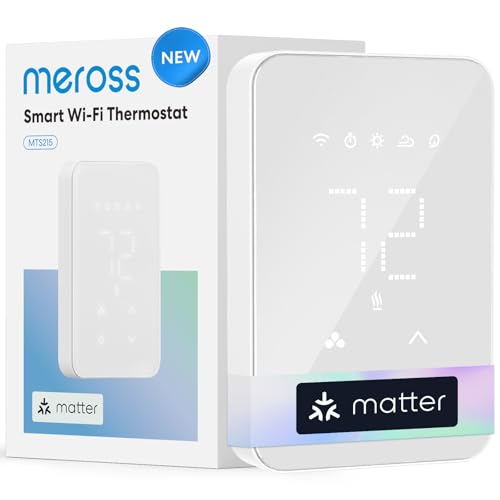
Best for: Smart-home enthusiasts who want multi-platform voice and app control. The Meross thermostat supports Alexa, Apple Home, Google, and SmartThings, providing seamless voice and app management for 120-240V electric heating systems such as baseboard and fan-forced heaters. It enables 24/7 scheduling to reduce energy use while maintaining comfort. A potential limitation is incompatibility with 24V HVAC systems, so verify your wiring before purchase.
Mysa Smart Thermostat LITE
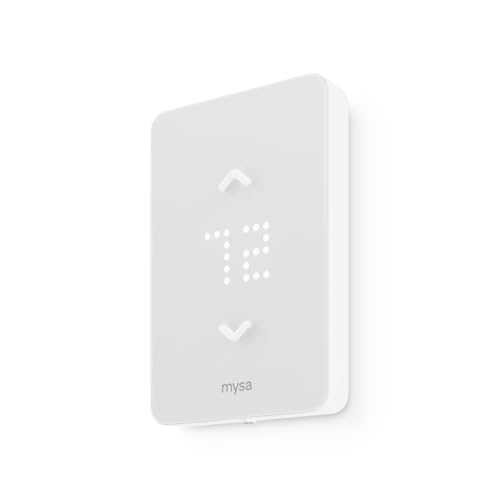
Best for: Homeowners seeking direct WiFi control with simple setup and strong scheduling. Mysa connects to your WiFi without a hub and works with HomeKit, Alexa, and Google. The 7-day scheduling helps cut electric heat bills without sacrificing comfort. It is ideal for rooms where remote monitoring is convenient, but verify 120V-240V compatibility for your heater configuration.
YeloDeer Dual Voltage 4-Wire

Best for: Users needing precise, higher-accuracy control for 120-240V heating systems in a compact unit. It covers 40°F to 80°F and handles up to 4800W at 240V. Consider this if you want a dedicated, non-smart thermostat with robust accuracy; however, it’s less focused on smart home integration and app control.
WILLHI WH2408 Digital Temperature Controller

Best for: DIY projects and hobbyists needing a universal plug-in thermostat for heaters, incubators, or greenhouse mats. The WILLHI unit offers a wide operating range (-58°F to 230°F) and 1800W capacity with simple knob controls, enabling quick setup. A limitation is that it is a plug-in controller rather than a wired wall-mounted thermostat, which may affect installation aesthetics in some rooms.
Cadet F Series Double Pole Built-In Thermostat

Best for: Homes with Cadet F-series electric baseboard heaters seeking a direct replacement. This double-pole thermostat supports 22 Amp and 120/208/240V, simplifying installation with end-mount design. It’s a solid choice when you want a compatible, straightforward retrofit. A caveat is that it targets Cadet F-series heaters, so compatibility with other brands requires alternative options.
Buying Guide
What should you consider when choosing an electric heater thermostat?
- Voltage and heater type: Confirm your system is 120V, 240V, or dual voltage, and whether you have baseboard, convection, or fan-forced heaters. Some units are designed specifically for high-line voltage baseboard systems, while others are universal.
- Smart features vs. manual control: Decide if you need app control, voice assistants, and scheduling. Smart models offer remote adjustments and energy insights, while manual or plug-in controllers emphasize simplicity and reliability.
- Wiring and installation: Wall-mounted thermostats may require professional wiring, while plug-in controllers offer easier DIY setup. Ensure the chosen model is compatible with your existing wiring and mounting requirements.
- Energy savings and scheduling: Look for features like 7-day or 24/7 scheduling, adaptive temperature routines, and interlocks with smart-home ecosystems to maximize savings without compromising comfort.
- Compatibility and ecosystem: If you use specific voice assistants (Alexa, HomeKit, Google), verify native support. Some controllers also work with multiple ecosystems simultaneously without locking you in.
- Accuracy and range: Consider temperature accuracy and the usable range (e.g., 40°F to 80°F). Higher accuracy helps maintain steady comfort and better energy control.
- Durability and environmental fit: For outdoor or garage installations, check enclosure ratings and safe operating temperatures. Probes should be rated for the intended environment when used with aquariums or greenhouses.
FAQ
- Do these thermostats work with all baseboard heaters?
Most listed units target common 120V or 240V electric baseboard and similar heaters. Always verify voltage and heater compatibility before purchasing.
- Can I control these thermostats with voice assistants?
Yes, several options support Alexa, Google Assistant, or Apple HomeKit. Check the product page for exact compatibility.
- Are plug-in controllers as effective as wall-mounted thermostats?
Plug-in controllers offer easier installation and can be suitable for temporary setups, but wall-mounted units may provide tidier installation and broader integration in a central system.
- What range of temperatures do these provide?
Most models cover roughly 40°F to 80°F (4.4°C to 26.7°C) or higher. Consider your climate needs when choosing a range.
- Should I choose a smart thermostat or a manual one?
Smart thermostats are best for energy savings and remote control, especially in homes with variable occupancy. Manual controllers suit straightforward, dedicated heating zones with minimal setup.