Best Electric Heat Trace for Piping: Reliable Freeze Protection for Winter
Winter weather can threaten plumbing with freezing pipes and costly outages. Electric heat trace cables keep water lines flowing by warming pipes and preventing ice buildup. This article highlights top-rated options and how to choose the right one for residential, farm, or small business use. Below you’ll find five carefully selected products, a quick summary, and a practical buying guide to help you compare features like wattage, durability, and safety certifications.
| Product | Brand | Key Feature | Typical Length |
|---|---|---|---|
| 3FT-200FT Heat Tape For Water Pipes | WABUPD | 255°F compatible, thermostat control | 3 ft to 200 ft |
| Frost King HC3A Automatic Electric Heat Kit | Frost King | Automatic thermostat, keeps flow to -40°F | 3 ft |
| Cupohus Heat Tape With Digital Display | Cupohus | Digital thermostat, real-time temp display | 3 ft |
| Frost King HC24A Automatic Kit | Frost King | Longer 24 ft option, keeps flow to -40°F | 24 ft |
| HEATIT Electric Heating Cable | HEATIT | CSA & ETL certified, complete safety | 3 ft |
Choosing the right heat trace involves considering pipe material, climate, and installation needs. The following sections introduce five relevant options, each with practical installation notes and safety features to help you compare at a glance.
WABUPD 3FT-200FT Heat Tape For Water Pipes
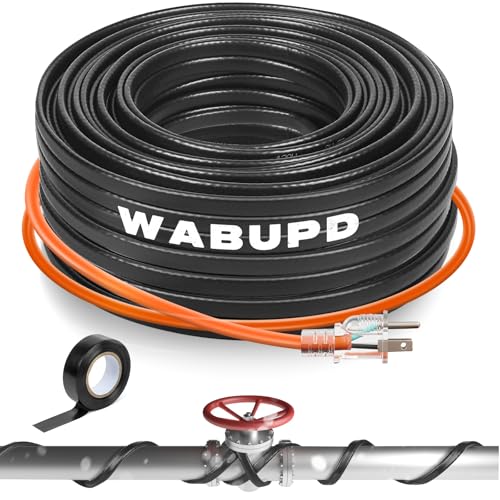
The WABUPD heat tape is designed for wide application—from roofs and gutters to metal and plastic pipes. It features a thermostat that automatically turns heating on or off, with a robust finish that endures cold conditions down to -45°F. The system uses durable metal retainers to keep the heater firmly attached. This option is suitable for longer runs up to 200 feet and includes 120V operation with 8W/ft rating. Typical uses include outdoor piping, garages, barns, and other unheated spaces.
Frost King HC3A Automatic Electric Heat Kit

Frost King HC3A provides a compact 3-foot solution with 120V power and a 7W/ft heating rate. It is designed to keep water flowing down to -40°F for metal and plastic pipes. The package emphasizes quick and easy installation, with a built-in thermostat that supports automatic cycling to maintain desired temperatures. A simple plug-and-play approach makes it a practical choice for smaller pipes and shorter runs in homes or cottages.
Cupohus Digital Display Heat Tape For Water Pipes

Cupohus pairs a three-foot heating cable with a digital display thermostat, enabling precise temperature control. It aims to keep pipes above 59°F (15°C) to prevent freezing and maintain steady water flow. The system includes a ground fault circuit interrupter (GFCI) outlet for safety, along with water-seepage protection for the heating elements. Its compact length makes it ideal for smaller pipe runs around sinks, outdoor taps, and RV hookups.
Frost King HC12A Automatic Electric Heat Kit
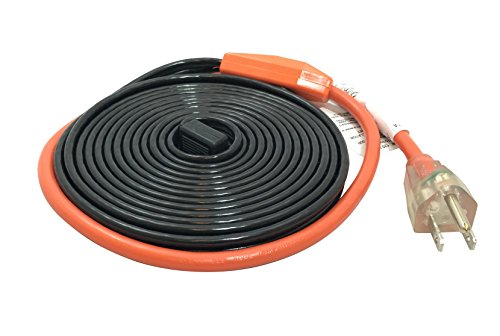
The Frost King HC12A offers a mid-range 12-foot option for longer pipe runs, with 7W/ft and automatic heating. It is compatible with metal and plastic water pipes, providing protection down to -40°F. This kit balances length and power, making it suitable for basements, crawl spaces, or longer exterior runs where a single device must cover more distance without multiple connections.
HEATIT Electric Heating Cable For Water Pipes

HEATIT emphasizes safety and certified reliability with CSA and ETL certifications, ensuring compliance for North American standards. The self-regulating heating cable uses a PVC shell with a built-in thermostat and a 3-foot power cord, plus 35 feet of aluminum foil fiberglass tape for easy installation. It operates effectively down to -40°F, supporting both metal and plastic pipes with durable, water-resistant construction.
Buying Guide
- Pipe material and environment: Metal pipes tolerate heat trace well, but plastic pipes require careful temperature control to avoid deformation. Outdoor vs indoor locations affect durability and IP ratings.
- Length and wattage: Longer runs require higher total wattage or multiple segments. Check whether the product supports inline thermostats or requires external controls.
- Thermostat type: Built-in thermostats simplify setup and cycling, while self-regulating cables adjust heat based on ambient and pipe temperature. Consider manual vs automatic control based on usage patterns.
- Safety certifications: Look for UL, CSA, and ETL marks, plus IP ratings for moisture and dust protection. GFCI outlets add an extra safety layer for wet environments.
- Durability and installation: Metal retainers and corrosion-resistant sheathing help ensure long-term adhesion in harsh winter conditions. Consider installation accessibility for repairs or future replacements.
- Maintenance and replacement: Some kits include longer warranty coverage or easier access to replacement parts. Plan for periodic inspection in seasonal use areas.
- Cost vs coverage: Shorter cables may be cheaper upfront but require multiple runs for longer pipes. Evaluate total installed cost and future scalability.
In sum, selecting the right electric heat trace for piping involves balancing pipe type, climate, length of run, and safety features. The listed products provide a range of lengths, controls, and certifications to fit typical residential, farm, and light commercial needs while prioritizing reliable freeze protection.