Best Electric Heat Cables for Water Pipes
Keep water flowing in freezing temperatures with reliable heat cable solutions designed for metal and plastic pipes. This guide highlights five top options, comparing length, wattage, safety features, and installation considerations to help homeowners select the right heat tape for pipe protection.
| Product | Brand | Length | Power | Key Feature |
|---|---|---|---|---|
| Frost King HC3A | Frost King | 3 ft | 7 W/ft | Prevents freezing down to -40°F |
| Frost King HC6A | Frost King | 6 ft | 7 W/ft | Maintains flow to -40°F |
| Frost King HC9A | Frost King | 9 ft | 7 W/ft | For longer pipe runs |
| HEATIT HISD 6ft | HEATIT | 6 ft | 7 W/ft | CSA & ETL certified, built-in thermostat |
| MAXKOSKO 6 ft | MAXKOSKO | 6 ft | 5 W/ft | Self-regulating with energy savings |
Note: The selection focuses on widely compatible cables designed to prevent pipe freezing and keep water moving in cold conditions. Each option listed below includes safety certifications, typical installation scenarios, and practical considerations for homes with metal or plastic piping.
Frost King HC3A Automatic Electric Heat Kit

Length: 3 ft | Power: 7 W/ft | Voltage: 120V. This heating cable is designed to keep water flowing down to -40°F and is suitable for both metal and plastic pipes. The compact 3-foot option is ideal for shorter runs or as a supplementary segment in longer installations. It integrates with standard guttering or protected pipe sections and relies on constant wattage to deliver steady heat when needed. Consider pairing with a thermostat or controller for enhanced energy management in larger systems.
Frost King HC6A Automatic Electric Heat Kit
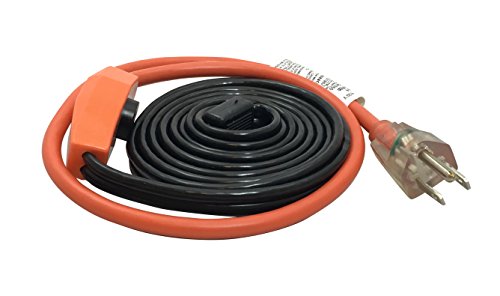
Length: 6 ft | Power: 7 W/ft | Voltage: 120V. A mid-length option that continues to protect pipes down to -40°F for metal and plastic lines. It offers straightforward installation and is well-suited to runs between fittings or across exposed sections. When used on longer pipe segments, ensure adequate insulation and consider a thermostat for controlled energy use in varying winter conditions.
Frost King HC9A Automatic Electric Heat Kit

Length: 9 ft | Power: 7 W/ft | Voltage: 120V. Designed for longer pipe runs, this 9-foot heat cable extends protection along larger sections of plumbing, maintaining flow down to -40°F. Ideal for exterior pipes or long runs through basements and crawlspaces. For optimal efficiency, pair with insulation and a thermostat to regulate on/off cycling in fluctuating temperatures.
HEATIT Heating Cable HISD 6ft

Length: 6 ft | Power: 7 W/ft | Voltage: 120V. This CSA and ETL certified solution emphasizes safety and reliability with a built-in thermostat and UL-listed plug. It is designed for water-filled pipes (metal or plastic) and comes with documentation suitable for code-conscious installations. The included features support consistent performance across cold periods, reducing the risk of frozen lines in exposed or partially heated areas.
MAXKOSKO 6 Ft Heating Cable

Length: 6 ft | Power: 5 W/ft | Voltage: 120V. Self-regulating heat tape optimizes energy use by adjusting heat output as ambient temperatures change, helping prevent overheating. It includes a 3 ft power cord and is suitable for both metal and plastic pipes. It is particularly versatile for smaller projects or where energy savings are a priority, though longer runs may require planning for thermostat placement and insulation.
Buying Guide: Key Purchase Considerations
- Pipe compatibility: Confirm that the heat tape is rated for metal and/or plastic pipes as needed, and verify the maximum temperature it can maintain without damage.
- Length versus coverage: Measure the pipe run and choose a length that provides continuous coverage, with extra length for curves or fittings.
- Power and energy use: Self-regulating cables save energy by matching heat output to ambient conditions; constant-wattage cables deliver steady heat but may consume more energy.
- Certifications and safety: Look for CSA, ETL, and UL labels to ensure safe, code-compliant operation; a fully certified system reduces risk in garages, basements, and outdoor areas.
- Thermostats and controls: Built-in thermostats simplify installation and improve efficiency; external controllers offer centralized management for multiple runs.
- Installation environment: Consider insulation, exposure to moisture, UV, and chemicals; IP ratings (like IP67) indicate moisture and dust resistance for outdoor use.
- Durability and warranty: A robust construction with multi-layer protection extends service life in harsh winter conditions; review warranty terms for long-term reliability.
- Installation method: Straight runs, spiraling, or overlapping are common; verify recommended patterns for the specific product to avoid overheating or gaps in coverage.
- Maintenance: Periodic inspection for insulation integrity and cord wear helps prevent failures during the thaw or cold snaps.